

Texas Tennessee Logistics became a real road-test issue for Longhorn fans on Saturday, September 26, 2026, when Texas played Tennessee at Neyland Stadium in Knoxville. As of October 19, 2026, the game is no longer a future date on the calendar, so the useful question is what the trip showed about SEC road travel, early kickoffs, stadium entry, parking and fan timing.
The matchup took place at Neyland Stadium, with a listed noon Eastern kickoff, 11:00 a.m. Central, on the Tennessee schedule. For Texas fans traveling from Austin, Dallas-Fort Worth, Houston, San Antonio and points across the state, that time slot shaped nearly every decision. A noon Eastern kick in Knoxville meant an earlier wake-up than a normal Central Time home routine, tighter traffic margins and less room for slow mobile-ticket or bag-check issues at the gate.
Texas Tennessee Logistics From The Road Trip
Texas Tennessee Logistics Timeline At Neyland
For Texas families, Texas Tennessee Logistics began before sunrise in Knoxville. The ESPN College GameDay Pit opened at 6:30 a.m. Eastern, which brought people into the stadium district long before gates opened. Will Call at Gate 21 opened at 8:00 a.m. Eastern. Vol Village opened at 8:30 a.m. Eastern, the Vol Walk followed at 9:45 a.m. Eastern, and the Pride of the Southland band march was scheduled around 10:10 a.m. Eastern.
That sequence mattered because the event had several overlapping waves of foot traffic. There were fans arriving for the television set, Tennessee pregame traditions, standard stadium entry and visiting Texas seating areas. Neyland’s listed 2026 capacity of 101,915 created the kind of crowd scale Texas fans know from major Austin weekends, but the road setting changed the details. Familiarity with local streets, campus walkways and entry points belonged mostly to Tennessee regulars.
| Time | Game-Day Operation | What It Meant For Texas Fans |
|---|---|---|
| 6:30 a.m. ET | College GameDay Pit opened | Early crowds formed before standard gate entry. |
| 8:00 a.m. ET | Will Call at Gate 21 opened | Ticket-service needs had to be handled early. |
| 8:30 a.m. ET | Vol Village opened | Pregame foot traffic increased around campus. |
| 9:45 a.m. ET | Vol Walk | Stadium-area movement tightened before kickoff. |
| 10:10 a.m. ET | Band march | More crowd pauses developed on approach routes. |
Why The Date And Kickoff Time Mattered
The September 26 date put the trip in the first month of fall, but it still carried the planning demands of a warm-weather football weekend. Texas fans who drove or flew in had to build the morning around the Eastern Time Zone. A hotel departure that feels comfortable for an 11:00 a.m. Central kick can become late once campus traffic, downtown parking, walking distance and security lines are added.
The lesson was straightforward: early SEC road games reward the fans who treat the first two hours of the morning as part of game day, not as extra time. A visiting fan who arrived in Knoxville without a permit, without a downloaded ticket and with a non-compliant bag had very little cushion.
Arrival Windows And Stadium Entry
Mobile Tickets And Security Perimeter
Tennessee Athletics events used digital and mobile-only ticketing for this matchup. Fans were instructed to add tickets to Apple Wallet or Google Pay before arriving, which was a practical step because cellular congestion can build near a sold-out stadium. For Texas fans used to mobile entry in Austin, the concept was familiar. The risk came from assuming the process would be just as smooth in a crowded road environment.
The extended security perimeter opened four hours before kickoff, which placed that first access point around 8:00 a.m. Eastern. Walk-through metal detectors were part of the process. Stadium gates opened two hours and 30 minutes before kickoff. With a noon Eastern kick, that put general entry in the morning window rather than near midday, and it compressed tailgate, walk-up and entry decisions.
Clear Bag And Cashless Operations
Neyland Stadium enforced a clear bag policy for football game days. Permitted items included one clear plastic bag no larger than 12 by 6 by 12 inches or one clear gallon-sized storage bag, plus a small clutch purse no larger than 4.5 by 6.5 inches. Non-clear bags, coolers and outside food or beverages were among the items listed as prohibited in the research notes.
The venue also operated as cashless for concessions and retail areas, including Vol Shops and kiosks. That mattered for traveling Texas families because a road game often involves more small purchases than a home game: water, snacks, ponchos, sunscreen, hats or souvenirs. Carrying a backup card or mobile payment option was the safer play than relying on cash.
For readers who tracked football context around the trip, the roster angle sat beside the logistics angle in our note on Texas’ injury report before Tennessee. Game-day planning, though, came down to timing, phones, bags and walking routes.
Parking, Traffic And The Texas Travel Reality
Reserved Lots Near Neyland
Parking around Neyland Stadium was not a casual drive-up setup for general fans. Lots immediately around the stadium were reserved for permit holders. That pushed many visitors toward downtown garages, public lots, rideshare plans or longer walks. The City of Knoxville listed game-day garage and lot parking in the $30 to $70 range and posted traffic details through its game day traffic page.
For Texas fans, that should sound familiar in one sense and different in another. Austin game days also demand parking plans, but Knoxville’s riverfront, hills and campus layout create their own pinch points. A visitor who parked downtown had to account not only for distance, but also for postgame pedestrian flow and street closures. The closer a fan parked to Neyland without a clear exit plan, the more likely the postgame wait became part of the trip.
Postgame Flow Away From Campus
Research notes for the game described traffic-flow changes designed to move vehicles out of the Neyland area more quickly after the final whistle. Those changes included three westbound lanes on Neyland Drive toward Alcoa Highway, I-40 and Kingston Pike, along with a Kingston Pike Express Lane intended to reduce signals and bottlenecks.
That type of postgame plan matters for a visiting fan base with flights, hotel checkouts or long interstate drives. A Texas family returning to Nashville, Atlanta or a Knoxville airport hotel needed to know whether the fastest walking route to the car matched the best driving route out. The two are not always the same on SEC campuses.
Game-Day Atmosphere Around Neyland
Checker Neyland And A Sold-Out Stadium
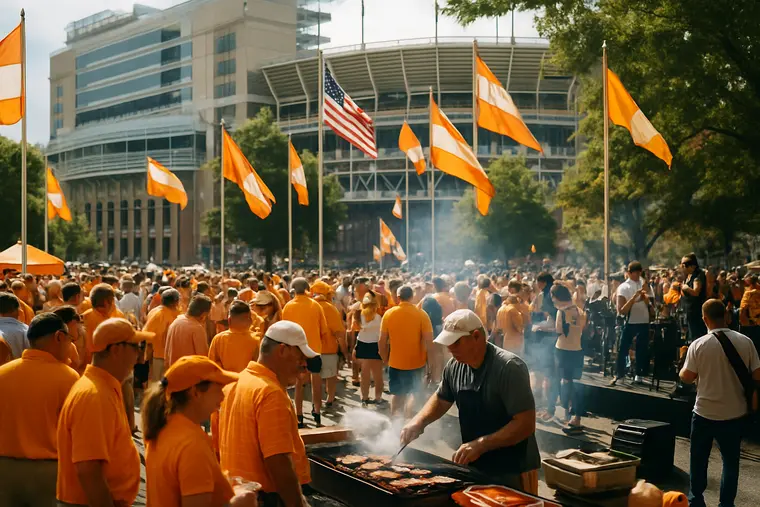
The game was listed as a sold-out Checker Neyland date, Tennessee’s checkerboard-themed stadium presentation. For a visiting Texas crowd, that meant the visual environment was built around the home team from the start. The atmosphere was not just about volume. It was about crowd pattern, traditions, band movement, pregame staging and the sheer size of Neyland Stadium.
Texas fans have seen large crowds at Darrell K Royal-Texas Memorial Stadium, the Cotton Bowl and neutral-site games across the state. Knoxville still offered a different kind of road setting. The stadium sits tight to campus and the Tennessee River, and that concentrates movement into defined corridors. Once the morning events began, fans could not assume they would move at a normal sidewalk pace.
What Worked For Visiting Fans
The best road-game approach was simple: arrive early, keep bags minimal, download tickets before leaving the hotel and decide on parking before entering the stadium district. Fans who followed those steps had fewer friction points. Fans who waited until late morning faced the combined pressure of event crowds, stadium security, mobile entry and a sold-out environment.
The cashless setup also rewarded preparation. A family with multiple payment options, portable phone power and tickets stored in a wallet app had fewer ways for the day to go sideways. That lesson applies beyond Knoxville. It is now part of big-game travel across the SEC, especially for Texas supporters still building routines for new road venues.
What Texas Tennessee Logistics Mean For Texas Fans
Texas Tennessee Logistics should stay in the fan playbook because the trip showed how different a road SEC Saturday can feel from a home Saturday in Austin. The football matchup brought the attention, but the practical parts shaped the day: Eastern Time, a noon kick, a sold-out stadium, mobile-only tickets, a clear bag policy, cashless purchases, permit-heavy parking and managed traffic exits.
For future Texas road trips, the Knoxville example points to a useful checklist. Confirm the kickoff time in the local time zone. Save tickets before leaving a hotel or rental. Pack only what the stadium allows. Carry a card and a charged phone. Pick a parking or rideshare plan before reaching campus. Build the morning around the first crowd wave, not the final walk to the gate.
That is why Texas Tennessee Logistics were more than a one-day travel note. They offered a clear case study for Longhorn fans adjusting to major SEC road venues, where game-day operations are local, crowds arrive early and small planning choices can decide whether the trip feels smooth or stressful.