

Arch Manning will remain the starting quarterback for the Texas Longhorns against Ole Miss on October 24, but head coach Steve Sarkisian has made it clear that the current level of performance is not enough. Following consecutive 27–24 losses to Oklahoma and Florida, Texas has fallen to No. 19 in the Associated Press Top 25, and its offense faces mounting questions heading into one of the most important games of the 2026 season.
During his October 19 media availability, Sarkisian reaffirmed Manning’s position while demanding improvement. “He’s our starter,” the coach said, adding that Texas needs to see a better version of its quarterback this week. The comments followed a disappointing loss to Florida at Darrell K Royal–Texas Memorial Stadium and renewed attention on backup quarterback KJ Lacey Jr. CBS Sports’ report on Sarkisian’s quarterback decision.
The distinction matters. Sarkisian has not announced a quarterback change, and increased attention on Lacey does not automatically mean Manning has lost his position. However, Texas cannot afford another performance filled with stalled drives, costly turnovers, and missed opportunities. Against No. 7 Ole Miss, Manning must demonstrate better decision-making while the coaching staff addresses the broader offensive problems that have contributed to the Longhorns’ two-game losing streak.
Why Arch Manning Is Facing More Pressure
Texas entered the season with expectations that extended well beyond competing for a winning record. The Longhorns reached No. 1 in the national rankings after their early-season success, including a 24–23 victory over Ohio State on September 12. That result strengthened the belief that Manning and Sarkisian could lead the program into another serious College Football Playoff run.
October has changed the conversation. Oklahoma defeated Texas 27–24 on October 10, and Florida repeated that score seven days later. Texas now stands at 4–2 overall and 1–2 in Southeastern Conference play, leaving little room for additional setbacks if the team hopes to regain its place among the leading playoff contenders.
Manning has recorded 1,295 passing yards, 11 touchdown passes, and five interceptions through six games. His production shows that Texas can generate offense through the air, but the timing of his mistakes has become a significant concern. Three fourth-quarter turnovers across the losses to Oklahoma and Florida have helped opponents capitalize during the moments when Texas most needed composure.
The issue is not simply the number of turnovers. It is the effect they have had on close games. Against Oklahoma, Manning threw two interceptions in the fourth quarter. Against Florida, a late fumble ended Texas’ opportunity to pursue a tying score after the Longhorns had narrowed the deficit.
According to Associated Press coverage of Texas’ quarterback situation, Sarkisian continues to support Manning as the starter despite the recent results. That support gives the quarterback an opportunity to respond, but it also raises the stakes for the Ole Miss matchup.
What Sarkisian Needs to See From Manning Against Ole Miss
The first priority is better ball security. Manning does not need to avoid every difficult throw or eliminate all risk from the offense. He needs to recognize when a play has broken down and make a decision that protects Texas from a turnover.
That may mean throwing the ball away rather than attempting to force a pass into tight coverage. It may mean accepting a short completion instead of holding the ball while waiting for a deeper route to develop. In late-game situations, protecting possession can be more valuable than attempting a spectacular play.
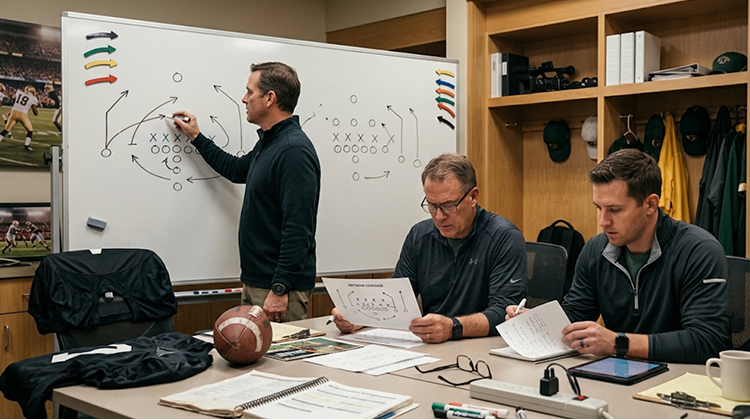
The second priority is faster processing. Texas has allowed 17 sacks this season, according to reporting from Field Level Media. That figure places the Longhorns among the SEC teams allowing the most sacks, and Manning’s tendency to hesitate has contributed to the problem. Protection breakdowns and quarterback decisions can reinforce one another: an offensive line that struggles to hold its blocks gives the quarterback less time, while a quarterback who holds the ball too long exposes the line to additional pressure. Field Level Media’s report on Texas’ quarterback situation.
Third, Manning must improve his consistency on early downs. Texas cannot repeatedly rely on difficult third-down conversions to sustain possessions. Quick passes, efficient running plays, and well-timed quarterback movement could give the offense more manageable situations and help prevent opposing defenses from concentrating exclusively on the passing game.
Finally, Manning needs to demonstrate that he can respond after a mistake. Turnovers happen in college football, but the next possession often determines whether one error becomes a decisive turning point. A composed response would help restore confidence in the quarterback and provide evidence that Texas can handle adversity.
KJ Lacey’s Practice Reps Add Pressure Without Guaranteeing a Change
Backup quarterback KJ Lacey Jr. has become part of the discussion surrounding Texas’ offense. Reports ahead of the Ole Miss game indicated that Lacey could receive increased first-team practice opportunities after Manning’s struggles against Florida.
Sarkisian clarified on October 19 that Lacey takes first-team reps as part of the team’s regular routine. That statement does not confirm a quarterback competition or a planned change to the starting lineup. Manning remains the designated starter heading into the game against Ole Miss.
Still, Lacey’s presence creates a practical form of accountability. Coaches need to evaluate their available options, particularly when the offense has struggled to produce consistent results. A backup who demonstrates good timing, sound decisions, and command of the playbook during practice gives the staff useful information about how the offense might function under different circumstances.
Lacey has limited game experience compared with Manning. Field Level Media reported that he had appeared in three games across the 2025–26 seasons, completing eight of nine passes for 70 yards while recording two carries for three yards. Those numbers are too limited to establish how he would perform as the full-time starter against a ranked SEC opponent.
The coaching staff must weigh that uncertainty against Manning’s experience and the need for immediate improvement. Replacing an established starter can disrupt timing and introduce new challenges, especially when the offensive line and play-calling also need attention. At the same time, the staff cannot allow the quarterback position to become exempt from performance standards.
For now, the clearest interpretation is that Texas is keeping Manning in place while evaluating its offense and maintaining preparation options. The Ole Miss game will provide another opportunity to judge whether the current approach can produce better results.

Texas’ Offensive Line Must Help Its Quarterback
The pressure on Manning cannot be separated from the performance of the offensive line. Texas’ 17 sacks allowed point to a recurring problem that requires attention from offensive line coach Kyle Flood and the rest of the offensive staff.
Pass protection is a collective responsibility. Linemen must identify defensive fronts, communicate assignments, and sustain blocks long enough for routes to develop. Running backs and tight ends may also need to assist with protection, depending on the defensive look. Manning, meanwhile, must recognize pressure and release the ball when the pocket begins to collapse.
The Florida game exposed another weakness: Texas struggled to maintain an effective running attack. The Longhorns finished with only 99 rushing yards against the Gators and converted just two of 10 third-down attempts. Those numbers made it difficult to sustain drives or keep Florida’s defense from dictating the pace.
A more productive running game would give Manning a wider range of options. If Texas can gain dependable yardage on early downs, Ole Miss will have to respect the possibility of a run instead of consistently preparing for obvious passing situations. That could create more favorable throwing opportunities and reduce the pressure on Manning to manufacture every important play.
Sarkisian should also consider how play design can help his quarterback. Faster-developing routes, well-timed screens, and formations that create clear reads may reduce the time Manning needs to hold the ball. These adjustments would not solve every protection problem, but they could make the offense less vulnerable to pressure.
Ole Miss Presents a Difficult Test for Texas
The Longhorns host No. 7 Ole Miss on Saturday, October 24, at Darrell K Royal–Texas Memorial Stadium in Austin. Kickoff is scheduled for 6:30 p.m. Central time. The Rebels entered the week at 5–1 overall and 3–1 in SEC play, giving Texas a challenging opponent as it attempts to halt its losing streak. Texas Athletics’ official game information.
Ole Miss quarterback Trinidad Chambliss adds another challenge. Texas must prepare for an offense capable of putting pressure on the defense while ensuring that its own offense can stay on the field. If the Longhorns continue to struggle on third downs, their defense could spend extended periods responding to Ole Miss possessions.
The game also offers a meaningful opportunity for Manning. A strong performance against a ranked opponent would not erase his recent mistakes, but it could help restore confidence in his ability to direct the offense. Efficient early drives, better ball security, and improved production in the second half would provide tangible signs of progress.
The coaching staff should avoid treating the matchup as a referendum on Manning alone. Texas’ recent losses have exposed problems with offensive execution, protection, and defensive consistency. A quarterback cannot solve every issue independently, and the Longhorns will need contributions across the roster to defeat Ole Miss.
Nevertheless, Manning’s decisions will remain central to the outcome. Texas needs him to turn promising possessions into points, avoid unnecessary turnovers, and recognize when a conservative decision gives the team a better chance to win.
The Longhorns Need Accountability, Not Panic
Texas’ fall to No. 19 has intensified the pressure on Sarkisian and his players, but an immediate quarterback change is not the only possible response. The more important question is whether the coaching staff can identify the causes of the recent failures and make adjustments that translate into better performance on the field.
Manning remains the starter because Sarkisian believes he can provide the team with a better performance. That decision now carries a clear expectation: the quarterback must show progress against Ole Miss. The offensive line must improve its protection, the running game must become more reliable, and the coaching staff must help the offense avoid predictable situations.
The upcoming game is also an opportunity to re-establish the standards that accompanied Texas’ rise to No. 1 earlier in the season. Winning against Ole Miss would not guarantee a playoff berth, but it would give the Longhorns an important conference result and interrupt a losing streak that has changed the outlook for their season.
If Manning responds with improved decisions and greater consistency, the debate about his starting role could lose urgency. If the same problems continue, pressure on Sarkisian to reconsider the offense and its personnel will only grow.
Texas still has time to change the direction of its season. The most direct route begins with better execution on October 24, when Manning and the Longhorns face their most important test since the start of the losing streak.