

The debate over home-field advantage in 4A and below is not just a bracket question. In Texas, it touches the band trailer, the booster club smoker, the visiting bus route, the sheriff directing traffic, and the old habit of meeting at the same cafe before kickoff.
For decades, early-round playoff football in the smaller classifications has carried a familiar rhythm. Teams leave town, fan caravans follow, and two communities meet somewhere in the middle if a workable neutral site can be found. That setup has created its own Texas tradition, but it has also created real planning pressure for schools spread across wide rural regions.
The UIL discussion has now moved from sideline talk to a formal planning issue. In July 2026, the University Interscholastic League approved a proposal tied to extending home-field advantage to Classes 4A and below for early-round playoff games, with a pilot proposal expected in October 2026 and possible implementation in 2027, according to TexasFootball.com.
That timeline gives school districts, coaches, families and local businesses time to think through what would change. The football piece matters first. The higher seed would be rewarded with a home date. Yet in Texas high school football, the game is never only the game. A home playoff night can shift who gets to attend, how long teams sit on buses, how gates are staffed, and how much of the town gets pulled into the week.
Why The Proposal Has Texas Small Towns Talking
The Current Split Between Big Schools And Smaller Classes
The current structure is uneven by classification. Classes 6A and 5A have used home-field advantage in the bi-district round, while Classes 4A and below have traditionally opened the playoffs at neutral sites, as reported by TexasFootball.com. The proposed shift would move the smaller classifications closer to the system already used by the largest schools.
For supporters, the idea is easy to understand. If seeding is supposed to reward the regular season, then the first-round setting should reflect that reward. A district champion or higher seed has already handled ten weeks of travel, injuries, weather, rivalry pressure and schedule stress. Hosting a playoff game would make the reward visible.
That matters in towns where the stadium is part of the weekly routine. A playoff game at home means the same walk from the parking lot, the same pregame meal spots, the same student section entrance, the same public-address voice, and the same parents working the concession stand. It keeps the first playoff Friday connected to the season that earned it.
Why The Neutral-Site Habit Still Has Support
Neutral sites are not just leftovers from an older bracket. They have helped communities split distance, share larger facilities, and turn early playoff rounds into regional gatherings. In many parts of Texas, neutral-site games feel like a November roadshow. Fans compare routes. Grandparents ask which side has the better parking. Former players show up wearing letter jackets from different eras.
That is part of the culture too. A playoff trip can become a marker of the season, especially for smaller schools whose postseason runs are remembered by where the games were played. Moving more first-round games to campuses would not erase that tradition, but it would change the first step of the postseason.
What Home-Field Advantage In 4A And Below Changes
Crowd Sound Travels Differently At Home
Home crowds in high school football do not sound like neutral crowds. The cheerleaders know the student section. The band hits the fight song at the exact moment the home sideline expects it. Younger kids lean over the rail hoping to see players they watched in summer workouts. That setting can tighten the connection between the roster and the town.
The practical edge can be just as real. A home team keeps its locker room routine. Coaches know the field surface, the wind patterns, the headset setup, and the pregame timing. Players do not have to wait through a long bus ride before stretching. Families with younger children or older relatives may find it easier to attend when the game stays in town.
None of that guarantees a win. Texas playoff football has a way of humbling easy assumptions. A lower seed with a strong front seven, a clean kicking game, and a calm quarterback can win anywhere. But a home game can make the first quarter feel faster for the visitor and steadier for the host.
The First-Round Data Already Shows A Gap
The question is whether home field would widen an advantage that already exists. In 2024, higher-seeded teams in Classes 4A through 2A went 143-49 in first-round playoff games, a 74.5 percent win rate, despite those games being played at neutral sites, according to The Dallas Morning News.
That number is worth sitting with. It suggests that seeding already reflects a meaningful competitive difference in many opening-round matchups. Stronger teams tend to win even without their own stadium. The argument for home games, then, may be less about creating a new edge and more about matching the playoff reward to the regular-season result.
For fans, that distinction matters. If the best team is likely to win either way, hosting becomes a community reward as much as a competitive tool. It brings ticket sales, concession traffic, marching band presence and local energy back to the school that earned the seed.
The Travel Question For Rural Playoff Teams
Distance Is Different Below 5A
The hardest part of this conversation sits on the map. Smaller classifications often cover large spaces. A home-site format can create long trips for lower-seeded teams, especially in rural areas where schools are spread far apart. The Dallas Morning News reported that travel concerns are among the obstacles tied to applying home-field advantage to 4A and below.
That concern is not abstract. A long playoff trip changes a school day. It affects meal planning, departure times, bus availability, band travel, athletic training supplies and family work schedules. For visitors, a faraway first-round game can mean leaving before the final bell or getting home deep into the night.
For the host, the workload also grows. A playoff home game requires staffing, security, parking direction, ticketing, visiting-side seating, officials support and hospitality space. Many Texas schools can handle those tasks well, but not every campus has the same stadium size, visitor parking or road access.
What Families Would Need To Plan
If the plan moves forward, families will pay close attention to the release of pairings. A home-campus format would make some trips simpler and others tougher. The higher seed’s town may get a full Friday-night crowd. The lower seed’s families may face a longer drive than they would have under a neutral-site agreement.
- Visiting fans would need clear parking and entrance information earlier in the week.
- Schools would need to plan band, cheer and student travel around longer routes.
- Host districts would need enough staffing for playoff-sized gates and concessions.
- Local businesses near host stadiums could see more pregame and postgame traffic.
Those are not small details in Texas. They are the difference between a smooth playoff Friday and a stressful one. The football decision sits in the bracket, but the fan experience starts with the first travel text sent to parents on Monday morning.
How Neutral Sites Shape Tradition
The Shared Stadium Feeling
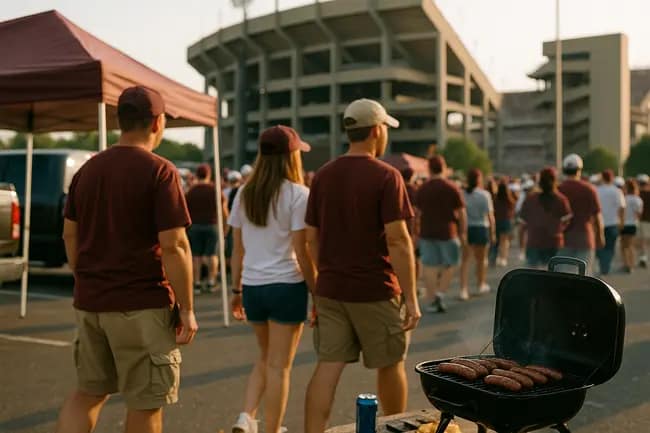
Neutral sites have given Texas high school playoff football some of its most familiar scenes. Two towns arrive at a stadium that belongs to neither side. The parking lot fills with trucks, school colors and folding chairs. The bands unload at opposite ends. The crowd spends the first quarter learning the venue while the teams settle into the game.
That shared-stadium feeling can be fair, but it can also be hard to arrange. Securing a neutral site requires finding a facility that is available, suitable and acceptable to both schools. In a crowded playoff week, that can become a race of phone calls and compromises.
A home-site system would reduce some of that scramble. The higher seed would know where it is playing. The lower seed would know where it is going. That clarity has value, especially for athletic directors and coaches who already face a short turnaround after Week 11.
The Local Identity Piece
Still, Texas football people understand what gets lost when every problem is solved by efficiency. Neutral-site games create memories tied to the road. A town remembers taking over a stadium two counties away. A senior class remembers the cold ride home after a loss or the late-night caravan after an upset.
Home playoff games would create a different kind of memory. They would turn the opening round into a town event, with younger players watching from the fence and alumni returning to the stands they know. Neither version is empty. The UIL question is which version best fits the lower classifications now.
What The 4A Home-Field Plan Means Before Kickoff
If home-field advantage in 4A and below becomes part of the playoff format, the impact will show up before the ball is ever spotted. It will show up in bus schedules, stadium gates, local restaurants, pep rallies, band call times and the way a higher seed feels rewarded for its regular season.
The debate should stay practical. Texas does not need a one-size answer borrowed from another state or another level of football. The smaller classifications have their own geography, their own budgets, and their own Friday-night customs. Any pilot plan will need to respect the distance between towns as much as the standings on the bracket.
For fans, the best approach is to watch the UIL timeline, ask local districts how they would handle hosting duties, and remember that the visitor’s burden is part of the equation. A home playoff game can be special. It can also send another community a long way down a dark highway after a hard loss.
That balance is why this topic has weight across Texas. The proposal is about competitive reward, but it is also about how small-town football gathers people. Whether the first round stays neutral or moves more often to campus stadiums, the goal should be simple: protect the playoff experience while keeping Texas high school football connected to the communities that give it life.