

Texas did more than secure another important SEC victory on November 7. The Longhorns demonstrated that their roster can withstand significant personnel losses and still compete against a ranked opponent in a difficult road environment. A 34–20 win over No. 18 Missouri at Faurot Field provided one of the clearest examples yet of how Steve Sarkisian’s recruiting and player-development strategy is beginning to produce results beyond the starting lineup.
The circumstances made the victory particularly meaningful. Texas traveled to Columbia without several important contributors, including running back Hollywood Smothers, offensive tackle Trevor Goosby and wide receiver Cam Coleman. Edge defender Colin Simmons was also severely limited, while other players had recently dealt with injuries. Instead of allowing those absences to dictate the outcome, the Longhorns found production from Arch Manning, Raleek Brown, Jermaine Bishop Jr., Derrek Cooper and a defense that delivered important stops in the fourth quarter.
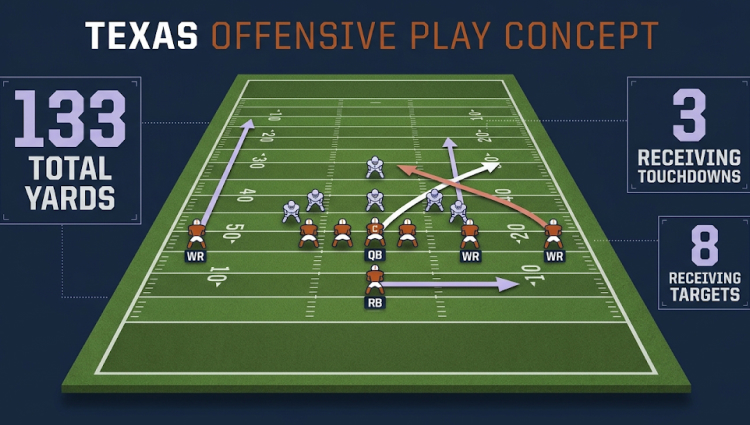
Texas finished with 401 total yards, converted all four of its red-zone opportunities and scored 14 unanswered points in the final quarter. Manning completed 28 of 38 passes for 297 yards and three touchdowns, while Brown contributed 133 yards from scrimmage. The result improved Texas to 7–2 overall and 4–2 in SEC play, giving the program its third consecutive victory.
The performance also reinforced a point Sarkisian has emphasized throughout the season: building a competitive roster requires more than recruiting recognizable starters. It requires developing players who can handle meaningful responsibilities when injuries force changes to the lineup.
Steve Sarkisian’s Recruiting Strategy Is Facing Its Real Test
Roster depth is easy to discuss during the offseason, when every position group appears to have multiple options. Its value becomes much clearer during November, when injuries accumulate and teams must rely on players who might not have expected to receive significant playing time.
Texas entered the Missouri game with several important absences. Goosby, the starting offensive tackle, had suffered a season-ending knee injury. Smothers was also expected to miss the remainder of the season after his knee injury. Coleman, who had become one of Manning’s most important receiving targets, was unavailable against Missouri.
Simmons, meanwhile, returned to action but was limited after missing the previous two games. His participation was encouraging, although Texas could not rely on him for his usual workload.
Before the game, Sarkisian discussed how recruiting, coaching and strength development had prepared the program for this situation. He credited the entire organization for bringing talented players into the program and developing them so they could contribute when their opportunities arrived.
His comments became more relevant after the final whistle.
Texas was missing players with important roles, but the remaining roster still had enough talent to produce 34 points against a ranked SEC opponent. The coaching staff adjusted its approach, distributed responsibilities and trusted younger contributors rather than asking a handful of stars to compensate for every absence.
That is an important distinction. A deep roster is not simply one with talented players sitting behind the starters. It is one in which those players understand the system, receive meaningful preparation and can execute when the pressure increases.
The Missouri game provided evidence that Texas is developing that type of depth.
Arch Manning Delivered When Texas Needed Its Offensive Leader
Manning’s performance was the foundation of the comeback.
The Texas quarterback completed 73.7% of his passes, throwing for 297 yards and three touchdowns without an interception. He connected with eight different receivers, giving the offense several ways to move the football despite Coleman’s absence.
His touchdown passes went to Derrek Cooper, Bishop and Brown. The distribution was especially important because Texas did not need to force the ball toward one established receiver to keep its offense productive.
Manning’s connection with Cooper produced a 24-yard touchdown in the first quarter. Later, Bishop caught a 25-yard scoring pass that tied the game at 20–20 in the third quarter. Brown then became the decisive target, catching a 23-yard touchdown with 5:03 remaining to give Texas a 27–20 lead.
The performance showed how a quarterback can help compensate for missing personnel by spreading the football around and maintaining confidence in the players available.
Manning also benefited from a more balanced offensive approach. Texas finished with 104 rushing yards, and Brown’s production gave the offense a reliable option outside the passing game.
The quarterback did not need to produce every important play himself. Instead, he distributed opportunities and allowed different players to contribute at critical moments.
That flexibility will matter during the remaining schedule. Opponents will continue to study Texas’ tendencies, and injuries may require further adjustments. Manning’s ability to maintain offensive efficiency while working with different combinations of receivers could become one of the team’s most important advantages.
Raleek Brown Has Become a Central Part of Texas’ Offensive Depth
Brown’s performance against Missouri was another example of how Texas can replace lost production through players already within the program.
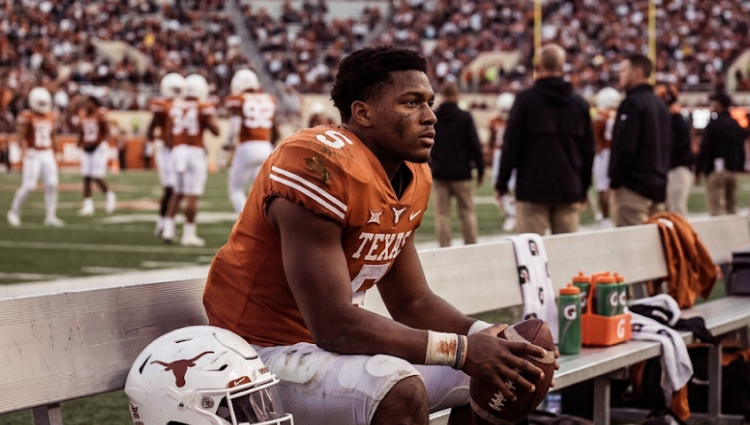
With Smothers unavailable, Brown carried a greater responsibility in the backfield. He responded with 85 rushing yards on 17 attempts and six receptions for 48 yards, finishing with 133 total yards and two touchdowns.
His receiving touchdown was arguably the most important offensive play of the afternoon.
With Texas trailing by three points in the fourth quarter, Brown caught a 23-yard pass from Manning and reached the end zone with 5:03 remaining. The score gave the Longhorns a lead they would not surrender. He later added an eight-yard rushing touchdown to complete the scoring.
Sarkisian praised Brown’s effort after the game, specifically highlighting his ability to catch the ball out of the backfield, run hard and make intelligent decisions.
Brown’s value extends beyond his rushing average. His ability to operate as a receiver gives offensive coordinator Sarkisian another way to create favorable matchups, particularly when defenses concentrate on the outside receivers.
The absence of Smothers has created a significant challenge for the running back room. However, Brown’s performance suggests Texas has a dependable option capable of contributing in multiple areas.
Michael Terry III and Derrek Cooper also remain part of the backfield rotation. Their development will be important because Texas cannot expect Brown to handle every rushing and receiving responsibility during the final weeks of the season.
The Longhorns need multiple players to remain productive, especially with LSU and Texas A&M still on the schedule.
Freshmen Jermaine Bishop Jr. and Derrek Cooper Are Becoming Important Contributors
One of the most encouraging elements of the Missouri victory was the involvement of two freshmen.
Bishop caught four passes for 60 yards and a touchdown. Cooper added a 24-yard receiving touchdown, giving Texas two young offensive contributors who made significant plays against a ranked opponent.
Their performances carried historical significance for the program. According to Texas Athletics, it was the first time Texas had two freshmen record receiving touchdowns against an AP Top 25 opponent. The previous occurrence came against Missouri on October 18, 2008.
Bishop’s touchdown was particularly important because it arrived after Missouri had taken a 20–13 lead in the third quarter. Manning found the freshman on a 25-yard scoring play, helping Texas regain momentum and tie the game.
Cooper had already established his presence with the first-quarter touchdown, demonstrating that he could contribute even when the offensive depth chart was affected by injuries.
These developments give Texas additional options as the season progresses.
Young players often need time to adjust to the speed and physical demands of SEC football. Their responsibilities also change as they move from limited appearances to situations in which the coaching staff expects them to execute important plays.
Bishop and Cooper showed that they can handle those opportunities.
Their emergence does not mean Texas has replaced Coleman’s experience or production. It means the offense has additional contributors who can make defenses account for more than the established starters.
That is exactly what roster depth should provide.
Texas’ Defense Found Contributions Beyond Its Biggest Names
The offensive players received much of the attention after the comeback, but Texas also needed its defense to respond when Missouri threatened to regain control.
The Tigers scored 20 points, including a 72-yard touchdown reception by Naeshaun Montgomery in the third quarter. That play gave Missouri a 20–13 advantage and placed pressure on the Longhorns to respond.
Texas eventually held Missouri scoreless in the fourth quarter.
Rasheem Biles, Justin Cryer and Derek Williams Jr. each finished with six total tackles. Biles also recorded two pass breakups and three quarterback hurries, while Cryer added a tackle for loss and a quarterback hurry.
The decisive defensive moment came late in the game. Warren Roberson forced a fumble, and Graceson Littleton made the recovery near the goal line. Sarkisian praised Roberson’s effort and Littleton’s awareness after the game.
That sequence demonstrated the importance of having dependable contributors across the defensive depth chart.
Texas has dealt with injuries at multiple positions, including the defensive secondary and edge group. Players such as Roberson and Littleton have had to handle important responsibilities, and their ability to make plays in high-pressure situations helped secure the victory.
The defense also received contributions from Colton Vasek and other members of the defensive front as the team adjusted to Simmons’ limited availability.
Texas does not need every reserve to become a star. It needs players who can perform their assignments, maintain communication and make decisive plays when opportunities appear.
The final defensive sequence against Missouri illustrated that principle.
Jonathan Cunningham’s Blocked Punt Added Another Dimension
Special teams also played a meaningful role in the victory.
Linebacker Jonathan Cunningham blocked a Missouri punt attempt shortly before halftime, giving Texas another opportunity to generate points and shifting momentum during a tight game.
According to the official Texas recap, it was the Longhorns’ first blocked punt since November 24, 2023, against Texas Tech.
The play demonstrated that contributions from the roster do not have to come exclusively from the offensive and defensive starters.
Special teams require preparation, timing and players who understand their assignments. A blocked punt can change field position, create a scoring opportunity and influence the emotional direction of a game.
Texas also received reliable kicking from Gianni Spetic, who converted both of his field-goal attempts against Missouri. His 27-yard kick tied the game at 10 before halftime, and his 34-yard field goal brought Texas level again in the third quarter.
Spetic improved to 14-of-15 on field-goal attempts for the season, according to the official game recap.
Those contributions helped Texas remain within reach while the offense worked through its adjustments.
The Missouri Victory Shows What Texas Must Carry Into LSU
The next test arrives on November 14, when Texas travels to Baton Rouge to face LSU at Tiger Stadium. The game is scheduled for 6:30 p.m. CT and will be televised on ABC. The Longhorns will need the same collective approach against another difficult SEC opponent.
Texas cannot assume that its injury situation will suddenly disappear. Goosby’s season-ending injury leaves a major question on the offensive line, while Smothers’ absence continues to affect the running back rotation. Coleman and Simmons will remain important availability considerations as the team prepares for the next game.
The Missouri performance nevertheless provides a useful blueprint.
Manning must continue distributing the football. Brown needs support from the other running backs. Bishop, Cooper, Emmett Mosley V and Ryan Wingo must remain involved in the passing game, while the defense needs contributions from its full rotation.
Sarkisian’s challenge is to maintain that balance without overloading the players who have stepped into larger roles.
The Longhorns also need to improve areas that remain vulnerable. Texas surrendered 336 total yards to Missouri and allowed the Tigers to create explosive plays through the passing game. The offensive line must continue protecting Manning, and the defense cannot afford to give LSU easy opportunities through missed assignments.
The victory was important, but it was not a perfect performance. Its greatest value may be what it revealed about the team’s ability to respond when the game becomes difficult.
Texas’ Biggest Advantage May Be the Players Who Were Waiting for Their Opportunity
The Missouri game gave Sarkisian a strong argument that his roster-building approach is producing results.
Texas was without several important players, yet younger contributors made decisive plays, experienced players accepted expanded responsibilities and the team found a way to win a ranked road matchup.
Manning delivered an efficient passing performance. Brown became the offensive difference-maker. Bishop and Cooper showed that freshmen can contribute against quality competition. Littleton and Roberson helped produce the defensive play that prevented Missouri from making another comeback attempt. Cunningham changed field position with a blocked punt.
Those contributions came from different areas of the roster, but they reflected the same underlying strength: Texas has players capable of stepping forward when the original plan changes.
That does not guarantee success against LSU or the remaining opponents. The Longhorns still need to stay healthy, improve their execution and maintain consistency across all three phases.
However, the 34–20 victory at Missouri offered something more valuable than another entry in the win column. It showed that Texas can absorb significant personnel losses without losing its competitive identity.
For a team with College Football Playoff ambitions, that ability could become one of the most important advantages of the 2026 season.