

Texas High School Football remains one of the clearest ways to see how a town understands itself in 2026. The scoreboard matters, but so do the packed home stands, the families who plan their week around kickoff, the local pride stitched into school colors, and the quiet expectation that Friday night still belongs to the community.
That cultural weight is not frozen in time. Public school enrollment pressure, questions about player safety, and debates over stadium resources all sit beside the old rituals. Fans still want the familiar walk through the gate, the noise before kickoff, and the feeling that the whole town has gathered in one place. They also know the sport is being asked harder questions than it was a generation ago.
For Texas football families, that mix is the real story of 2026. The game remains beloved. The responsibility around it feels sharper.
Why Texas High School Football Still Feels Local
Texas High School Football As A Friday Anchor
In many towns, Texas High School Football is less like a single event and more like a weekly civic habit. The game pulls together students, parents, alumni, teachers, small business owners, grandparents, and younger kids who are still learning the names of the varsity players. That gathering creates a sense of shared purpose that can be hard to find elsewhere.
The cultural force of the sport is tied to repetition. Homecoming week, district games, rivalry nights, playoff sendoffs, and senior recognition all give the season a familiar rhythm. Even people who do not follow every roster move often know when the local team is playing. The lights, the crowd, and the traffic around the stadium become part of the town calendar.
That is why a game can carry meaning beyond wins and losses. It can become a place where families see neighbors, students perform in front of their community, and local identity gets renewed in public. For a closer look at that town-level connection, our piece on how Friday nights bring towns together follows the same thread through local pride and family traditions.
Rivalry Week And The Weight Of Place
Rivalries make the local nature of the sport even clearer. A district game against a nearby school can turn into a weeklong conversation at school, at work, and around dinner tables. The distance between towns may be short, but the emotional distance can feel much wider once kickoff arrives.
Those games help explain why the sport has such staying power. The opponent is familiar. The players often know one another through youth sports or family ties. The fans may shop in the same places during the week, then sit on opposite sides of the stadium on Friday. That closeness gives Texas Friday nights their bite without needing national attention.
Enrollment Pressure And The 2026 Crowd
What A Smaller Student Base Can Mean
The 2026 conversation also has to account for school enrollment. Texas public schools saw a decline of roughly 76,000 students in the 2025-2026 academic year, described as the first non-pandemic enrollment drop in nearly four decades, with Hispanic students accounting for 81% of the decrease Texas enrollment report.
That fact does not tell the whole football story by itself. It does not automatically mean every town will have fewer players, smaller crowds, or a different game-day feel. It does mean that schools, families, and athletic departments are operating in a changing public school environment.
That is why Texas High School Football in 2026 should be viewed through both the stadium gate and the school hallway. A football program is connected to enrollment, transportation, student participation, family schedules, and district budgets. If student numbers shift, the effects can be felt in many parts of campus life, even when Friday crowds remain loyal.
Why Fans Should Watch More Than The Varsity Record
For fans, the practical question is not only whether the team wins. It is whether the program is still drawing students into football, band, cheer, training roles, media work, and other game-night responsibilities. Friday night depends on a wider student body than the 11 players on the field.
Families can read the health of a program in small ways: how many younger players dress out, how full the student section feels, whether community support remains steady after a losing streak, and whether district travel strains families who already have packed weeks. Those details shape the fan experience long before the playoffs arrive.
Safety Memory Around Friday Nights
The Part Of The Sport Families Carry Quietly
Football’s physical risk is part of the 2026 conversation because Texas families remember that players are teenagers first. In 2015, Cam’ron Matthews, a junior at Alto High School in Texas, collapsed during a game and died one day after suffering a seizure during that game Guardian report.
That kind of story sits heavily over any honest discussion of high school football. It does not erase the joy of the sport, and it does not mean every game should be viewed through fear. It does remind communities that the athletes under the lights are sons, brothers, classmates, and friends.
Texas High School Football has never been only about spectacle. The best version of the culture includes care: parents paying attention, coaches taking responsibility, schools preparing for emergencies, and fans understanding that a safe Friday night matters more than any final score.
Respecting The Player Behind The Jersey
Fans can help set that tone. The way adults talk about teenagers from the stands matters. So does patience with coaches who stop play for injury checks or weather delays. A crowd that respects caution sends a clear message to players: the community values them as people, not just as performers.
That is especially important in a state where the sport carries so much public attention. A packed stadium can lift a team. It can also create pressure. The healthiest communities know the difference between pride and demand.
Stadium Talk And Community Priorities
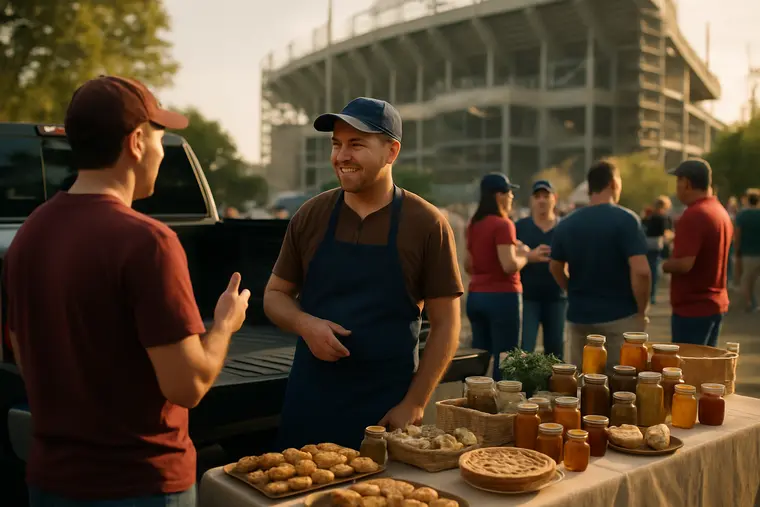
Why Facilities Become A Civic Debate
Stadiums are part of the cultural picture because they are public gathering places as much as sports venues. The research around high school football points to continued attention on facility spending, stadium size, and the money communities devote to game-day infrastructure. The specific 2025 stadium example supplied in the research is outside Texas, so it should not be treated as Texas-specific data without district records.
Still, the larger issue applies naturally to Texas towns: football facilities can become symbols of ambition, pride, and disagreement. One family may see a stadium as a needed home for students and community events. Another may ask whether athletic spending is balanced with academic needs. Both responses can come from people who love the same school.
The debate is often sharper because the stadium is so visible. A new or upgraded facility is not tucked away in a budget document. It stands at the edge of town, lit up on Friday, carrying the hopes and arguments of the community at once.
Game-Day Planning For Families
For 2026 fans, the practical side still matters. A good Friday night often starts before anyone reaches the bleachers. Families should check kickoff time, parking plans, district policies, and weather before leaving home. Older relatives may need easier access to seating. Younger kids may need a plan for long lines or late finishes.
- Arrive early for rivalry games and homecoming crowds.
- Check school or district channels for venue rules before bringing bags or outside items.
- Plan for heat early in the season and cold fronts later in the year.
- Support student groups beyond the varsity roster, including band, cheer, trainers, and campus media.
Those small choices keep the night centered on what it should be: a community gathering built around young athletes and local pride.
The 2026 Question For Texas High School Football
The central question for Texas High School Football in 2026 is not whether the sport still matters. It plainly does. The better question is how communities can keep the best parts of the tradition while answering the pressure points around enrollment, safety, spending, and student well-being.
The answer will not be the same in every town. A fast-growing suburb, a rural district, and a long-established city program may face different challenges. What they share is the Friday night pull: the belief that showing up still says something about who belongs, who is supported, and what the school means beyond the classroom.
The strongest football communities will be the ones that treat tradition as a responsibility, not just a memory. They will cheer loudly, plan carefully, ask fair questions, and remember that every uniform belongs to a student. That balance is where the culture can hold its shape in 2026.