Texas entered the 2026 season with a clear objective under Steve Sarkisian: eliminate the self-inflicted mistakes that had repeatedly made games harder than they needed to be. Through the first two games, the Longhorns appeared to be moving in that direction. Then came the 30-6 victory over UTSA on Sept. 19, when Texas committed eight penalties for 88 yards at Darrell K Royal-Texas Memorial Stadium.
The result itself was never in serious doubt. Texas improved to 3-0, held UTSA to 142 yards of total offense, limited the Roadrunners to one successful third-down conversion in 11 attempts and kept them out of the end zone. Rasheem Biles also intercepted Owen McCown on the opening play from scrimmage, setting the tone for another dominant defensive performance.
But the penalties created a different problem.
Texas is now preparing for its first SEC road game of the season against No. 14/13 Tennessee at Neyland Stadium on Sept. 26. The Volunteers are also 3-0, and the game is scheduled for 11 a.m. CT on ABC.
Against UTSA, Texas had enough talent and defensive control to absorb 88 penalty yards. Against Tennessee, those same mistakes could change field position, extend drives and turn manageable situations into scoring opportunities.
Texas’ Discipline Had Actually Improved
The UTSA game stands out because Texas had been considerably cleaner during the first two weeks.
The Longhorns had committed only six penalties for 47 yards across their victories over Texas State and Ohio State. Against Ohio State, Texas was flagged just twice while completing a dramatic 24-23 comeback against the nation’s No. 1 team at the time.
That early discipline mattered because Texas was playing games in which individual possessions carried enormous weight. The Longhorns could not afford to repeatedly give opponents free yardage or erase their own field position.
The UTSA performance represented a clear step backward.
Texas’ official box score shows eight penalties for 88 yards, while UTSA was penalized 12 times for 115 yards. Texas still produced 400 total yards, 27 first downs and 228 rushing yards, but the penalties added unnecessary friction to a game that should have been much cleaner.
That is why Sarkisian’s response is more significant than the final score.
After the game, Sarkisian acknowledged that Texas had not played cleanly enough. He said the team had been good in the penalty area previously but needed to examine why the mistakes occurred.
For a team now carrying the No. 1 ranking, that distinction matters. Texas does not need to turn every mistake into a crisis, but it does need to identify which mistakes are correctable before SEC competition begins.
The Penalties Were Not All Harmless
The 88-yard total is significant, but the individual penalties tell a more useful story.
Some flags can be absorbed without changing the game. Others alter an entire possession.
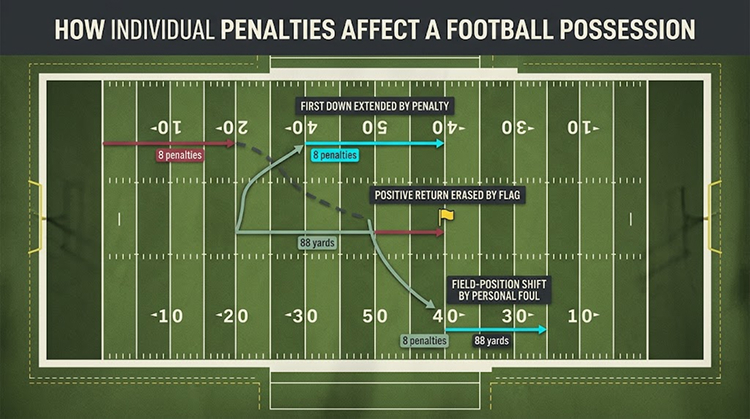
One of the first penalties against Texas came immediately after Biles intercepted McCown on the opening snap. The Longhorns were flagged after too many players left the bench to celebrate the turnover. Texas still scored a touchdown on the possession, so the mistake did not ultimately prevent points. But it illustrated exactly the type of unnecessary error Sarkisian wants removed.
Another penalty came when Texas was in position to force UTSA into a difficult third-down situation. A horse-collar tackle instead gave the Roadrunners a first down and helped extend the drive. UTSA eventually settled for a field goal.
Those are the penalties that become more important against a ranked SEC opponent.
Tennessee will have the speed and offensive talent to capitalize on extra opportunities. The Volunteers enter the matchup with quarterback Faizon Brandon, running back DeSean Bishop and wide receiver Mike Matthews among their leading statistical contributors. Tennessee’s official game center lists Brandon with 552 passing yards, Bishop with 286 rushing yards and Matthews with 189 receiving yards entering the matchup.
Giving that offense additional possessions or easier down-and-distance situations is a very different proposition from doing it against UTSA.
Special Teams Cannot Become A Hidden Problem
Texas’ penalty issue also extended beyond the offense and defense.
One of the more damaging sequences involved a long Ryan Niblett punt return that was erased by an illegal-block penalty. Instead of gaining valuable field position, Texas lost the benefit of the return and later failed to convert on fourth down. Other penalties involving special teams also helped UTSA gain favorable field position.
That matters because special teams plays can quietly determine the shape of an SEC game.
A 15-yard penalty on a kickoff, punt return or coverage unit can effectively erase several plays of field-position advantage. Unlike an offensive penalty that may simply move the line of scrimmage backward, special-teams mistakes can immediately change where the opponent starts its next possession.
Against Tennessee, that could be particularly relevant at Neyland Stadium.
The game is Texas’ first SEC road contest of the season, and Tennessee’s home environment will already create communication and concentration challenges. The official Texas schedule confirms that the Longhorns will play at Neyland at 11 a.m. CT on Saturday, Sept. 26.
That makes clean special teams execution even more valuable.
Texas’ Defense Has Been Good Enough To Absorb Mistakes
There is a reason the penalty problem did not become the headline of Texas’ season after the UTSA game: the defense has been exceptional.
The Longhorns held UTSA to 142 total yards, including 72 rushing and 70 passing. The Roadrunners converted only 1-of-11 third downs and scored no touchdowns.
That defensive margin gave Texas room to make mistakes.
Biles’ interception on the first play immediately created an opportunity. The defensive front continued to pressure McCown, while Texas consistently forced UTSA into difficult down-and-distance situations. The Roadrunners eventually finished with only nine first downs.
For more context on how the defense has developed into one of Texas’ biggest strengths, Texas football coverage and game information provides the team’s official statistics and weekly updates.
But relying on the defense to erase offensive and special-teams mistakes is a dangerous long-term strategy.
Texas may be capable of winning that way. It is much harder to sustain it against teams with the personnel to punish every extra opportunity.
Tennessee Will Make Field Position More Important
The matchup with Tennessee changes the penalty equation because Texas will be playing an opponent capable of creating explosive plays.
The Volunteers are 3-0 and ranked No. 14/13 entering the game. Their home opener in SEC play will also take place in front of a Neyland Stadium crowd, with the official capacity listed at more than 100,000.
Texas will therefore have to manage two different challenges at the same time.
First, the Longhorns must communicate effectively in a difficult road environment. Second, they cannot give Tennessee additional field position through avoidable penalties.
That combination puts particular pressure on pre-snap discipline.
False starts, illegal formations, substitution issues and unnecessary personal fouls can become magnified in a loud stadium. A team that struggles to communicate can create its own problems before the ball is even snapped.
Texas has already demonstrated that it can recover from adversity. The Ohio State comeback proved that. But the objective against Tennessee should be to avoid creating another situation where a comeback is necessary.
The No. 1 Ranking Raises The Standard
Texas’ ranking also changes how the penalty problem should be viewed.
After defeating Ohio State 24-23 on Sept. 12, Texas moved into the No. 1 position. The Longhorns then followed that victory with a 30-6 win over UTSA.
Being No. 1 does not mean Texas has to play perfectly. It does mean opponents have greater incentive to capitalize when the Longhorns make mistakes.
A penalty that might have been insignificant against Texas State or UTSA could become the difference between a punt and a scoring drive against Tennessee.
That is particularly relevant because Texas’ offense was not operating at its most efficient level against UTSA. Arch Manning completed 16 of 32 passes for 164 yards and two touchdowns according to the official game statistics, while Texas generated most of its production on the ground with 228 rushing yards.
If the passing game is still finding its rhythm in Knoxville, Texas cannot afford to compound that challenge with penalties.
Sarkisian Has Already Shown He Can Correct Problems
There is another reason the UTSA penalties should be treated as a warning rather than a defining characteristic.
Texas has already shown this season that the coaching staff can identify problems and get a response from the roster.
The Longhorns entered the season with questions about discipline and ball security. After the opening weeks, their penalty numbers had improved significantly compared with 2025. One recent analysis noted that Texas had committed 108 penalties for 906 yards in 2025, while the team entered the UTSA game having committed only six penalties across its first two games of 2026.
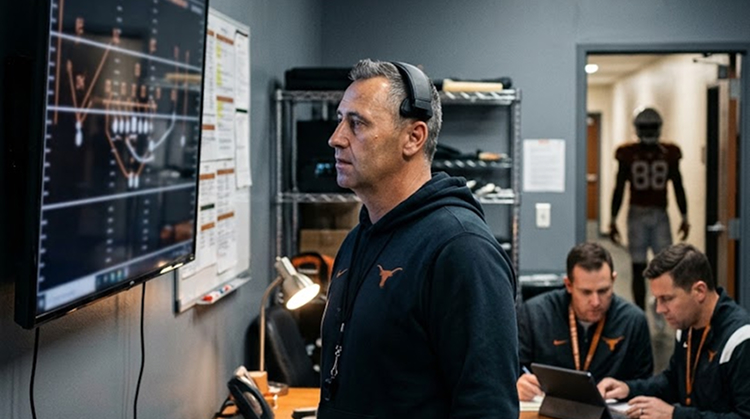
That makes the UTSA performance more useful as a data point than as evidence of a permanent regression.
Sarkisian has a full week to address the specific mistakes.
The goal should not simply be to tell players to “play cleaner.” The more valuable approach is to identify why each penalty happened, determine whether it came from technique, communication, emotion or decision-making, and then make sure the same situation is addressed during practice.
That process becomes particularly important for a team preparing for a hostile road environment.
Texas Cannot Give Tennessee Free Possessions
The most important number from the UTSA game is not actually 88.
It is the number of opportunities those 88 yards created.
Texas can survive losing 10 or 15 yards on a penalty when the defense immediately forces a punt. It becomes much more damaging when a penalty turns third-and-long into a first down, erases a return, extends a scoring drive or moves an opponent from poor field position into comfortable territory.
That is the distinction Texas must carry into Tennessee.
The Longhorns already have a defense capable of limiting opponents. They have a running game that produced 228 yards against UTSA. They have Arch Manning, Cam Coleman and a group of offensive weapons capable of producing explosive plays.
What they cannot afford is to repeatedly make Tennessee earn the yardage Texas gives away.
For the latest official matchup details, Texas-Tennessee game information confirms the Sept. 26 kickoff at Neyland Stadium, with the game scheduled for 11 a.m. CT on ABC.
The Tennessee Game Will Show Whether The UTSA Penalties Were A Blip
Texas does not need to erase every penalty from its game.
Every football team gets flagged. Some penalties are unavoidable, particularly in a physical game involving two talented rosters.
The issue is whether Texas can eliminate the preventable ones.
Eight penalties for 88 yards after six penalties for 47 yards over the first two games represents a clear statistical jump. The fact that several penalties affected field position or erased positive plays makes the number more meaningful.
Tennessee now provides the appropriate test.
The Volunteers are undefeated, ranked nationally and playing at Neyland Stadium. Texas will be entering its first SEC road game as the No. 1 team in the country. That combination leaves very little room for the Longhorns to repeatedly give away yardage.
If Texas returns to the discipline it showed against Ohio State, the UTSA game can remain an isolated setback.
If the penalties continue, they could become one of the first real weaknesses Tennessee is capable of exploiting.
That makes the 88 penalty yards more than a statistic from a 30-6 win. They are an early warning about the level of precision Texas will need once the schedule stops giving the Longhorns room for mistakes.
A useful starting point for the broader Texas football season outlook is the official Texas Athletics schedule, which tracks the Longhorns’ results and upcoming SEC games. Texas 2026 football schedule