
TCU Stadium Upgrades arrived before the Horned Frogs’ 2026 home opener, so Fort Worth fans did not have to wait deep into the schedule to see what changed at Amon G. Carter Stadium. By the time TCU hosted Grambling State at 7 p.m. on September 12, 2026, the major projects were no longer plans on a facilities calendar. They were part of the game-night setting.
The work centered on three visible stadium pieces: new full-spectrum LED lighting, a larger south end-zone video board, and a rebuilt natural grass playing surface. TCU said the trio was completed before the 2026 home opener, with the new board, lighting and field ready for the first home crowd of the season TCU announced.
That timing matters. Stadium work can feel abstract until fans walk through the gates, look toward the end zone, hear the band, and watch the first touchdown sequence play out under new lights. For a 2026 season that began with fresh infrastructure, the upgrades changed how TCU presented football at home from the opening date.
How TCU Stadium Upgrades Changed The Home Opener
Why TCU Stadium Upgrades Were Ready By Kickoff
The clearest fan-facing point is that the major projects were complete before the September 12 home opener. That avoided the uneven feel some venues have when construction or installation work lingers into the first month of a season. For families, students, alumni and visiting fans, the first look at Amon G. Carter Stadium in 2026 came with the new pieces already in service.
The LED lighting system was installed during summer 2026 and had been tested in the weeks leading into the season. Its purpose was not limited to brighter field lighting. The system was designed to be programmable, with the ability to sync with music and game-day moments such as touchdowns. In a college stadium, that changes the pace between plays, after scores, and during pregame or halftime windows.
TCU also replaced the previous south end-zone video board with a full-framed board in the same location. The new board is approximately 60% larger and was built to provide enhanced clarity, live stats, replays and entertainment. For fans sitting far from the south end zone, that matters during reviews, scoring plays and drives where down-and-distance context can get lost in crowd noise.
A Better Field, Not Just A Better Show
The playing surface carried its own importance. TCU’s natural grass field was fully rebuilt before the 2026 home schedule, with the old turf removed, the subgrade replaced, and all-natural grass laid down TCU Athletics update.
Fans often notice boards and lighting first, but the field is the piece players deal with on every snap. A rebuilt natural grass surface affects how the stadium looks on television, how it presents in person, and how the home venue feels as a football setting. The field project also gave the 2026 home opener a cleaner visual reset, paired with the lighting and video upgrades around it.
What Fans Saw Inside Amon G. Carter Stadium
The South End-Zone Board Became A Bigger Reference Point
The new south end-zone board changed one of the stadium’s main visual anchors. Because it replaced the former board in the same location, fans did not have to learn a new sightline. They saw a larger version of a familiar focal point.
That is a practical improvement for a college crowd. Live stats and replays help fans follow game flow without relying only on phone updates or public-address announcements. The board also supports entertainment elements between series, during stoppages and around pregame programming. The best way to read TCU Stadium Upgrades is not as one big change, but as several pieces working together during the same three-hour stadium window.
The lighting gives TCU more control over mood and timing. The board gives the crowd more information and presentation space. The new field gives the entire event a fresh base. None of those pieces decides a game, but each affects how a home date feels from the stands.
Food, Messages And Field-Level Moments Added Layers
The 2026 fan changes were not limited to construction. New pregame food options included a soft Bavarian pretzel stick, Southwest Burger, hot chicken tender sandwich, chili-cheese nachos, the “Sloppy Yes” sandwich, and “Frost Buddy” beverages. For fans who arrive early, those additions widened the pregame choices inside the stadium setting.
TCU also introduced the “Four Buck Blitz” pregame promotion, with $4 special drinks available from gates open until 30 minutes before kickoff. That detail matters because it ties the promotion to arrival timing rather than the full game window.
Several experience-based options were also part of the 2026 setup. Fans could purchase videoboard messages for display on the new south end-zone board. Other offerings included “Front Row to the Team Entrance” access and the chance to “Shadow the In-Game Host for a Quarter.” Those features give fans a way to connect with the event beyond a seat location.
Game-Day Details That Matter For Fort Worth Crowds
The Band And Kids Programming Shaped Pregame Timing
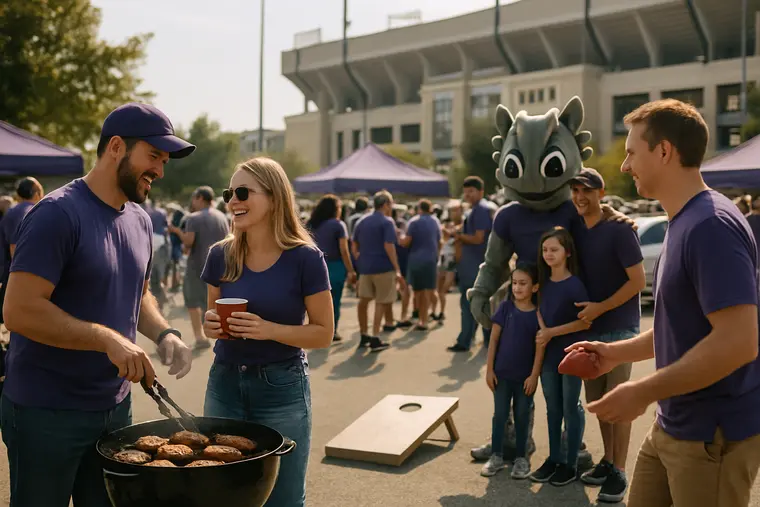
Pregame routines carry weight at TCU because Amon G. Carter Stadium sits inside a campus setting where walking routes, arrival windows and traditions shape the day. In fall 2026, the Horned Frog Marching Band was set to be the largest in school history. The band also added color-changing lighting effects during pregame and halftime.
The band march begins one hour prior to kickoff from Frog Fountain to the stadium. That gives fans a clear planning marker. Anyone wanting the full campus-to-stadium buildup needs to be in position before that one-hour window, not just near kickoff.
The “Bleacher Creatures” program also gave families a specific timeline. Children ages 12 and under could participate in pregame activities approximately 18 minutes before kickoff, with the meeting point in the southeast corner of the stadium 30 minutes before kickoff. Participants run on the field during pregame and receive a free jersey.
- Fans focused on the band march needed to plan around the one-hour-before-kickoff window.
- Families using “Bleacher Creatures” needed to reach the southeast corner 30 minutes before kickoff.
- Fans using pregame concessions promotions needed to account for the cutoff 30 minutes before kickoff.
Those details are small only if fans arrive late. For families bringing young children, alumni meeting groups, or students trying to catch pregame traditions, the timing shapes the day. Stadium upgrades are not just hardware; they work best when the fan schedule around them is clear.
A Texas Venue Competing For Attention
North Texas is crowded with football options every fall. High school stadiums fill on Fridays, college venues compete on Saturdays, and the Dallas-Fort Worth sports calendar rarely slows down. In that setting, Amon G. Carter Stadium benefits from changes that make the in-person product sharper and easier to follow.
For readers tracking the project before the opener, our earlier Amon G. Carter renovations preview covered the stadium work as it approached completion. As of October 11, 2026, the conversation has shifted from what was coming to how those changes have fit into the home-season routine.
There are no verified attendance, revenue or fan-satisfaction figures in the provided research, so those claims should wait. What can be said is narrower and more useful: TCU delivered the listed stadium pieces before the opener, then layered in food, pregame and participation features for the 2026 season.
What TCU Stadium Upgrades Mean For The 2026 Home Season
TCU Stadium Upgrades were not a single cosmetic touch. They changed the lighting, the central video presentation, the playing surface and several fan-facing routines around home games. That combination matters because college football game days are built from repeated moments: the walk in, the first look at the field, the band, the team entrance, the replay after a close play, and the way the venue reacts after a touchdown.
For TCU, the timing was the strongest part of the project. Completing the main upgrades before the September 12, 2026, home opener allowed the Horned Frogs to start the home schedule with the new setup fully visible. Fans did not need to separate the early season from the finished product.
For Fort Worth football fans, the 2026 version of Amon G. Carter Stadium has been easier to define: brighter, larger on the south end-zone display, fresh on the field, and more structured around pregame participation. That is the practical value of the project as the season continues past October 11, 2026.