

Texas is back inside the AP Top 10, but the Longhorns’ 31–3 victory over Mississippi State on October 31 did more than improve their record. It highlighted just how different this team can look from one side of the ball to the other.
Texas moved to 6–2 overall and 3–2 in SEC play after dominating Mississippi State at Darrell K Royal–Texas Memorial Stadium. The Longhorns held the Bulldogs to 187 total yards, produced seven sacks, scored a defensive touchdown and watched Arch Manning throw three touchdown passes without an interception. The result was convincing enough to move Texas from No. 11 to No. 10 in the AP Top 25.
But the scoreboard did not erase the problems that have followed Texas throughout the season.
The Longhorns rushed for only 60 net yards on 32 attempts, allowed five sacks, and saw five important players leave the game with injuries. Now the margin for error becomes smaller. Texas travels to face No. 19 Missouri on November 7 before visiting LSU, hosting Arkansas and traveling to Texas A&M.
The Mississippi State victory was exactly what Steve Sarkisian needed from his team. The question is whether it fixed enough of the underlying issues to make Texas a legitimate College Football Playoff contender.
Texas’ Defense Delivered Another Statement Performance
The biggest reason Texas has climbed back into the national conversation is its defense.
Mississippi State finished with only 187 total yards, including 68 net rushing yards and 119 net passing yards. The Bulldogs averaged just 2.8 yards per play and converted six of 18 third-down attempts. Texas also recorded seven sacks for 45 yards in losses.
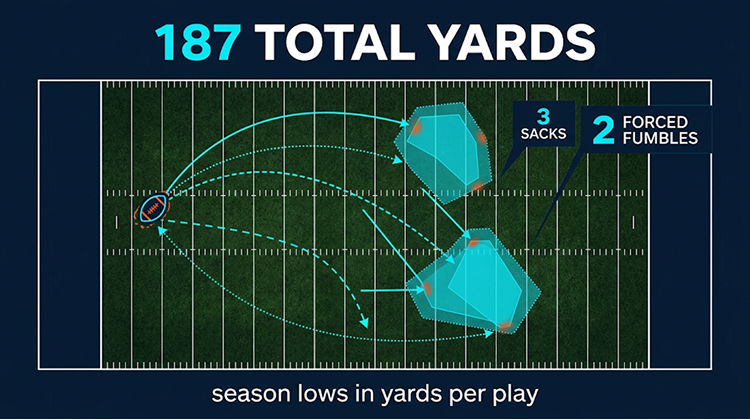
That performance continued an impressive trend.
Texas has now held all five of its SEC opponents to season lows in yards per play, according to the university’s official game report. The Mississippi State game also gave Steve Sarkisian his 100th career victory as a head coach.
The most disruptive player was linebacker Rasheem Biles.
Biles produced a career-best three sacks, four tackles for loss, eight total tackles and two forced fumbles. His second-quarter strip sack of Mississippi State quarterback AJ Swann created the game’s most important defensive sequence. Maraad Watson recovered the loose ball and returned it 61 yards for a touchdown, extending Texas’ lead to 17–0 before halftime.
That play represented exactly what Texas wants its defense to become. The Longhorns did not simply force Mississippi State to punt. They created pressure, forced a mistake and immediately converted that mistake into points.
The performance was even more notable because Texas remained without star edge rusher Colin Simmons.
That means the defense has demonstrated an ability to create disruption through multiple players rather than depending entirely on one pass rusher. Biles’ emergence gives defensive coordinator Will Muschamp another player offenses must account for as the schedule becomes more difficult.
Arch Manning Finally Produced the Efficient Performance Texas Needed
Arch Manning also provided Texas with a significant positive.
The sophomore quarterback completed 17 of 21 passes for 220 yards and three touchdowns, finishing without an interception. He connected with Cam Coleman for a 14-yard touchdown in the first quarter, found Raleek Brown for a four-yard score in the third, and hit Emmett Mosley V for a 42-yard touchdown in the fourth.
The efficiency was important because Texas did not need Manning to manufacture every scoring opportunity.
The Longhorns finished with 280 total yards and averaged 5.3 yards per play. Manning’s 220 passing yards accounted for most of the offense’s production, while the passing game generated several explosive completions.
Mosley was particularly productive, catching four passes for 98 yards and a touchdown. Coleman added two catches for 61 yards and a touchdown, including the 47-yard reception that helped establish Texas’ early offensive rhythm.
Manning’s performance also came at an important point in the season.
Texas had entered the Mississippi State game after consecutive losses to Oklahoma and Florida, followed by a victory over Ole Miss. The Longhorns needed another convincing result to prevent the season from becoming defined by inconsistency.
Against Mississippi State, Manning avoided the interceptions that had hurt him in previous games and operated an offense that consistently produced explosive passing plays.
That is encouraging.
But the Missouri game will provide a substantially different test.
The Running Game Is Still Texas’ Biggest Offensive Concern
The most obvious issue from the Mississippi State game was Texas’ inability to establish the run.
The Longhorns finished with just 60 net rushing yards on 32 attempts, averaging 1.9 yards per carry. Arch Manning officially led the team with 10 net rushing yards, while Raleek Brown finished with 30 yards on eight attempts and Michael Terry III added 16 yards on four carries.
That production is difficult to sustain against the best teams in the SEC.
Texas did not need a dominant rushing performance against Mississippi State because Manning threw three touchdowns and the defense controlled the game. But Missouri presents a different challenge. The Tigers entered the week ranked No. 19 nationally and have built one of the stronger defensive fronts in the conference.
Current statistical comparisons show the concern clearly. Texas entered the Missouri matchup averaging 134.3 rushing yards per game, ranking 102nd nationally. Missouri’s defense was allowing just 98.4 rushing yards per game, good for 16th in the FBS.
That creates a difficult matchup for Texas.
If the Longhorns cannot run effectively, Missouri can devote more attention to Manning and the passing game. Defensive coordinators have fewer reasons to respect play-action when a team consistently struggles to gain yards on the ground.
Texas also allowed five sacks against Mississippi State. Although Manning’s passing numbers were efficient, the protection issues cannot be ignored.
The Longhorns therefore have two connected problems to solve: improve the rushing attack and keep Manning cleaner in the pocket.
Texas’ Injury List Could Matter More Than the Ranking
The other major concern coming out of the Mississippi State game is health.
Five players did not finish the game: wide receivers Cam Coleman and Ryan Wingo, running back Hollywood Smothers, defensive back Graceson Littleton and defensive back Kade Phillips. Sarkisian said immediately after the game that the severity of those injuries was not yet known.
That uncertainty is particularly significant because Texas already has important players unavailable.
Starting offensive tackle Trevor Goosby is out for the season, while Simmons and Richard Wesley have also been dealing with injuries. Texas cannot afford to lose several more starters for an extended period as the schedule moves into November.
Sarkisian acknowledged the importance of getting players healthy after the Mississippi State game. The next four games include road trips to Missouri and LSU, a home game against Arkansas and another road matchup at Texas A&M. Three of those four games are away from Austin.
That makes recovery almost as important as preparation.
Texas has enough depth to survive individual injuries, but losing multiple offensive skill players simultaneously could change how the offense operates. Coleman and Wingo provide different receiving options, while Smothers has been part of the running-back rotation.
If several of those players cannot play against Missouri, Texas may have to rely more heavily on players who have had smaller roles so far.
That could become one of the defining storylines of the next month.
Missouri Is a Much Bigger Test Than Mississippi State
Texas’ reward for moving into the AP Top 10 is a road game against another ranked SEC opponent.
Missouri is 6–2 and climbed four spots to No. 19 in the latest AP poll after its own convincing victory. The Tigers now have a chance to knock Texas back down the rankings by winning at home on November 7.
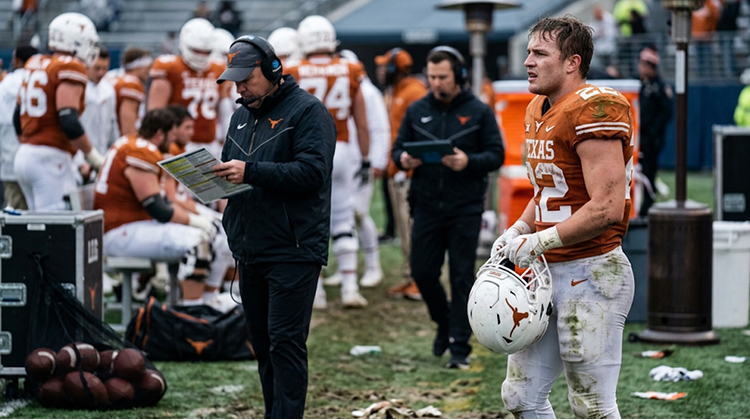
The statistical contrast makes this matchup particularly interesting.
Texas entered the game with the nation’s No. 9 total defense, allowing 273.1 yards per game, while Missouri was averaging 425.3 yards offensively. The Tigers were also averaging 168.1 rushing yards per game and 31.5 points.
That is a considerably different offensive challenge from what Texas just faced.
Missouri’s offense can put pressure on the Longhorns’ defense through both the passing and running games. Texas will need another strong performance from its front seven, particularly if Simmons remains unavailable.
The Tigers also have an advantage in turnover margin. Missouri entered the week at +8, while Texas was at -3, a major statistical difference heading into a game between two 6–2 teams.
That number deserves attention.
Texas has shown that its defense can generate turnovers, but the offense cannot continue giving opponents extra possessions while expecting the defense to erase every mistake. Against a ranked Missouri team on the road, one or two turnovers could completely alter the game.
The College Football Playoff Margin Is Becoming Clearer
Texas’ playoff situation improved with the Mississippi State win, but the Longhorns remain in a crowded SEC race.
One current projection model gives Texas a 52% chance of reaching the 12-team College Football Playoff and identifies Missouri as the biggest remaining game on the regular-season schedule. The model projects a significant swing in Texas’ playoff probability depending on the outcome in Columbia.
Another simulation-based model puts Texas’ playoff probability higher, illustrating just how much the outcome depends on assumptions about the remaining schedule and the broader SEC race.
The exact percentage matters less than the larger point: Texas cannot afford to treat the final four games as interchangeable.
At 6–2, the Longhorns still have a realistic path to 10 wins. But they also have enough difficult games remaining that another loss could place enormous pressure on the final stretch.
A victory at Missouri would move Texas to 7–2 and strengthen its position before the LSU trip.
A loss would drop the Longhorns to 6–3 and make the remaining games considerably more consequential.
The national ranking may have changed overnight, but the underlying stakes have not.
No. 10 Texas Still Has to Prove It Can Win Complete Games
The 31–3 victory was unquestionably a good result.
Texas dominated Mississippi State defensively, Manning played efficiently, the passing game produced explosive plays, and Biles helped create a defensive touchdown. The Longhorns also avoided the type of close finish that had characterized some earlier games.
But the most important question heading into Missouri is whether Texas can reproduce that performance against a better opponent.
The running game needs improvement.
The offensive line must provide better protection.
The Longhorns need to determine which injured players can return.
And the defense must maintain its current level without Simmons if he remains unavailable.
The good news is that Texas has demonstrated it can win in multiple ways. The Longhorns beat Ole Miss in a high-scoring contest, then shut down Mississippi State in a completely different type of game. That versatility is valuable.
The next step is consistency.
Texas is now No. 10 in the country, but the ranking is a reflection of what the Longhorns have accomplished—not a guarantee of what comes next. Missouri is also 6–2, also ranked, and playing at home.
For Sarkisian, the Mississippi State win provided momentum. For the Longhorns, Missouri will provide the evidence.
If Texas can run the football better, protect Manning, survive the injury situation and maintain the defensive standard established over the last two games, the Longhorns could enter the final month of the season as a genuine playoff threat.
If those weaknesses remain, the No. 10 ranking could prove to be a temporary stop rather than the beginning of a November climb.