

Texas football technology has moved from a coaching luxury to a Friday-night factor, and the shift is no longer theoretical. Since the UIL approved limited in-game video and data use on May 1, 2024, Texas high school programs have had new ways to study formations, correct mistakes and manage player safety during live competition.
That does not mean every program is suddenly operating like a college staff. The UIL limits still matter. The 2024 rule allowed video and data tools in coaching booths and locker rooms during games and at halftime, while keeping them off the sidelines, according to the UIL video and data rule. That boundary is the right starting point for understanding the change: Texas did not throw open the door to every device in every part of the stadium. It let coaches use better information in controlled spaces.
The result has been a quieter, more practical change than the usual hype around sports tech. This is about a defensive coordinator seeing a missed fit before halftime. It is about an offensive staff confirming whether a coverage tendency is real or just a first-quarter hunch. It is about athletic directors weighing the value of systems that can help coaches, while still knowing that school budgets are not equal across Texas.
Texas Football Technology Is Now A Coaching Issue
Where Texas Football Technology Fits On Friday Nights
The best case for Texas football technology is not that it replaces coaching. It is that it sharpens coaching during the short windows that already decide games. Texas high school football has always rewarded staffs that can adjust quickly. The difference now is that some of those adjustments can be backed by video clips, data tags and tendency reports rather than memory alone.
Systems such as ANSRS, launched in 2024, gave programs a way to log plays in real time, review video faster and sort tendencies during games. The research available from 2024 and 2025 showed adoption by more than 100 customers, including about 70 Texas high schools. That is not universal use, but it is enough to show that this is not a small experiment limited to one region or one classification.
The most direct football value sits in the middle of a game. Coaches can study down-and-distance calls, formation choices, run-pass rates and alignment problems before the final whistle. That matters because the old model often pushed the most useful film lesson into Saturday morning. By then, the result was already final.
There is a difference between having data and using it well. A staff still has to decide which trend matters. A team that chases every number can become slow and cluttered. A good staff filters the information: one protection issue, one coverage tell, one missed run fit, one route concept that is creating space. The technology helps most when it narrows the message rather than adding noise.
Faster Adjustments Change The Coaching Conversation
Halftime Is No Longer The First Real Film Session
For decades, halftime adjustments were built from coaches’ notes, spotter information and what players could describe after each series. Those tools still matter. Players know what they feel on the field. Assistants still see details from the box. But video and data can settle arguments faster.
If a linebacker is over-running counter, the staff can show it. If a corner is opening his hips too early against a certain split, the evidence is not abstract. If an offense keeps getting the same front on second-and-medium, the call sheet can be trimmed with more confidence.
That is where the competitive effect becomes real. Technology does not make a slow team fast or a thin roster deep. It can, however, reduce the number of wasted possessions. In Texas high school football, especially in playoff games where margins tighten, two corrected mistakes can change the shape of the second half.
The UIL’s 2025 approval of one-way wearable devices for play calls added another layer. Under the research provided, coaches in the press box could send calls to players through approved wearable devices such as watches, wristbands or belt packs. Sideline coaches could not initiate those calls, and voice transmission was not allowed. That distinction matters because it keeps the system closer to controlled signaling than open coach-to-player radio.
Information Still Has To Reach Players Clearly
A common mistake in discussing Texas football technology is assuming faster communication automatically creates better football. It does not. A call sent quickly still has to be understood by a teenager in a loud stadium, under pressure, with the play clock moving.
That places new responsibility on practice planning. Teams using wearables or faster film tools have to rehearse the full process: who sends the call, how the player receives it, what happens if the device fails and how the sideline communicates the same concept without panic. The most organized staffs will gain more than the most gadget-heavy staffs.
That is an old football truth in a new format. The best programs turn tools into routines. The weaker ones collect tools without changing habits.
Safety Data Belongs In The Same Discussion
Heat Policy Is Technology Too
Gameplay is not only about play calls. A safer practice week can improve Friday execution because players arrive better prepared and less worn down. On August 1, 2026, UIL’s Wet Bulb Globe Temperature requirements began for public schools, including football programs. WBGT readings are used to judge outdoor practice conditions and guide decisions tied to heat zones, equipment, rest and hydration, as reported in coverage of Texas heat rules.
That change belongs in the same conversation as tablets and wearables. Heat management is a performance issue, a safety issue and a staffing issue. Coaches have to think about practice tempo, drill length, gear and recovery with more structure. Families care because August football in Texas has always carried heat concerns. Administrators care because policy now demands specific procedures rather than informal judgment.
There is also a game-planning effect. If practice time is modified because of heat readings, coaches may need to choose fewer install periods and teach with greater precision. That could push staffs to use video more efficiently before and after practice. For readers following how heat policy affects Friday logistics, our related analysis on heat-rule planning covers how those decisions stretch beyond the practice field.
Guardian Caps Add Another Layer
The research also shows that UIL permitted guardian caps for games beginning in the 2025 season, with caps required to match the main helmet shell in color. That rule fits a broader pattern: Texas high school football is adding technology not only to call plays but also to reduce risk where possible.
No single piece of equipment can remove the physical nature of football. Coaches, trainers and families know that. Still, the willingness to approve protective equipment for games shows a more open attitude toward tools that were once largely associated with practice fields.
The Access Gap Cannot Be Ignored
Better Tools Can Widen Existing Advantages
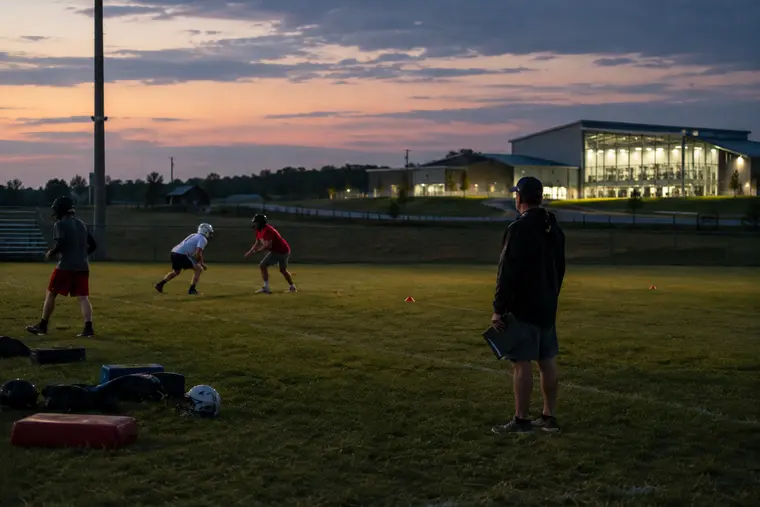
The hardest question around Texas football technology is not whether it works. It is who can afford it, staff it and use it well. The research notes ongoing concern from coaches in Title I and smaller districts that wealthier programs could pull farther ahead with analytics systems, wearable communication and advanced video setups.
That concern is legitimate. Texas high school football already varies widely by district resources, booster support, facilities, staffing and travel demands. If one program can purchase a full data system, assign staff to tag plays and train coaches throughout the offseason, while another program is sharing equipment and stretching a small staff, the gap can show up on Friday nights.
This is where UIL limits may help, but they do not solve everything. Keeping video and data tools out of the sideline area prevents a full free-for-all. It does not make systems equally affordable. It does not create extra staff members for smaller programs. It does not erase the fundraising gap between districts.
- Large programs may have more staff capacity to manage data during games.
- Smaller programs may need simpler systems that do not overload coaches.
- District policies will shape how quickly tools become normal across classifications.
- Training may matter as much as purchasing power.
The practical answer is not to reject technology. It is to keep asking whether the rules protect competitive balance while allowing reasonable innovation. Texas high school football has room for better tools, but it should not become a contest of who can buy the most software.
Why Texas Football Technology Now Matters In November 2026
By November 8, 2026, the direction is clear. Texas high school football has already moved into a period where video, data, wearable communication, heat measurement and protective equipment are part of the weekly football conversation. Some changes began in 2024. Others took hold in 2025. The WBGT mandate started on August 1, 2026. None of this is distant or theoretical anymore.
The next test is discipline. Coaches need to decide what information is worth acting on. Athletic directors need to weigh cost against usable value. The UIL needs to keep rules clear enough that schools understand what is allowed in the booth, locker room, press box and on the field. Parents and players need to know that safety tools are being treated as more than public-relations gestures.
Texas football technology is no longer a side topic. It is part of how games are coached, how practices are managed and how programs define preparation. The best use of it will still look like good football: clear teaching, smart adjustments, sound player care and a staff that knows the difference between useful information and clutter.