

Texas may be approaching its most important defensive reinforcement of November at exactly the right time. Edge rusher Colin Simmons remains questionable for Saturday’s November 7 matchup against No. 18 Missouri, but the possibility of his return has become one of the biggest storylines surrounding the Longhorns’ trip to Columbia.
Simmons has missed Texas’ last two games after suffering an ankle injury. However, Thursday’s November 6 availability update brought some encouragement: Simmons has participated in portions of practice, although he remains listed as questionable. The designation means his availability has not been confirmed, and Texas must prepare for the possibility that he will miss another game.
The timing matters. Texas enters the matchup ranked No. 7 in the first College Football Playoff rankings, while Missouri sits at No. 18. Both teams are 6–2, making Saturday’s contest an important opportunity for the Longhorns to strengthen their postseason position.
Simmons’ potential return would give defensive coordinator Will Muschamp another proven pass-rushing threat against a Missouri offense that has been productive throughout the season. More importantly, it could change how the Tigers approach protection, quarterback dropbacks and their offensive game plan.
Texas has managed to remain competitive without its leading edge defender. Getting him back, however, could give the Longhorns a defensive dimension they have been missing during the second half of October.
Colin Simmons’ Production Makes His Possible Return Significant
Simmons has established himself as one of the most disruptive defensive players in college football during the 2026 season.
Through Texas’ first seven games, the official team statistics credited him with 10.5 sacks, 16 tackles for loss and two forced fumbles. He also recorded four games with multiple tackles for loss, demonstrating that his impact has extended beyond individual quarterback pressures.
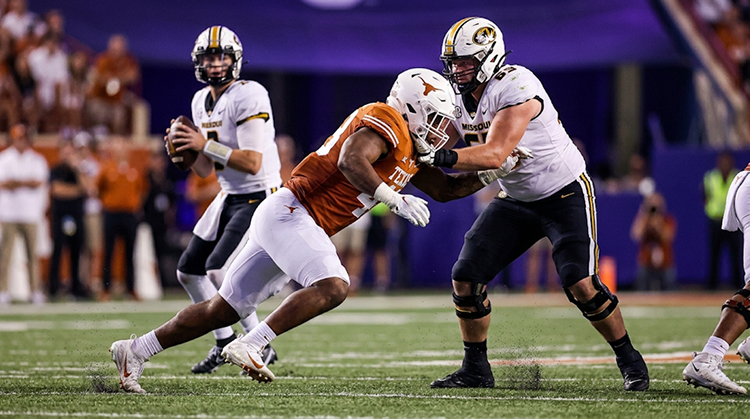
His performance against Tennessee on September 26 remains the clearest example of his ability to change a game. Simmons recorded 5.5 sacks and 5.5 tackles for loss, setting a Texas single-game program record for sacks.
That performance established the type of defensive influence Texas can receive when Simmons is healthy and operating at full speed.
His importance is not limited to the number of sacks he produces. Simmons can force quarterbacks to move away from their preferred throwing locations, disrupt the timing of passing concepts and create opportunities for teammates to finish plays.
When an edge defender consistently wins one-on-one matchups, offensive coordinators must account for him before the snap. That can require additional protection, chip blocks from tight ends or running backs, and adjustments to passing routes.
For Texas, getting that influence back could make the entire defensive front more dangerous.
Texas Has Managed Without Simmons, but the Defensive Structure Changes
The Longhorns have not collapsed defensively during Simmons’ absence.
Texas defeated Mississippi State 31–3 on October 31, holding the Bulldogs to 187 total yards and recording seven sacks. Rasheem Biles delivered one of the game’s biggest performances with three sacks, eight tackles, four tackles for loss and two forced fumbles. His second-quarter strip sack helped set up Maraad Watson’s 61-yard fumble-return touchdown.
That performance demonstrated the depth of Texas’ defensive front.
Biles has become an increasingly important contributor because he can affect the quarterback while also supporting the run defense and coverage responsibilities. Maraad Watson has added interior pressure, while Zina Umeozulu, Hero Kanu and the other defensive linemen provide additional options.
The challenge is that replacing Simmons’ production collectively is different from having him available as an individual matchup problem.
Without Simmons, Texas must distribute more of its pass-rushing responsibilities. Opposing offenses can also adjust their protection schemes without having to devote the same attention to his side of the formation.
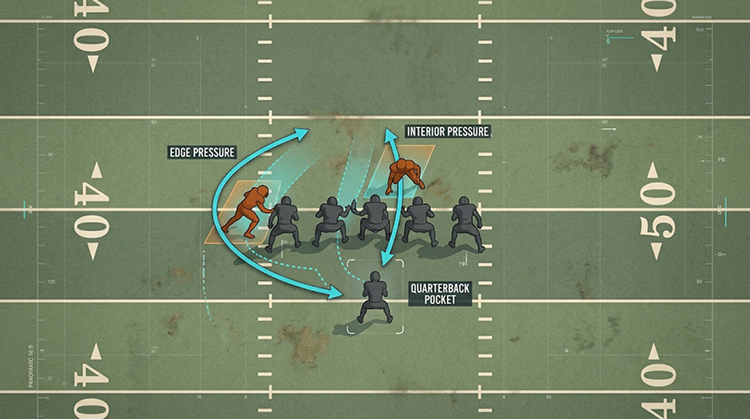
His return would allow Muschamp to use a more flexible defensive rotation. Simmons could attack from the edge while Biles and the interior defenders create pressure from different angles.
That combination would make it harder for Missouri to identify the primary threat before the snap.
Missouri’s Offensive Line Faces a Major Pressure Test
Missouri is not entering Saturday’s game with an offense that can be dismissed as an easy target.
The Tigers have produced 425.3 total yards per game, including 257.1 passing yards and 168.1 rushing yards. Quarterback Austin Simmons has thrown for 1,952 yards, 16 touchdowns and two interceptions through eight games.
Those numbers make Missouri a balanced opponent. Texas cannot focus exclusively on the passing game because running back Jamal Roberts has already surpassed 1,000 rushing yards.
However, Missouri’s offensive protection deserves particular attention.
The Tigers’ official November 5 matchup notes credited their offense with allowing eight sacks through eight games. That statistic creates an interesting matchup against a Texas defense whose leading pass rusher has already recorded 10.5 sacks despite missing recent action.
If Simmons plays, Missouri must decide how much additional attention to give him.
The Tigers could use tight ends and running backs to help protect the edge, adjust the quarterback’s launch point or rely on quicker passing concepts to reduce the time defenders have to reach Austin Simmons.
Each adjustment creates another opportunity for Texas.
Additional protection toward Simmons could leave other defenders with favorable matchups. Faster throws could reduce the number of opportunities for deeper routes, while changes to the quarterback’s positioning could affect Missouri’s ability to attack the entire field.
The Longhorns do not need Simmons to record several sacks to benefit from his presence. Forcing Missouri to alter its protection plan would already represent a meaningful defensive advantage.
Daeden Hopkins Gives Missouri Its Own Pass-Rushing Threat
The matchup is not one-sided.
Missouri’s defensive front has been productive, particularly through edge defender Daeden Hopkins and defensive tackle Donta Simpson.
According to Missouri’s November 5 game notes, PFF credited the Tigers with 133 quarterback pressures through eight games, including 23 sacks, 21 quarterback hits and 89 hurries. Hopkins led the team with 27 pressures and seven sacks. His seven sacks placed him ninth nationally and tied for third in the SEC at the time of the report.
Simpson presents another problem from the interior. Missouri’s official notes cited his 25 quarterback pressures across 143 pass-rush snaps and a 17.5% pressure rate. His ability to generate interior disruption makes him particularly important against an offensive line that has already experienced personnel problems.
Texas allowed five sacks against Mississippi State, even though the Longhorns won by 28 points. That result showed why protecting Arch Manning must remain a priority.
The Missouri defense can create pressure without relying exclusively on Hopkins. Simpson’s interior production gives the Tigers another way to collapse the pocket, potentially forcing Manning to move before his receivers finish their routes.
That makes the matchup between the two defensive fronts especially important. Texas needs its pass rush to affect Austin Simmons, but the Longhorns must also prevent Missouri from creating the same problems for Manning.
Rasheem Biles Could Become Even More Dangerous With Simmons Back
One of the biggest benefits of Simmons returning would be the opportunity to restore a more complete pass-rushing combination.
Biles has already shown that he can become a disruptive player without needing Simmons on the field. His performance against Mississippi State included three sacks, and his production against Ole Miss earlier in the season demonstrated that he can also create turnovers.
The official Texas statistics credited Biles with seven quarterback pressures through the Mississippi State game, placing him among the team’s leading pressure producers. Simmons, despite missing recent action, remained the team’s sack leader with 10.5.
Imagine the different problems that combination could create for Missouri.
If Simmons attacks from the outside, Biles can threaten the quarterback through pressure packages and delayed blitzes. If Missouri shifts protection toward Simmons, Texas can create opportunities for Biles and the interior defensive line.
The goal would be to prevent Austin Simmons from settling into a comfortable passing rhythm.
Texas must still respect Jamal Roberts and Missouri’s rushing attack. Sending extra defenders after the quarterback without maintaining gap discipline could create running lanes for the Tigers. Muschamp therefore needs to balance aggression with defensive responsibility.
Simmons’ return would provide another weapon, but the defensive structure must remain disciplined.
Texas Cannot Depend on One Player to Fix Everything
Even if Simmons is cleared to play, Texas should not immediately treat him as the solution to every defensive problem.
An ankle injury can affect an edge defender’s ability to accelerate, change direction and maintain leverage against offensive tackles. His availability would be encouraging, but the coaching staff must determine how much work he can handle and whether he can perform effectively in game conditions.
A limited role could still be valuable.
Texas could use Simmons in selected pass-rushing situations, particularly on obvious passing downs, while allowing other defensive linemen to handle a larger portion of the early-down workload.
That approach would give the Longhorns an opportunity to benefit from his presence without requiring him to play every defensive snap.
It would also allow Biles, Watson, Umeozulu and the rest of the front to continue contributing.
If Simmons cannot play, Texas has already shown that it can generate pressure through different players. The seven-sack performance against Mississippi State provides evidence that the defensive front can remain productive without its most prominent edge defender.
The difference is that Missouri presents a more balanced offensive challenge, and Texas would benefit from having every available defensive weapon.
The Missouri Game Could Shape Texas’ November Defensive Identity
Saturday’s matchup at Faurot Field carries significant implications for Texas.
The Longhorns are 6–2 and ranked No. 7 in the initial CFP rankings. Missouri is also 6–2 and ranked No. 18. Kickoff is scheduled for 11 a.m. CT on November 7 in Columbia, with ESPN carrying the game.
Texas has more difficult games ahead, including a November 14 road matchup against LSU. The ability to restore Simmons to the defensive rotation would therefore provide a potentially important boost as the schedule becomes more demanding.
But the bigger question is whether Texas can turn its defensive depth into a consistent advantage.
The Longhorns have already demonstrated that Biles and the supporting defensive front can produce sacks and turnovers. Adding Simmons would give Muschamp a chance to combine that production with the most accomplished pass rusher on the roster.
Missouri’s offensive line will have to account for the possibility of Simmons playing. Austin Simmons will need to recognize pressure, make quick decisions and avoid giving Texas opportunities to create negative plays.
For Texas, the ideal outcome is not simply seeing Colin Simmons return to the field. It is seeing the entire defensive front become more difficult to block because opponents can no longer concentrate their protection on one area.
The final availability decision remains uncertain. Thursday’s report still lists Simmons as questionable, and the final SEC report will provide the clearest indication of whether he is available.
If he returns, Texas could receive its biggest defensive reinforcement of November at a crucial point in the season. If he remains sidelined, the Longhorns will need another collective performance from Biles, Watson and the rest of the front.
Either way, the matchup against Missouri will reveal how prepared Texas is to generate pressure against a ranked SEC opponent when its defensive depth is tested.