
North Texas homecoming has a way of turning a football week into something larger than the game on the schedule. In high school halls, it shows up as mums and garters that announce the week before kickoff. On college campuses, it becomes a march, a picnic, a yell practice, a bonfire, and a stadium crowd finding its voice together.
The football matters. So does everything wrapped around it. Families plan around parade times. Alumni come back to town. Students wear school colors before the band ever steps onto the field. For North Texas schools, homecoming works because the ritual belongs to more than the roster.
That is especially clear across Dallas-Fort Worth and Denton, where high school traditions sit close to college ones. Lewisville can build a mum so big it makes national curiosity feel local. UNT can pull thousands into a week of events before the Mean Green run onto the field. DeSoto can set a parade route and ask people to line up in school colors. Each example says the same thing in a different accent: football week gives the community a place to gather.
How North Texas homecoming Starts Before Kickoff
North Texas homecoming Mums Carry The Week
The mum is one of the clearest signs that homecoming week has arrived in Texas. In North Texas, it is not just an accessory. It is a public display of school pride, friendship, family effort, and local creativity. The bigger examples can feel like portable pep rallies, layered with ribbons, keepsakes, colors, and the names that matter to the student wearing them.
Lewisville High School gave that tradition a record-sized stage in October 2023. The school created a Guinness World Record-breaking homecoming mum that measured 37.5 feet long and covered 290 square feet. The project took roughly nine weeks and cost about $800, according to Axios Dallas.
That number is eye-catching, but the deeper story is familiar to Texas football families. A mum that large could not be made by one person at the last minute. It required planning, supplies, helpers, space, and patience. In that sense, the Lewisville project mirrored what homecoming already asks from a community: people giving time to a shared symbol before the lights come on Friday night.
Parades Put The School Colors On The Street
Homecoming parades make the week visible beyond campus. They pull the celebration out of hallways and stadium concourses and onto local streets, where parents, younger students, alumni, teachers, and neighbors can share the same route.
A 2026 example came from DeSoto ISD, which held a homecoming parade on September 23, 2026, at 6:00 p.m. Staging and lineup began at 4:30 p.m., and participants were encouraged to wear school colors along the route. By October 5, 2026, that parade had already passed, but it remains a useful snapshot of how North Texas schools schedule homecoming as a community event rather than only a pregame feature.
For fans, those details matter. A parade time changes dinner plans, parking habits, after-school pickup, and where families decide to stand. In football towns, planning is part of the tradition. The more people who know the route and timing, the easier it is for grandparents, little siblings, and former students to take part without feeling rushed.
What UNT Shows About Campus Homecoming
Mean Green Scream Turned A Week Into A Crowd
College homecoming stretches the same feeling across a wider map. At the University of North Texas, the 2023 Mean Green Scream homecoming week ran from October 23 through October 28 and drew more than 11,000 attendees across its events, according to UNT Student Affairs.
That total matters because it shows how many entry points a homecoming week can offer. Not everyone connects to a campus through the same door. Some come for the picnic. Some come for Greek life events. Some show up for a bonfire. Some care most about the football game. When the schedule has several traditions, it gives more people a reason to feel included.
UNT’s homecoming picnic on Monday, October 23, 2023, drew roughly 2,500 students, faculty, and staff. The Yell Like Hell competition brought more than 1,600 participants from fraternities, sororities, dorms, and campus organizations. The Spirit March to the bonfire included about 500 community members walking from Greek Row to DATCU Stadium. The bonfire itself drew more than 6,000 participants, making it one of the university’s most attended bonfires.
Those numbers describe more than attendance. They show how homecoming builds its own rhythm. Early-week gatherings warm up the campus. Competitive spirit events give groups a role. The march gives people movement and direction. The bonfire creates a shared stop before the football weekend. By the time kickoff arrives, the crowd has already practiced being together.
The Stadium Is Only One Part Of The Return
At DATCU Stadium, the game remains the anchor. Yet homecoming is rarely just a stadium story. Alumni may care about the final score, but they also return to walk campus, see old friends, introduce children to familiar streets, and feel the school’s habits again.
That is why North Texas homecoming has staying power. It gives different generations a common calendar. A current student might remember the first time they carried an oversized mum or joined a yell competition. A graduate might remember a bonfire, a parade float, or a cold drink near a tailgate. A parent might remember making sure the ribbon colors were right before the school day began.
On Texas football weekends, those small acts add up. They shape the crowd before the first down marker moves. They also help explain why Texas football community starts on Fridays, long before statewide attention turns to scoreboards and playoff brackets.
Why Families Keep These Football Traditions Alive
Homecoming Gives Everyone A Job
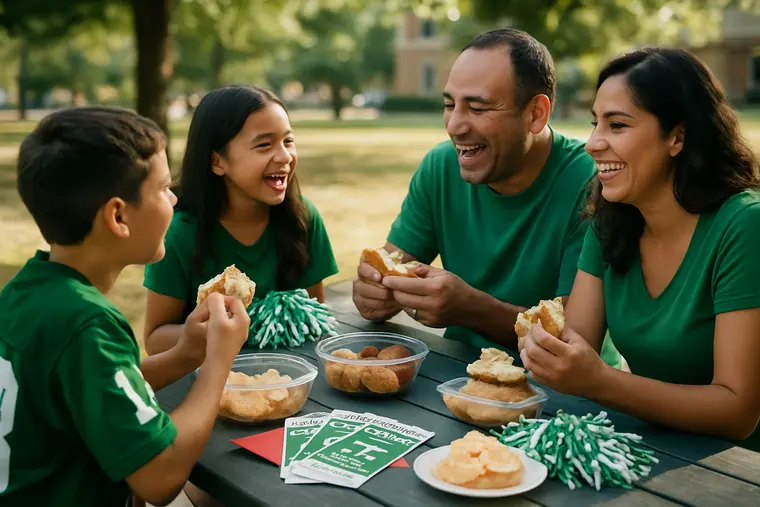
One reason homecoming lasts is that it gives nearly everyone something to do. Students dress up, build, rehearse, vote, decorate, march, or perform. Parents drive, pay, pin, glue, photograph, and wait in line. Teachers and administrators handle schedules and safety. Bands, cheer teams, drill teams, and student groups help set the tone. Coaches and players carry the football side of the week, but they do not carry the whole tradition alone.
- Students bring the visible energy through mums, garters, spirit wear, performances, and class pride.
- Families make the week work through rides, supplies, photos, meals, and parade plans.
- Alumni give homecoming its return value by reconnecting the present campus to past classes.
- Local businesses and neighbors often feel the extra traffic, school colors, and game-week attention.
That shared labor is part of the appeal. Homecoming does not feel handed down from a press box. It feels assembled in living rooms, school gyms, parking lots, cafeterias, and streets close to the stadium.
The Scale Can Change, But The Feeling Holds
Not every school will make a record-breaking mum. Not every campus will draw thousands to a bonfire. The scale varies by enrollment, budget, facilities, and local tradition. Still, the pattern is steady across North Texas: homecoming asks a community to show up before kickoff, not just after a win.
That matters in high school football because the team often represents more than the students on the roster. It represents a town, a district, or a neighborhood. It gives younger kids something to picture for themselves. It gives families a weekly place to gather. It gives alumni a reason to return even when they no longer know every player’s name.
In college football, the same idea stretches across a larger alumni base. UNT’s 2023 homecoming events showed how a university can build connection through a full week rather than a single football window. The game is the centerpiece, but the return begins earlier.
What North Texas homecoming Means For Game Week
North Texas homecoming remains powerful because it turns football into a shared schedule. A mum in Lewisville, a parade in DeSoto, and a bonfire in Denton do not look exactly alike, but they come from the same Texas football instinct. They give people a reason to wear the colors, make the plan, find the route, and stand together.
For fans and families, the practical lesson is simple: homecoming week is bigger than kickoff. Check parade times, school schedules, campus event windows, and stadium plans early. Leave room for traffic near the route. Expect more photos, more walking, more alumni, and more emotion than a normal game day.
The heart of North Texas homecoming is not measured only by the size of a mum or the count at a bonfire. Those numbers help tell the story, but the tradition lasts because people keep choosing to take part. They build, march, cheer, return, and remember. Then, when the band starts and the teams take the field, the football game feels like the natural finish to a week the whole community helped carry.