

Texas Football Talent is already a major talking point before the 2026 high school season, and the reason is clear: public rankings are giving fans, coaches and families an early map of which players and programs are drawing attention.
That map is useful, but it should not be treated as the whole evaluation. Rankings can highlight the players who are already visible. They can also point college staffs toward schools worth visiting during spring evaluation, summer camp season and fall game weeks. Still, player development is built on more than a list. Scheme fit, position growth, health, academic work, coaching, film quality and weekly production all shape the path from Friday night football to the college level.
For Texas readers, the 2026 cycle has two layers worth separating. The first is individual recognition, where the top players set the early tone. The second is team context, where programs such as North Shore, Duncanville and South Oak Cliff enter the season with major expectations. Both matter because top players are often sharpened by strong practice environments, hard district schedules and deep playoff pressure.
How Texas Football Talent Shows Up In Rankings
Texas Football Talent At The Top Of 2026
Prep Redzone’s 2026 Texas rankings list 482 players, with Keisean Henderson, Jermaine Bishop Jr., Felix Ojo, Jalen Lott and Davian Groce shown as the top five in the state rankings Prep Redzone rankings. That is a broad board, not just a short watch list, and it gives a sense of how deep the state is across classes, regions and position groups.
Those names carry early weight because they sit at the front of a large group. For college evaluators, that type of ranking can help organize travel and film review. For high school coaches, it can also create a clearer view of how their players are being seen outside the building. For families, it can be a starting point for understanding exposure, not a final answer on a player’s ceiling.
The most practical way to read any ranking is to ask what it reflects. Some rankings reward current varsity production. Some account for frame, movement skills and long-term projection. Some players may be more advanced right now because they have already played against top competition. Others may rise later after a position change, a growth spurt, a stronger junior season or a strong showing at a verified camp setting.
Why A Ranking Is Only Part Of The Evaluation
A public ranking can open the door, but it does not block the rest of the room. Texas has too many schools, classifications and offensive systems for one board to capture every useful player at the same time. A running back in a small-school power scheme, a safety asked to play deep middle every snap, and a tight end who is really a sixth offensive lineman on Friday nights may all need different types of evaluation.
That is where football context matters. A player can be ranked highly and still need technical development. A player can sit outside the top group and still be a strong college fit if his film, frame and academic profile line up with a program’s needs. Texas Football Talent is best understood as a moving picture, not a snapshot taken before kickoff.
Team Rankings Add Context To Individual Buzz
North Shore, Duncanville And South Oak Cliff Set The Bar
Team rankings do not recruit players by themselves, but they do help explain the weekly pressure around the top prospects. The 2026 Preseason HSFA Texas Top 25 lists North Shore at No. 1, Duncanville at No. 2 and South Oak Cliff at No. 3 HSFA Texas Top 25. That top three matters because each program sits in a setting where players are tested by expectations, depth and opponent preparation.
A highly rated player at a team near the top of the state conversation usually gets evaluated against strong competition. College staffs want to see how a prospect handles playoff-type speed, difficult matchups and tight game situations. They also want to see whether a player can produce while every opponent knows where he lines up.
For fans planning the fall, preseason team rankings help identify games that could carry recruiting interest beyond the scoreboard. A matchup involving a top-ranked team can draw college coaches, local media and regional attention. For a practical fan view of the team side of the 2026 conversation, our related read on Texas preseason rankings connects those early team expectations with programs to track.
How Strong Programs Shape Development
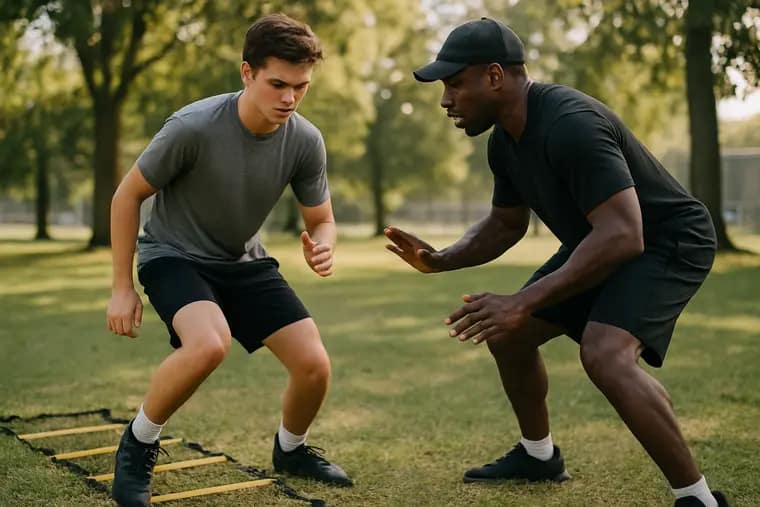
Development is not just about what happens in a single game. It is built through practice tempo, weight-room standards, position coaching, film review and competition for snaps. At programs with deep rosters, a young player may have to earn a role against future college players every week. That can slow early production, but it may raise the player’s readiness once his opportunity comes.
There is also a flip side. A standout at a smaller or less publicized program may get more touches, more leadership responsibility and more freedom to show traits on film. College staffs know this. That is why good evaluation compares role, competition and projection instead of treating all stat lines the same.
Player Development For Texas Football Talent
Recruiting Attention Follows Verified Growth
The safest recruiting read is this: verified growth tends to matter. Timed speed, improved strength, cleaner movement, better route detail, stronger tackling angles and more consistent pass protection can all affect how a player is viewed. Public rankings may create early visibility, but college staffs still have to decide whether a player fits their roster and academic standards.
Because of that, families should be careful with unsupported recruiting claims. Offers, commitments and visits should be confirmed through trusted recruiting services, school announcements or the player’s own verified channels before they are treated as fact. That discipline is especially important in Texas, where attention can move fast during camp season and playoff runs.
| Evaluation Area | Why It Matters |
|---|---|
| Varsity Film | Shows how a player performs in real game conditions. |
| Position Traits | Helps project fit at the college level. |
| Competition Level | Gives context to production and matchup quality. |
| Physical Development | Tracks whether size, speed and strength are improving. |
| Academic Profile | Shapes which recruiting paths are realistic. |
The 2027 Class Is Already Part Of The Conversation
The research notes that the 2027 class is gaining attention as well, with a much larger early pool listed by Prep Redzone. That matters because college staffs rarely evaluate one class in isolation. A school visit for a 2026 prospect can also put younger teammates on the radar. A playoff run can raise the profile of a whole roster, not just the seniors and juniors already known statewide.
That is why the next cycle connects naturally to the current one. Texas programs with young varsity contributors may see their recruiting attention build over two seasons rather than one. For a college-focused angle on that next wave, our breakdown of Texas 2027 recruiting looks at how early priorities are forming around in-state talent.
What Texas Football Talent Means For 2026
What Fans And Families Should Track
The useful approach is to watch rankings and development together. Rankings tell fans who is already being discussed. Development tells families and coaches what still has to happen. The difference matters because many Texas players make their biggest move after more varsity snaps, a new role or a stronger offseason.
- Track whether a ranked player is producing against strong opponents, not just weaker matchups.
- Watch position usage, especially for athletes who could project differently in college.
- Separate verified recruiting news from message-board talk and social media noise.
- Pay attention to team context, including depth, schedule strength and playoff exposure.
For the 2026 season, Texas Football Talent should be viewed through both the player board and the Friday night setting around it. The top names deserve attention, and the top teams will shape much of the conversation. The best evaluations will still come from steady film work, real competition and visible year-to-year growth.