

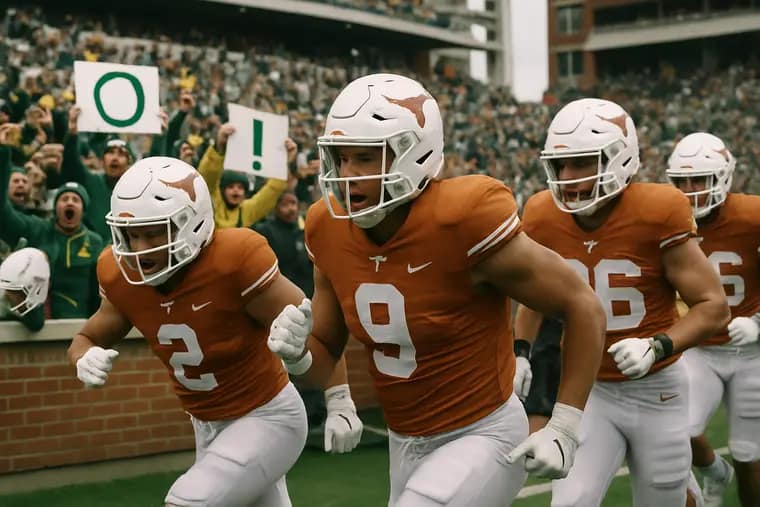
Texas Football Programs enter 2026 with a rare mix of pressure, proof points and program-shaping opportunity. The Longhorns are chasing national relevance again, Texas A&M faces another schedule that will test its staying power, Texas Tech carries high expectations, and the state’s Big 12 group has enough road pressure to show which teams are built for weekly strain.
That makes this season more than a scoreboard exercise. It is a development checkpoint. For coaches, it will show whether roster plans match conference demands. For athletic departments, it will test whether recent investment is producing steady progress. For fans across the state, it should reveal which programs are building something durable and which ones are still leaning on hope.
The Texas angle starts in Austin because the Longhorns have the clearest national path. Texas went 10-3 in 2025, and quarterback Arch Manning is coming off a season with 3,163 passing yards and 36 total touchdowns, according to Dave Campbell’s Texas Football. CBS Sports also framed Texas as a program trying to rebound after missing the College Football Playoff in 2025 while reloading around Manning and Steve Sarkisian’s roster plan CBS Sports reported.
Why Texas Football Programs Face A 2026 Test
How Texas Football Programs Prove Growth
The most useful way to view 2026 is not through preseason praise. It is through pressure. Programs grow when the schedule exposes weaknesses early enough for coaching staffs to respond, but late enough that depth and player development matter. Texas, Texas A&M, Texas Tech, Houston and Baylor all enter the year with different versions of that test.
Texas has the highest ceiling in the state because it pairs quarterback stability with roster upgrades. The Longhorns added wide receiver Cam Coleman, offensive lineman Melvin Siani and running back Hollywood Smothers through the transfer portal, a group highlighted in the Dave Campbell’s Texas Football outlook. That does not guarantee a championship push, but it does show how Sarkisian’s staff has treated 2026 as a season that needed immediate help around returning talent.
The harder question is whether that roster can handle a schedule that includes Ohio State, Oklahoma, Ole Miss, LSU and Texas A&M. Those games are not equal in style, but they share one trait: each can expose a different part of a roster. Ohio State and LSU measure top-end talent. Oklahoma and Texas A&M bring rivalry emotion. Ole Miss can pressure defensive discipline and offensive efficiency. Texas does not need to be perfect to validate its growth, but it cannot look unprepared in the same ways week after week.
Texas A&M sits in a different position. Its schedule includes LSU, Alabama, Oklahoma and Texas, which means the Aggies will have fewer soft landings if execution slips. That type of schedule can sharpen a team, but it can also reveal whether a program has enough depth to survive injuries, travel, momentum swings and hostile venues. For A&M, 2026 is about showing that the program can build consistency against opponents that punish thin margins.
The Schedule As A Development Tool
Schedules are often judged by difficulty, but they also work as mirrors. A favorable slate can help a team stack confidence. A demanding one can speed up development or expose gaps. The key is whether a staff turns each week into evidence instead of excuses.
That is why 2026 matters for Texas Tech. The Red Raiders are projected to have a favorable schedule and high expectations. Those two things can be helpful, but they can also create a different kind of strain. When a team is expected to win, player leadership matters. Game management matters. Avoiding the one flat Saturday that damages a conference race matters.
For Texas Tech, the question is not whether outside expectations are flattering. It is whether the program can treat a favorable path as a responsibility. The difference between a good season and a program-shaping one often comes down to how a team handles games it is supposed to control.
What The Longhorns Must Show Beyond Talent
Arch Manning Raises The Standard
Manning gives Texas a national entry point, but quarterback attention can distort the rest of the evaluation. His production from 2025 sets a high bar. It also raises the standard for everyone around him. A quarterback can lift a team, but he cannot cover every protection issue, missed tackle or special teams mistake.
That is why the transfer additions matter. Coleman gives Texas another receiving piece, Siani adds an offensive line option, and Smothers strengthens the running back room. Each move points to the same conclusion: Texas is not treating 2026 as a patient rebuild. It is trying to close gaps now.
The challenge is fit. Transfer talent only changes a team if it settles into roles quickly. A receiver has to earn timing with the quarterback. An offensive lineman has to adjust to calls, communication and SEC defensive fronts. A running back has to protect the football, handle blitz pickup and produce when defenses load the box. Those details rarely drive preseason discussion, but they often decide November games.
Texas Needs A Team Identity
The Longhorns’ 2026 season should also answer a broader question: what is the most reliable Texas identity under Sarkisian? Is it quarterback-led efficiency? Is it line-of-scrimmage control? Is it explosive skill talent? Is it defensive depth that can survive SEC tempo and power?
National championship contenders usually have more than one answer. Texas appears positioned to enter that conversation, but the schedule will not allow the Longhorns to hide if one phase lags behind. That is why this year feels so important for the state’s lead program. A strong 2026 would not just help Texas chase a postseason goal. It would strengthen the belief that the roster model is built for the SEC grind.
That matters well beyond Austin. The Longhorns set a reference point for recruiting, spending, fan expectations and media attention across the state. When Texas is operating near the top of the sport, every other major program in Texas is measured against that standard, fairly or not.
Big 12 Pressure On Texas Teams
Texas Tech Has The Clearest Opening
If Texas is the state’s national measuring stick, Texas Tech may be the team with the clearest chance to convert schedule position into a major step forward. The Red Raiders’ favorable 2026 setup creates real opportunity. It also removes some of the cover that comes with a brutal slate.
A program trying to rise has to win the obvious games before it can claim staying power. That means handling home-field advantage, avoiding slow starts, and finding production even when a key matchup does not tilt its way. Texas Tech does not need style points as much as repeatable habits.
This is where Texas Football Programs are judged differently than national brands. In this state, fans know the difference between a lucky schedule and a well-built team. They watch line play, travel spots, late-game clock decisions and whether a roster still looks fresh in the fourth quarter. Texas Tech’s 2026 season will invite that kind of close reading.
Houston And Baylor Face Road Tests
Houston’s 2026 schedule includes five conference road games, with trips identified in the research against Texas Tech, Kansas State and Utah. That is a difficult way to build consistency. Road games test quarterback communication, defensive substitutions and emotional control. For a program still trying to strengthen its footing in the Big 12, those weeks can show whether development is happening in the travel party, not just on the home sideline.
Baylor has a different challenge. The Bears face a neutral-site game against Auburn in Atlanta and five conference road games, including trips to Arizona State, BYU and Houston. That setup tests preparation and recovery. It also asks whether a program can handle different environments without losing its weekly identity.
The Bears and Cougars do not need identical goals for 2026 to matter. Houston can use the season to measure Big 12 maturity. Baylor can use it to test resilience against travel and matchup variety. Both programs need evidence that player development is showing up after kickoff.
For a wider read on why this year carries so much weight across the state, our related breakdown of why 2026 defines Texas football programs connects the college race with broader state expectations.
Why 2026 Should Matter Across Texas
Development Is Bigger Than One Team
The value of 2026 is that it gives the state a clear set of comparisons. Texas is testing championship readiness. Texas A&M is testing week-to-week staying power against a demanding group of opponents. Texas Tech is testing whether high expectations can become wins. Houston and Baylor are testing travel toughness and Big 12 depth.
That mix is why Texas Football Programs should be judged by more than final records. A record matters, but how a team reaches it matters almost as much. Did the offensive line improve from September to November? Did the defense adjust after a bad matchup? Did young players earn real snaps? Did transfers solve problems or simply add names? Did the staff manage road games with poise?
Those are practical questions for Texas football fans because they tell us which programs are actually developing. Recruiting wins create optimism. Portal additions create headlines. Schedule talk fills the offseason. The season itself turns those pieces into evidence.
For Texas, anything short of national contention will invite hard questions because the roster and quarterback situation have placed the Longhorns in that tier. For Texas A&M, the test is whether the program can turn a hard schedule into proof of progress rather than another explanation for uneven results. For Texas Tech, opportunity is the story. For Houston and Baylor, road performance may define whether 2026 feels like a step forward.
The best part for local fans is that these answers will not be abstract. They will show up in kickoff windows, road trips, rivalry weeks, late drives and fourth-quarter line play. That is where development becomes visible. That is why 2026 carries real weight for Texas Football Programs, from Austin to Lubbock to College Station, Houston and Waco.