

Texas high school football transfers are shaping more than depth charts this season. They are changing how coaches set roles, how communities talk about roster identity, and how families plan Friday nights when eligibility decisions can affect who is actually available for varsity snaps.
The statewide discussion became harder to ignore after the UIL State Executive Committee declared two highly recruited players ineligible for varsity competition on July 9, 2026, citing transfers for athletic purposes. John Meredith III, a five-star cornerback committed to Texas, had transferred from Euless Trinity to North Crowley. Colton Nussmeier, a four-star quarterback committed to Georgia, had moved from Flower Mound Marcus to Denton Ryan, according to Texas Football reporting.
Those rulings landed in a state where high school football is tied closely to school identity, local travel habits, band nights, parent routines, and small-business Friday traffic. A transfer does not just add or remove a player. It can alter a locker room, a ticket line, a rivalry week conversation, and the way a town reads its own team.
What Changed Before The Season
UIL Decisions Put Eligibility In The Spotlight
The Meredith and Nussmeier cases drew attention because both players were nationally known recruits and because the rulings came before the season rhythm settled in. For fans, that timing matters. Preseason expectations often shape ticket interest, road-trip plans, student-section energy, and the first few weeks of local coverage.
The key issue in the reported UIL rulings was not whether a student changed schools. Student movement happens across Texas for many reasons. The issue was whether the move was judged to be for athletic purposes. That distinction is central to how the UIL process is discussed by coaches, families, and school communities.
The Numbers Show A Narrow Ruling Window
The debate can feel larger than the actual number of ineligibility findings. During the 2025-26 school year, roughly 17,000 to 18,000 students transferred to UIL high schools seeking to participate in sports, and fewer than 15 were ruled ineligible for varsity play because of athletic-purpose transfers, according to the same Texas Football report.
That gap is important for game-day expectations. Most transfer students are not at the center of a statewide eligibility debate. Still, the most visible cases can influence how fans view every new face on a roster. A player introduced during summer workouts or early scrimmages may bring excitement, but also questions about fit, fairness, and whether the roster will hold steady by district play.
How Transfers Change Friday Night Roles
Roster Fit Is More Than Talent
A transfer can improve a position group quickly, but coaches still have to build trust and timing. A quarterback joining a new program has to learn signals, protection calls, receiver spacing, and the pace of the sideline. A defensive back has to match coverage rules, communication habits, and tackling expectations. A running back has to read blocks from linemen he may have practiced with for only a short period.
That adjustment affects returning players, too. A senior who expected to start may now share snaps. A younger player may shift to special teams. A captain may need to help a newcomer understand team rules that are not written on a play sheet. This is where team dynamics become visible to fans. The first few games can show whether a team has absorbed new personnel or is still sorting through roles.
One Move Can Change A Matchup
Not every transfer case involves a statewide ruling. Some moves are simply notable because of football impact. Terrell “TJ” Stinson, a sophomore RB/DB, transferred from Houston Clear Lake to Hitchcock, with reporting noting that the move bolstered Hitchcock’s secondary after his freshman season, according to an SBLive Texas report.
For a Friday night crowd, that kind of addition changes what to watch. A secondary may play more aggressively if coaches trust a new defensive back in coverage. A staff may use a two-way athlete in selected game situations rather than every series. Opposing teams may test the newcomer early or avoid him if film supports that choice. None of that guarantees results, but it changes the scouting conversation before kickoff.
What Coaches And Families Are Weighing
Community Pride Is Part Of The Debate
Texas high school football is not built only around varsity starters. It includes freshman teams, JV players, cheer programs, bands, trainers, booster clubs, grandparents in reserved seats, and local families who have followed the same school for decades. Coaches who worry about athletic-purpose transfers often frame the issue around community pride and team cohesion.
The concern is simple: if rosters start feeling temporary, the connection between school and neighborhood can weaken. Some coaches have pointed to states with more open transfer structures and raised concerns about fan engagement and attendance. The Texas discussion is not just about who wins a district game. It is about whether a community still feels like the team reflects the students who grew up in that program.
Families See Choice Differently
The other side of the debate is just as real. Some coaches and families question why athletic fit should be viewed differently from academic, arts, or other school choices. Parents may believe a different campus offers better coaching, a safer environment, a stronger schedule, or a clearer path for development. Those views are part of the current statewide conversation.
The college transfer portal is also part of the backdrop. The research points to college player movement influencing high school athletes, with more students seeking better athletic opportunities in ways that mirror the college level. High school sports still operate under UIL rules, but athletes and parents are aware of the wider football culture around movement, exposure, and opportunity.
Game-Day Planning For Fans And Parents
Check More Than The Schedule
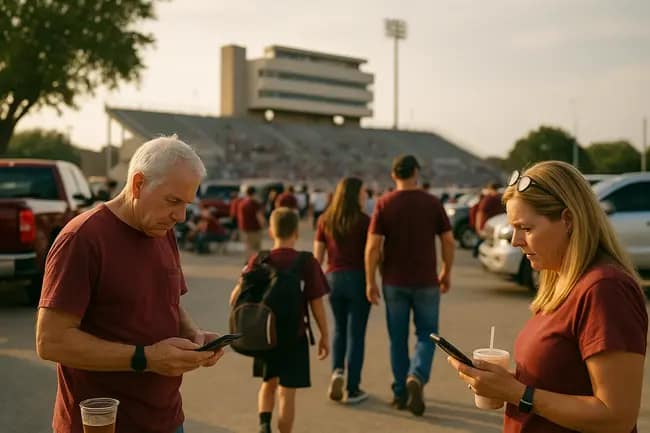
For families planning a Texas high school football night, the schedule is only the first step. Transfers and eligibility questions make it wise to check official school athletic pages, coach updates shared through school-approved channels, and district announcements before leaving home. If a key player’s status is uncertain, the safest assumption is that final varsity availability may not match summer talk.
This matters most for long road games, rivalry weeks, and early-season matchups that draw extra attention. A fan driving across the Metroplex, from the Houston suburbs, or between smaller towns should confirm kickoff time, stadium location, ticketing method, parking guidance, and any bag or entry rules posted by the host district. Player movement creates interest, but venue details still decide whether the night starts smoothly.
Watch Warmups With Context
Transfers can be easiest to understand before the first whistle. Warmups show who is working with the first unit, who is rotating between position groups, and who coaches pull aside for extra instruction. A newcomer standing near a position coach for repeated teaching moments may still be learning the system. A transfer taking every first-team rep may already be central to the plan.
Parents and fans should also remember that early-season usage does not always define the full year. Coaches may protect a new player from overload, especially if he plays both ways. They may build packages week by week. They may also keep a returning senior in a major role because trust, communication, and special-teams value matter.
- Confirm kickoff time and stadium location through the host school or district.
- Check official ticketing and parking notes before leaving home.
- Look for roster updates from school-approved channels, not rumors.
- Arrive early for high-interest games tied to notable transfers or rivalry weeks.
- Watch rotations during warmups to understand how new players fit.
Why Texas High School Football Transfers Matter Now
The UIL Process Shapes The Season Before Kickoff
The transfer process described in the research starts with the Previous Athletic Participation Form. A previous school’s coach can indicate whether the move appears to be for athletic reasons. If that box is checked, the case can go to a District Executive Committee hearing and may reach the UIL State Executive Committee for a final decision.
That process affects more than the player involved. Coaches may have to prepare two versions of a depth chart. Teammates may practice with a player who is not cleared for varsity competition. Fans may hear a name all summer and then learn that the player will not be available on Friday nights. For high school football planning, certainty matters.
Local Identity Still Drives The Crowd
The UIL’s position, as reflected in the research, is that rules are established by member schools and any change to transfer regulations must move through the legislative council process. That means this debate is not only a football staff issue. It belongs to the schools that make up the UIL system.
Texas high school football transfers will keep shaping team dynamics because they sit at the meeting point of player development, family choice, competitive balance, and local pride. For fans, the practical response is to stay close to verified school information, understand that rosters can shift before district play, and judge teams by how well they come together under the lights. In Texas, the name on the front of the jersey still carries weight on game day.