

Back-To-School Football in Texas brings a different kind of game day. Families are getting used to new class schedules, younger students are finding their routines, and stadium staffs are trying to move large crowds through gates before kickoff. A smooth night usually comes down to ordinary details: tickets bought ahead of time, bags packed correctly, students carrying IDs where required, and parents knowing where younger fans need to be during the game.
The research available for this topic points to a clear pattern across school football settings: more districts are using digital ticketing, tighter entry rules, clear bag expectations, student conduct policies, and adult supervision requirements for younger children. Policies can differ by district, campus, and stadium, so Texas parents should treat the school or district game-day page as the lead authority before every road or home game.
Back-To-School Football Starts Before The Gate
The first pressure point on a school football night is rarely the bleachers. It is the entrance line. A family that reaches the gate without the right ticket, ID, or bag can hold up its own group and everyone behind it. That is why the best habit is to handle admission checks before leaving the driveway.
Back-To-School Football Ticket Checks
Digital ticketing is now a normal part of many school game-day operations. Melissa ISD’s 2025-2026 student and spectator guidelines stated that football and volleyball tickets were sold online and that no cash was accepted at the gate Melissa ISD guidelines. That district-specific example matters for Texas families because it shows how quickly a simple Friday night can turn into a phone, battery, and login issue if tickets are not handled early.
Parents should buy tickets before arriving, open the ticket link before stepping into the entry line, and make sure the phone has enough charge for the scan. If grandparents, separated households, or older siblings are attending, send ticket details ahead of time rather than sorting them out at the gate. A screenshot may not be accepted everywhere, so families should follow the exact rule posted by the host district.
Student IDs, Chaperones, And Entry Timing
Student entry rules deserve the same attention as ticketing. Prince George’s County Public Schools’ football spectator policy requires tickets through GoFan, requires students to show a valid school ID, and says middle and elementary school students must be accompanied by an adult chaperone PGCPS spectator policy. Texas districts set their own rules, but that official policy is a useful reminder: student admission is not always the same as adult admission.
For parents, the practical move is simple. Check whether the host stadium requires student ID badges, whether younger students need an adult, and whether the district dress code applies at athletic events. Melissa ISD’s guidelines referenced student ID badges and dress code compliance for games, so families should not assume school-day expectations disappear after the final bell. The safer plan is to prepare students for a school-supervised event, not a casual public gathering.
Bag, Parking, And Arrival Habits
Back-To-School Football nights often bring a mixed crowd: players’ families, students, band parents, cheer families, alumni, and visitors from the opposing school. The bigger the crowd, the more small delays matter. Parking, bag checks, and entry screening can all affect whether a family sees the opening kickoff.
Clear Bags And Security Lines
Bag rules should be checked before every game, even at familiar stadiums. Melissa ISD’s spectator guidance included a clear bag requirement at its stadiums. That kind of rule changes how parents pack for the night. A blanket, small wallet, keys, phone, and permitted medical or child-care items may be easier to manage than a full backpack or oversized purse that cannot enter the venue.
The best approach is to pack only what the posted policy allows. Families with infants, medical needs, or special circumstances should contact the school before game day rather than arguing policy at the entrance. Stadium workers at the gate are there to apply the rule they were given; they usually cannot rewrite it because a family packed in a hurry.
Parking Windows Around Texas Kickoffs
Parking plans should account for the full school event, not just the football game. Marching bands, drill teams, cheer squads, student sections, visiting fans, and youth football groups can all affect traffic flow around a stadium. No single arrival time works for every Texas venue, so parents should check the host school’s stadium notes and build in a cushion for ticket scans and bag checks.
Families planning multiple games across the fall can benefit from setting one repeatable routine: confirm kickoff time, check the host bag policy, verify ticket access, assign a meeting spot, and decide where younger students sit. For a broader Texas-focused routine, this 2026 game day prep piece connects many of the same habits to high school football travel, heat, and stadium timing.
Parent Conduct During Football Season
The easiest way for parents to help a team is to support the players without taking over the game. Coaches coach. Officials manage the contest. Players need to hear signals, corrections, and sideline communication. Crowd noise is part of football, but constant sideline coaching from the stands can add confusion rather than confidence.
Cheer Without Sideline Coaching
Positive support travels well. Cheer a tackle. Clap for a first down. Encourage a player who makes a mistake. Avoid shouting instructions at athletes during live action. A parent in the bleachers usually does not know the play call, coverage rule, blocking assignment, or coaching point being taught that week.
This matters even more early in the school year. Players are settling into class loads, practice routines, and Friday travel. Younger athletes may be adjusting to varsity pace, special teams duties, or new coaches. Clear support from the stands helps them stay locked in without adding another voice to process between snaps.
Respect Officials, Coaches, And Game Staff
Officials will miss calls in the eyes of one sideline or the other. Coaches will make choices parents question. Gate workers may enforce rules that feel inconvenient. The adult response sets the tone for students nearby. If parents want a better student section, calmer concourse, and safer postgame exit, adult behavior has to match that expectation.
A good family rule is to let the game end at the stadium. Do not chase officials, confront coaches after the handshake line, or use the parking lot as a complaint session in front of players. If a parent has a real concern, the better path is through the school’s team communication process after emotions cool.
Athlete Prep For Hot Texas Nights
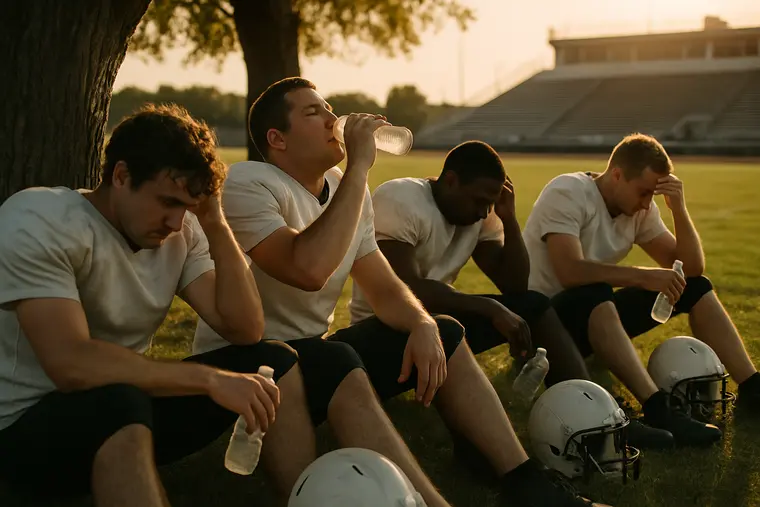
Back-To-School Football in Texas also means players are returning to school while still dealing with early-season heat. Parents cannot control the weather, but they can help athletes arrive with the basics handled: a labeled water bottle, organized gear, and a clear plan for recovery after the game.
Hydration And Labeled Gear
A labeled water bottle is not just a convenience. It helps players keep track of their own supply during practices, games, and bus rides. Families should make sure the bottle is clean, clearly marked, and packed before the athlete leaves for school or the fieldhouse. If a player carries gear between school, practice, and home, an organized football bag cuts down on missing mouthguards, gloves, towels, or other personal items.
Parents should also treat hydration as a routine, not a last-minute fix. Athletes should not wait until they feel thirsty before drinking water in hot conditions. For families, that means building water into the day before kickoff, not just handing a bottle to a player on the way out the door.
Postgame Pickup And Family Communication
Postgame plans are part of athlete safety. Players may leave the locker room later than the crowd, buses may return after a road game at a different time than expected, and phone batteries may be low after a long school day. Parents should set a pickup spot, a backup contact, and a simple rule for what happens if plans change.
For younger siblings attending the game, the same rule applies. Decide where they sit, who supervises them, and where the family meets if the stadium crowd separates. Those steps are not flashy, but they prevent most of the stress that shows up after the final whistle.
Why Back-To-School Football Planning Matters In Texas
Back-To-School Football works best when families treat game day as a school event with football at the center. The game has pageantry, noise, and rivalry, but it also has student conduct rules, admission policies, security practices, and expectations for adults in the stands.
For Texas parents and fans, the practical plan is to check the host district’s rules, buy tickets early, pack within the bag policy, bring student IDs where required, supervise younger children, arrive with time to spare, and support the team without becoming part of the sideline noise. Those habits help stadium staff, protect the student-athlete experience, and make Friday night feel like what it should be: a community football night that runs well from the gate to the ride home.