

The Texas Gameday Guide arrived at a telling moment for University of Texas football. On August 25, 2026, Texas Athletics introduced three fan profiles for the 2026 home schedule: Families, Explorers, and Essentials. The idea was simple enough on paper. Not every Longhorn fan comes to Austin with the same clock, budget, group size, or comfort level. A parent with small children needs a different Saturday than a former student meeting friends near Bevo Blvd. A first-time visitor needs more direction than a season-ticket holder who can walk to Darrell K Royal–Texas Memorial Stadium by memory.
That is why the guide mattered beyond one announcement. It treated fan engagement as part of the game-day operation, not as decoration around kickoff. The first use came around the Texas–Texas State opener on Saturday, September 5, 2026, a 2:30 p.m. game that gave fans a real test of how the new planning approach worked on a hot, crowded Austin football Saturday.
Why The Texas Gameday Guide Matters In Austin
Texas Gameday Guide As A Fan Plan
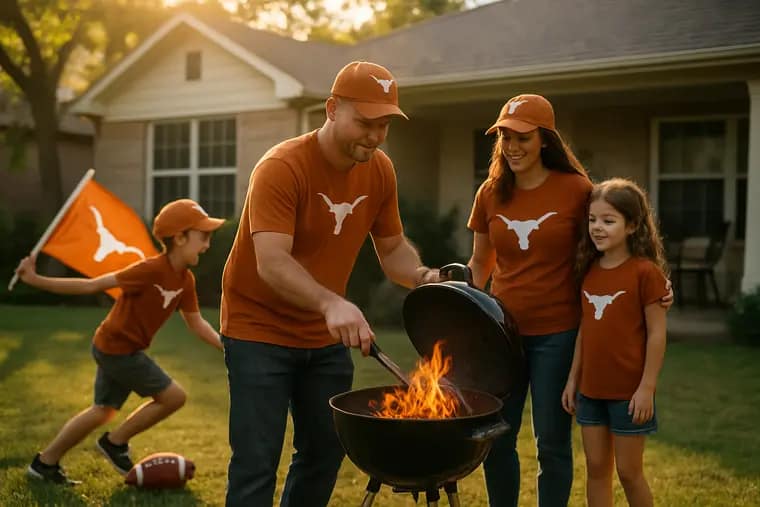
The Texas Gameday Guide organized the Saturday experience through three profiles. Families were pointed toward kid-friendly timing and easier routines. Explorers were given a wider path through the pregame district. Essentials focused on fans who wanted the key information without extra stops.
That structure fits Austin because Texas football Saturdays are not one-size-fits-all. Some fans build the day around brisket, shade, and a familiar tailgate spot. Some come for the Longhorn Band, photo stops, and the walk toward the stadium. Others want the cleanest route from parking to gate to seat. The guide gave those groups a starting point without asking them to sort through every option at once.
For the September 5 opener, the Families profile included activity windows that began at 10:00 a.m. with Hook ’Em Herd wristband pickup. It also pointed families toward mid-morning attractions, the Hall of Fame, and the Longhorn Band pregame show. Those details may sound small, but Texas parents know the truth: a good Saturday plan can save a long walk, a missed meal, or a child wearing down before kickoff.
From First-Timers To Regulars
The quiet value of the Texas Gameday Guide was that it did not only serve newcomers. It also helped regulars adjust to a game-day scene that keeps adding layers. Bevo Blvd, Longhorn City Limits, Smokey’s Midway, Hook ’Em Hangout, and Big Bertha’s Bazaar all create reasons to arrive early, but they also create choices. Fans who know the stadium may still need help deciding where to spend the two hours before the gates feel urgent.
That is fan engagement in practical form. It is not just a social post or a slogan. It is the ability to make a family feel less rushed, a visiting fan feel less lost, and a longtime ticket holder feel like the pregame scene still has something new to offer.
The Digital Shift Around DKR
Tickets, Wallets, And The Front Gate
The 2026 football season guide also confirmed that entry into Darrell K Royal–Texas Memorial Stadium used mobile-only ticketing. Fans had to save tickets to Apple Wallet or Google Wallet, and screenshots were not accepted. That rule changed the first chore of game day from “remember the paper tickets” to “charge the phone, save the ticket, and have it ready before the gate.”
For younger fans, that process may feel normal. For families bringing grandparents, guests, or children, it can require a few extra minutes at home or at the tailgate. The best game-day technology is the kind that works before fans are standing in a slow line under the sun. UT’s guide pushed that preparation into the planning stage, which helped make the stadium entry process part of the day rather than a surprise at the gate.
The App Map Meets Old Habits
The Longhorns mobile app also included an interactive map tied to key game-day destinations. Fans could use it to find Bevo Blvd, Longhorn City Limits, Smokey’s Midway, Hook ’Em Hangout, and Big Bertha’s Bazaar based on their preferences. In a compact, crowded part of Austin, that kind of tool can matter as much as a parking tip.
Still, digital planning works best when it respects old habits. Texas fans do not want every tradition reduced to a phone screen. They want to know where the band will be, where friends are gathering, when to head toward the gate, and how to leave enough time for the walk. The guide supported those habits instead of replacing them. For readers who want more on the atmosphere surrounding Austin Saturdays, our look at Texas football game day in Austin fits naturally with this shift.
Traditions Still Carry The Day
Live Music Before Kickoff
Texas Athletics’ pregame destinations also showed how much of the fan experience happens before the first snap. Longhorn City Limits entered its seventh season in 2026 and had hosted more than 80 acts since it began. That fact says plenty about how Austin’s football culture works. Music is not a side attraction in the city. It is part of the rhythm of getting ready for a game.
On a Texas Saturday, live music gives fans a place to gather before the stadium pull becomes too strong. It helps bridge different groups, from students to alumni to families who may not spend the rest of the day in the same spaces. The band, the tailgates, the food lines, and the walks along campus all build the emotional runway toward kickoff.
Why Fans Care Beyond One Saturday
National data helps explain why schools are paying closer attention to those details. A Knight Commission survey found that 65% of Americans believed college sports were moderately to extremely important, while 57% saw a high benefit to school identity and marketing, and 43% cited high benefit in engaging alumni, parents, and fans college sports survey.
That fits what Texas fans see every fall. College football is a scoreboard sport, but it is also a reunion calendar, a family routine, a campus open house, and a statewide conversation. The people in the stands are not background. They shape the sound, the spending, the travel patterns, and the way a school presents itself to the next generation of students and players.
Fan engagement also now stretches beyond the stadium. AP reported that female athletes’ participation in NIL compensation rose 123% in the 2025-26 fiscal year, with the report pointing to female student-athletes’ strength as content creators and their role in driving fan interest AP NIL report. That matters for a major athletics department because fans increasingly follow athletes across sports, platforms, and campus events, not only during football Saturdays.
Texas Gameday Guide And The Fan Community
The Texas Gameday Guide did not replace the familiar feel of a Longhorn Saturday. It organized it. That distinction matters. The best traditions in Texas football are carried by people: the family that leaves before sunrise, the alumni group that claims the same corner, the band member’s parents waiting for the pregame show, the child seeing Bevo for the first time, and the out-of-town fan trying to understand why Austin feels different on football weekends.
By sorting fans into practical profiles, Texas Athletics acknowledged that the stadium crowd is not a single audience. It is a mix of ages, routines, needs, and loyalties. Some fans want every pregame stop. Some need shade, water, and a restroom plan. Some care most about getting through the gate smoothly. Serving all of them is part of building a stronger home atmosphere.
After the September 5, 2026 opener, the broader lesson was clear: fan engagement works best when it helps people feel prepared before they feel swept into the crowd. In Austin, where college football already carries noise, color, and family memory, that kind of planning can make the difference between simply attending a game and feeling at home in the middle of it.