Texas is 4-0, 1-0 in SEC play and still sitting at No. 1 in the national polls after surviving its first conference road game at Tennessee. But the Longhorns left Neyland Stadium with something more than another ranked victory to discuss during their bye week: a discipline problem that Steve Sarkisian cannot afford to let become part of the team’s identity.
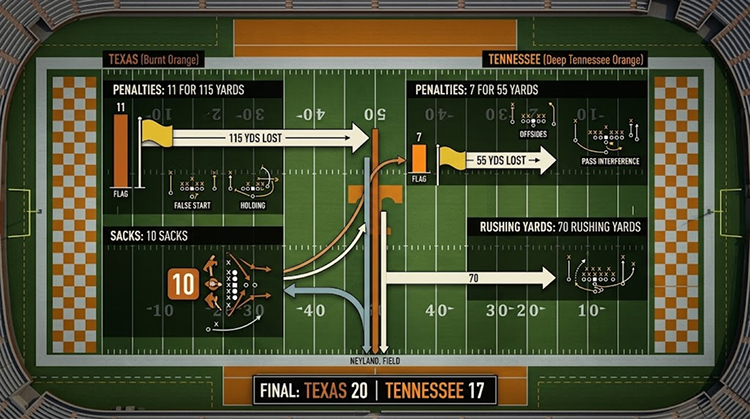
Texas defeated No. 14 Tennessee 20-17 on Sept. 26, with Colin Simmons tying the school record with five sacks and the defense holding the Volunteers to 221 total yards. The victory strengthened Texas’ position at the top of college football, but the Longhorns also committed 11 penalties for 115 yards. That was more than double Tennessee’s 55 penalty yards and nearly enough to turn a defensive masterpiece into a much more difficult afternoon.
The bye week gives Sarkisian something every coach wants after an emotionally demanding SEC game: time. Texas does not play again until Oct. 10, when the Longhorns meet Oklahoma at the Cotton Bowl in Dallas at 2:30 p.m. CT. That means the coaching staff has nearly two weeks to address the mistakes before the most recognizable rivalry on the schedule.
Texas Won At Tennessee Despite Its Discipline Problems
The easiest way to overlook Texas’ penalty problem is to look at the final score.
The Longhorns won 20-17. They held Tennessee to 70 rushing yards on 44 attempts, produced 10 sacks and repeatedly forced freshman quarterback Faizon Brandon into difficult situations. Simmons alone recorded five sacks, while Rasheem Biles, Maraad Watson, Zina Umeozulu and Hero Kanu also recorded sacks.
That defense gave Texas enough margin to survive an offense that produced only 262 total yards.
But the box score also tells a different story. Texas finished with 11 penalties for 115 yards, while Tennessee had seven penalties for 55 yards. Texas converted only three of 13 third downs and produced 14 first downs compared with Tennessee’s 22. The Longhorns also lost a fumble.
Those numbers matter because Texas was playing a ranked SEC opponent on the road. Against a team capable of turning one extended possession into seven points, giving away 115 yards creates opportunities that the defense should not have to erase.
The official Texas-Tennessee box score makes the imbalance clear: Texas’ defense was good enough to overcome those mistakes, but the offense and special teams did not provide much room for error.
The Problem Started Before The Tennessee Game
Texas’ discipline issue did not suddenly appear in Knoxville.
Against UTSA on Sept. 19, the Longhorns committed eight penalties for 88 yards. UTSA, meanwhile, finished with 115 penalty yards of its own, but Texas’ number was still significant considering the 30-6 victory.
The difference between the UTSA and Tennessee games is important.
Texas went from eight penalties and 88 yards against UTSA to 11 penalties and 115 yards against Tennessee. That is an increase of three penalties and 27 penalty yards despite the fact that Texas was entering the Tennessee game with a higher level of preparation and a much greater understanding of the stakes.
That trend makes the bye week more valuable.
Sarkisian does not have to manufacture a problem for his players to study. The film already provides several examples of unnecessary mistakes, including penalties that extended Tennessee possessions and the unsportsmanlike conduct penalty assessed to Simmons after one of his sacks.
The bye gives Texas the chance to examine those plays without having another Saturday immediately waiting.
Sarkisian Has Already Addressed The Celebration Issue
The most visible discipline problem from Tennessee was Simmons’ celebration after a sack.
Simmons had just produced one of the most dominant individual defensive performances in Texas history when he was penalized for an inappropriate celebration. The 15-yard penalty gave Tennessee an automatic first down after the sack and turned what had been a major defensive loss into a new opportunity for the Volunteers. The official play-by-play confirms the penalty came after Simmons recorded a 16-yard sack of Brandon.
Sarkisian addressed the issue after the game and again afterward, making clear that the behavior did not meet the standard he expects from his program. Reporting following the game said Sarkisian discussed the incident with Simmons and Raleek Brown during the team’s internal review process. Simmons also apologized for his actions.
That response matters because Texas cannot separate discipline from the culture Sarkisian has spent years building.
The point is not to eliminate emotion from football. Simmons’ five-sack performance was fueled by an edge that Texas needs. Brown’s physical running style is part of what allowed the Longhorns to score two rushing touchdowns in Knoxville.
The challenge is making sure emotion does not become self-inflicted damage.
Texas Cannot Keep Asking Its Defense To Clean Up Mistakes
Texas’ defense has earned the right to be trusted.
Against Tennessee, the Longhorns held a team that had been built around its rushing attack to 70 yards on the ground. Brandon finished with 145 passing yards, while Tennessee averaged just 1.6 yards per rushing attempt. Texas also generated 10 sacks, the second-highest single-game total in program history.
That is an extraordinary defensive performance.
But relying on that level of defensive dominance every week is unrealistic.
The better Texas becomes at eliminating penalties, the more dangerous that defense becomes because opponents have fewer opportunities to extend drives. A third-and-long stop should end a possession. A sack should create a fourth down. A defensive penalty can reverse both.
That distinction became obvious in Tennessee.
The Longhorns’ defense repeatedly won individual battles, but penalties occasionally changed the value of those victories. Texas cannot build a championship-level season around the assumption that Colin Simmons will produce five sacks every Saturday.
The Texas football season schedule shows why the standard has to rise now. Oklahoma is followed by Florida, Ole Miss, Mississippi State, Missouri, LSU, Arkansas and Texas A&M. The remaining SEC schedule offers very little room for repeated mistakes.
The Oklahoma Game Creates A Different Kind Of Pressure
The Red River Rivalry is already a different environment from Tennessee.
Texas will play Oklahoma at the Cotton Bowl on Oct. 10 at 2:30 p.m. CT. The game is part of the State Fair of Texas, and more than 100,000 people travel to the fair for the rivalry game according to the State Fair’s official information.
That environment creates an obvious discipline test.
There will be noise, rivalry emotion, national attention and a large neutral-site crowd split between Texas and Oklahoma. Players will have to manage the same emotional intensity that made Simmons’ performance so effective without allowing it to turn into unnecessary penalties.
That becomes even more important because Oklahoma enters the bye week at 2-2 after a 41-13 loss to Georgia. The Sooners will have their own reasons to respond, and Texas cannot assume the rivalry will follow the current standings.
The circumstances make emotional control part of the matchup.
The Bye Week Gives Texas Time To Reset Its Standard
A normal game week leaves coaches with limited time to correct everything.
A bye week is different.
Texas can spend additional practice time emphasizing pre-snap discipline, tackling technique, sideline behavior, post-play reactions and situational awareness. Coaches can isolate every penalty from Tennessee and determine whether it came from technique, communication, positioning or an emotional decision.
That distinction is important.
Not every penalty represents the same problem. A defender arriving a fraction late on a quarterback can be corrected differently from a player losing composure after a big play. False starts require a different solution from personal fouls.
Texas’ 11 penalties against Tennessee therefore should not be treated as one single problem.
They should be treated as 11 individual teaching opportunities.
That is where the bye week can become more than rest. It can become a reset of the team’s weekly standards.
Arch Manning Also Benefits From A Cleaner Game
Texas’ discipline problem is especially important because the offense is still searching for greater consistency.
Arch Manning completed 14 of 19 passes for 201 yards against Tennessee, but he also threw an interception and Texas finished with only 61 rushing yards. The Longhorns scored two touchdowns through Raleek Brown, while Gianni Spetic supplied two field goals.
That formula worked in Knoxville because the defense was exceptional.
It becomes harder to depend on that formula if Texas continues giving opponents extra possessions or field position.
A cleaner team would also give Manning more manageable situations. Avoiding a false start can keep an offense on schedule. Avoiding a personal foul can preserve field position. Avoiding a penalty after a defensive stop can prevent the opponent from extending a drive.
Those details eventually affect quarterback play even when the quarterback is not responsible for the penalty.
Texas’ offensive development and defensive dominance therefore connect directly to discipline.
Raleek Brown Shows Why Emotional Control Matters
Brown’s performance against Tennessee provides another example of the fine line Texas must manage.
The running back carried the ball 17 times for 67 yards and scored both of Texas’ touchdowns. His second touchdown, a four-yard run with 5:41 remaining, gave the Longhorns a 20-10 lead.
That play was exactly the kind of emotional moment players naturally want to celebrate.
But Sarkisian’s message after Tennessee was that celebrations cannot cross the line into behavior that creates penalties or disrespects an opponent. Reporting on the postgame discussion indicated that Brown’s celebration was also addressed internally even though it did not result in a penalty.
That distinction is useful for Texas.
The objective is not to remove personality from the team. The objective is to make sure personality does not cost the team.
The Red River Rivalry Will Test Texas’ Emotional Discipline
Oklahoma presents the perfect environment for testing whether the bye-week message actually worked.
Texas and Oklahoma have already played 2026 as teams with very different trajectories. Texas enters the rivalry at 4-0 after ranked victories over Ohio State and Tennessee. Oklahoma is 2-2 after its 41-13 loss to Georgia.
But rivalry games do not respect recent form.
The Cotton Bowl will create its own pressure, and Texas will need to manage that pressure from the opening snap. The Longhorns cannot afford pre-snap mistakes, unnecessary personal fouls or emotional decisions that hand Oklahoma free yardage.
That is why the bye week matters more than the schedule gap suggests.
Texas is not trying to recover from a loss. It is trying to correct something while winning.
Texas’ Defense Has Given Sarkisian A Valuable Margin For Error
The biggest reason the discipline problem can be addressed calmly is that Texas has already demonstrated an ability to win difficult games.
The Longhorns defeated Ohio State 24-23 after trailing by 20 points and then handled UTSA before traveling to Tennessee. At Neyland, the defense produced enough pressure to compensate for an offense that struggled to sustain drives.
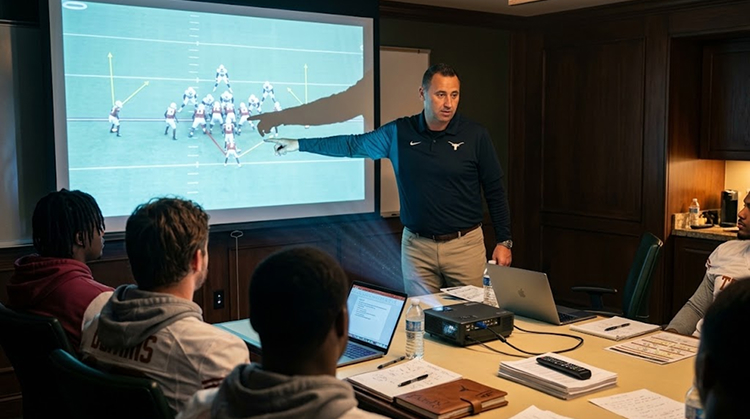
That gives Sarkisian a strong foundation.
The coaching staff does not have to overhaul the team. It has to remove unnecessary mistakes from a team that is already capable of beating ranked opponents.
The difference could be substantial.
If Texas reduces its penalty total from 11 to a more manageable number while maintaining the defensive pressure it showed against Tennessee, the Longhorns will force opponents to beat them through execution rather than receiving extra opportunities.
That is the standard Sarkisian needs during the bye.
The Bye Week Is About More Than Oklahoma
It would be easy to frame the next two weeks entirely around Oklahoma.
That would miss the larger point.
Texas has eight regular-season games remaining after the bye. Oklahoma is the next opponent, but the same discipline standards will matter against Florida, Ole Miss, Mississippi State, Missouri, LSU, Arkansas and Texas A&M.
The Longhorns are now playing from the position of the No. 1 team in the country.
That means opponents will be motivated to capitalize on every mistake.
Texas cannot control how well another team plays. It can control whether it gives that team unnecessary opportunities.
The Tennessee game demonstrated both sides of that equation. Texas’ defense was good enough to dominate the line of scrimmage and produce 10 sacks. The offense did enough to score 20 points. But 11 penalties for 115 yards created a margin that should have been much smaller.
The bye week gives Sarkisian and his staff the opportunity to make that margin disappear.
The next test comes Oct. 10 at the Cotton Bowl.
For Texas, the objective is straightforward: keep the aggression, keep the physicality, keep the emotion — and stop giving away yards.
That is how a 4-0 team turns its early-season survival skills into a more complete SEC identity.