

Texas Heat Rules moved from policy language to daily football reality after the UIL’s 2026-2027 Heat Stress & Athletic Participation Required Plan took effect on August 1, 2026. For high school football programs across the state, that shift changed more than practice paperwork. It changed how coaches build August schedules, how athletic trainers manage risk and how families should judge whether a program is taking early season heat seriously.
This is not a small operational tweak. Texas football starts at the hottest point of the school calendar, with players returning to conditioning, pads and contact before many campuses have settled into a normal academic rhythm. The sport asks teenagers to sprint, collide, recover and learn under heat stress that can make a routine practice dangerous if adults cut corners.
The UIL’s move toward mandatory Wet Bulb Globe Temperature monitoring was the right step. It also raised the standard for every head coach and athletic director. Heat safety is now part of competitive preparation, not separate from it.
Why Texas Heat Rules Changed August Practice
The Rule Shift Moved Heat From Judgment Call To Procedure
The most meaningful change in August 2026 was that schools had to use on-site WBGT readings for outdoor athletic and marching band activity. The plan required measurements 15 minutes before outdoor practices and every 30 minutes during practices. Depending on the reading, teams had to adjust time limits, equipment use or stop activity.
That matters because August heat is not uniform across Texas. A late-afternoon practice in the Rio Grande Valley is not the same as a morning workout in the Panhandle. A turf field, humidity spike or lack of wind can change risk even when the temperature on a phone app looks manageable. WBGT is useful because it accounts for more than air temperature.
The policy also tied football planning to gear progression. Before August practices began, full contact was prohibited, and the first day of conditioning began on August 3, 2026, without full contact. Full pads came later, depending on classification. That structure limits the old temptation to rush players into football shape by stacking contact, equipment and heat all at once.
Texas Heat Rules made August harder on coaches in one sense. They limited the freedom to practice whenever a staff preferred. But that friction is the point. A good program should be able to teach tempo, assignment discipline and conditioning without treating dangerous heat as a toughness test.
Rapid Cooling Is Now Part Of Football Infrastructure
The UIL’s 2026 plan also required rapid cooling access when WBGT readings crossed specified thresholds. That means schools needed the ability to provide full-body immersion in ice water during practices or workouts under those conditions.
This is where the issue becomes practical for districts. A heat plan is only as good as the staffing, equipment and space behind it. Ice tubs, water access, shaded recovery areas, trained adults and communication with emergency medical services are not luxuries. In August football, they are part of the field setup.
That is why families should see heat policy as part of game-day and practice-day readiness, much like transportation or security. We have already seen how heat policy has affected bands, kickoff routines and sideline operations across the state, a point we addressed in our look at Texas heat safety planning.
The Medical Case For Mandatory Heat Acclimatization
Texas Heat Rules And The Evidence Behind Them
The strongest argument for stricter early season limits is not fear. It is evidence. A national study of U.S. high school football from 2012 through 2017 found an average exertional heat illness rate in preseason practices of 0.70 per 10,000 athlete-exposures. In states with mandated heat-acclimatization guidelines consistent with national athletic training recommendations, the rate was 0.42 per 10,000 athlete-exposures, compared with 0.72 in states without mandates, according to a national heat illness study.
That gap is why voluntary guidance was never enough for a state as large and football-driven as Texas. A recommendation depends on local discipline. A mandate creates a baseline. It gives athletic trainers, assistant coaches and campus administrators a rulebook they can point to when practice plans need to change.
The Florida data in the research record points the same way. A North Central Florida study reported 57 exertional heat illnesses during 29,759 athlete exposures, with the August rate rising to 4.35 per 1,000 athlete exposures. Practices longer than three hours drove much of the increase, according to the Florida practice study.
Texas is not Florida, but the lesson travels well: the early practice calendar is the danger zone. The combination of heat, incomplete acclimatization, long sessions and equipment creates the problem. The best response is not one heroic sideline decision after a player collapses. It is a system that lowers risk before the whistle blows.
Safety Is A Coaching Standard, Not A Soft Standard
Texas Heat Rules should not be framed as an attack on hard coaching. The best coaches in the state already know the difference between demanding effort and ignoring warning signs. Conditioning matters. Physical play matters. So does availability.
A player who misses time because a staff ignored heat risk is not tougher. He is unavailable. A roster that loses practice quality because too many players are cramping, dizzy or unable to recover is not gaining an edge. It is losing teaching time. Smart heat management protects player health while preserving the quality of football work.
What Coaches And Families Should Demand
Accountability Has To Be Visible
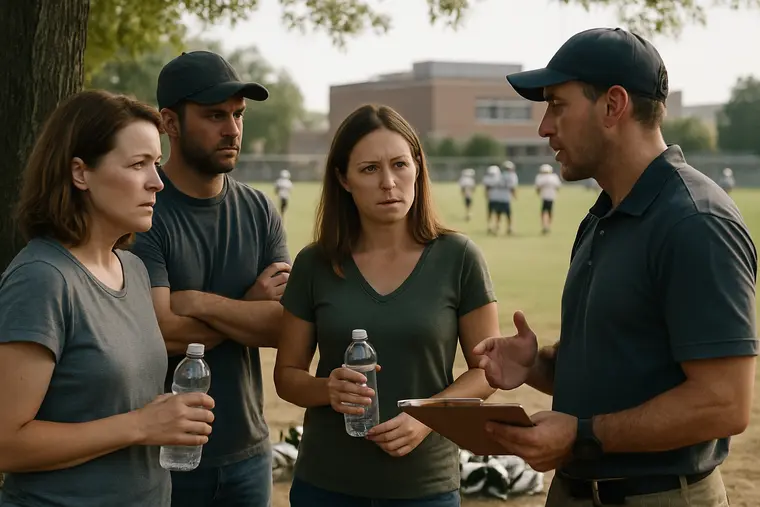
The practical test for any Texas high school program is simple: can the adults explain the heat plan before trouble starts? A strong program should not hide behind vague language about hydration or toughness. It should be able to explain how WBGT is measured, who records it, who has authority to modify practice and where cooling equipment is located.
Parents do not need to micromanage practice. They do have a fair reason to ask whether the campus is prepared. Coaches do not need to publish every internal detail. They should be ready to communicate the basics because trust is earned before August heat exposes weak planning.
- Who takes WBGT readings before and during practice?
- Where is the rapid cooling area located during outdoor workouts?
- How does the staff adjust equipment, contact and practice length when readings rise?
- Who contacts emergency medical services if a player shows signs of serious heat illness?
These are not gotcha questions. They are responsible football questions. The schools that handle them well are likely to be the same schools that handle fourth-quarter fatigue, two-way players and short-week practice schedules with discipline.
Competitive Programs Will Adapt First
Some coaches may see heat policy as another burden on an already crowded calendar. That reaction is understandable, especially at smaller schools where one athletic trainer may serve several teams, or where facilities lag behind larger districts.
Still, the programs that adapt fastest will gain an organizational advantage. They will schedule smarter. They will use walk-throughs with purpose. They will divide reps more efficiently. They will develop younger players without wasting bodies in unsafe conditions. The best staffs will treat Texas Heat Rules as a planning challenge, not an excuse.
That matters in Texas because early season football can set the tone for district play. August practice is where offensive line communication, defensive tackling angles and special teams assignments start to take shape. If heat forces shorter or modified sessions, coaches must be sharper with every rep.
Why Texas Heat Rules Still Define August Football
The Culture Has To Match The Policy
Texas Heat Rules are now part of the sport’s operating structure, but rules alone cannot carry the full load. The culture around them has to change too. Players need to report symptoms without fear of being labeled weak. Assistants need freedom to raise concerns. Head coaches need district backing when they shorten or move a practice.
There is no conflict between Texas football pride and heat safety. The state can value Friday nights, packed stands and tough players while admitting that August practices require a different standard than October district games. The sport is better when the adults act early, communicate clearly and refuse to let heat become a preventable crisis.
The lasting impact of Texas Heat Rules will be measured less by the policy document than by routine habits: readings taken on time, gear progression followed, cooling zones ready and practices adjusted before athletes are in distress. That is not a retreat from Texas football culture. It is how the game protects the players who make that culture matter.