

Texas heat safety has moved from a preseason talking point to a game-day operations issue for high schools across the state. As of August 1, 2026, UIL member schools are required to use Wet Bulb Globe Temperature readings for outdoor athletic and marching band practices, which means coaches, trainers, administrators and families are dealing with a more formal standard than the old heat-index conversation.
That change matters because Texas high school football does not run on the field alone. It runs on buses, practice scripts, band call times, athletic training rooms, concession staffing, officials, parents and students waiting through late-summer heat. The UIL policy does not turn every hot day into a cancellation. It does force schools to document conditions, plan cooling access and adjust activity when the readings demand it.
For a state that treats Friday nights as a civic routine, that is a real shift. The smartest schools will not treat the rules as a burden. They will treat them as a new operating standard, just like lightning delays, venue security or medical coverage.
Texas Heat Safety Moves From Advice To Operations
Texas Heat Safety Now Starts With WBGT
The most meaningful change is the move from recommendation to requirement. UIL had promoted WBGT monitoring as a best practice beginning in 2023, but the 2026-27 school year made it mandatory for outdoor athletic and marching band practices. The UIL plan requires WBGT readings within 15 minutes before a practice or workout begins and every 30 minutes during the session, according to the UIL heat stress plan.
That timing detail is not paperwork trivia. Conditions can shift during a late-afternoon practice. A reading taken before stretching may not reflect what players face during team periods, special teams work or post-practice conditioning. The 30-minute check creates a recurring decision point for coaches and trainers.
It also changes authority on the field. The old culture often rewarded pushing through discomfort. The new model gives schools a measurable trigger for rest breaks, equipment limits, reduced activity time or cancellation. That does not remove coaching judgment, but it narrows the room for guesswork.
Why The Thresholds Change The Sideline
The UIL plan sets different requirements by WBGT class. Texas is divided into classifications, including Class 2 and Class 3 areas, with different heat thresholds. Under the 2026-27 plan, rapid-cooling zones are required for outdoor activity when the WBGT reaches at least 79.7 degrees in Class 2 or at least 82 degrees in Class 3.
Those numbers may look modest to anyone used to reading a standard thermometer in August. That is the point. WBGT accounts for factors beyond air temperature, including radiant heat and humidity. A football field can feel different from a shaded parking lot, and a humid evening can strain athletes even when the air temperature does not look alarming.
From an operations standpoint, the rule pushes schools to prepare before the first whistle. A rapid-cooling zone is not something a staff can improvise after an athlete collapses. It requires space, water, ice, equipment and people who know their assignments.
How Game Day Decisions Are Changing
Kickoff Windows Are Now Part Of Risk Management
UIL competitions are not bound by every practice WBGT limitation, but the 2026-27 plan still requires rapid-cooling zones at set heat levels and encourages officials to consider game-time adjustments, extended breaks or shifted start times. That distinction is central to how football Fridays will work.
A varsity game may still be played on a hot evening, but the operation around it has to be tighter. Athletic departments must think about where cooling equipment sits, who monitors field-level conditions, how officials communicate breaks and how quickly emergency response can begin.
This is where game management becomes more visible. A school may choose a later kickoff window. Officials may allow longer stoppages. Coaches may adjust warmup periods. Bands may alter pregame routines. Those decisions can frustrate people who want the night to run on old habits, but they are practical responses to a rulebook that now treats heat as a measurable event-management issue.
For families planning around heat, travel and stadium timing, our related look at Texas heat rules explains how August routines are being reshaped beyond the sideline.
Cooling Zones Are Becoming Core Infrastructure
The rapid-cooling requirement may be the clearest example of how Texas heat safety is changing budgets and staffing. Schools need cold-water immersion or equivalent equipment, and the UIL plan also references emergency action planning for exertional heat stroke. The plan emphasizes rapid cooling, including cold-water immersion or the TACO method using tarps with ice and water.
That standard carries a plain football meaning: the sideline is no longer just benches, water bottles and a trainer’s table. It is a treatment area that must be ready before the athletes arrive. In larger districts, that may be easier because athletic training coverage and equipment budgets are stronger. In smaller communities, the same requirement may demand more coordination among coaches, administrators, booster groups and local emergency personnel.
There is an equity issue here that should not be brushed aside. The rules apply statewide, but resources do not. A school in a fast-growing suburb and a small rural district may face the same heat threshold with very different staffing depth. The rule is still necessary. The challenge is making sure compliance is realistic, funded and checked.
- WBGT readings must be taken shortly before and during outdoor practices.
- High readings can trigger reduced activity time, more rest, hydration breaks or equipment limits.
- Rapid-cooling zones are required at UIL thresholds for specified heat conditions.
- Competitions can include adjusted start times, longer breaks or other heat responses.
Bands, Travel And Families Feel The Same Pressure
The Rule Extends Past Football
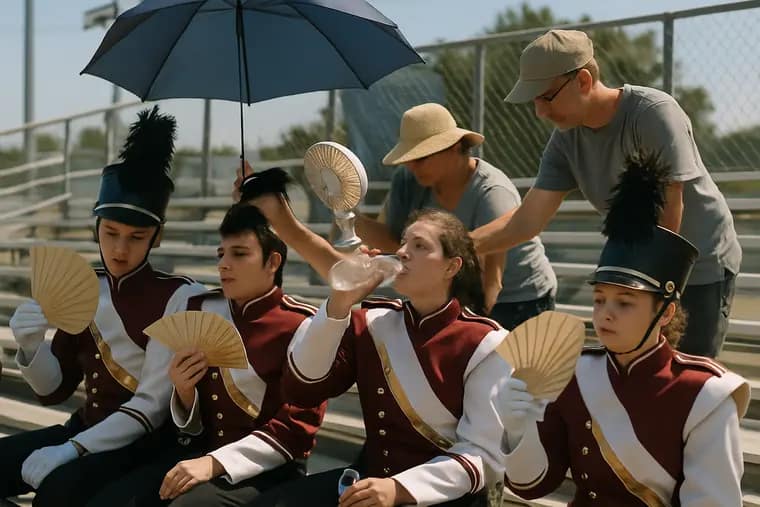
One of the more practical features of the UIL policy is that it does not isolate football as the only heat-risk activity. Outdoor athletic programs and marching bands are both included. In Iowa Park, band leaders adapted to the wet-bulb mandate with longer water breaks and cooling stations, according to News Channel 6 coverage.
That matters on game day because the band often spends more time in uniform before kickoff than many fans realize. Call times, warmups, pregame performance, halftime setup and postgame routines all create heat exposure. If football staffs are adapting but band schedules are not, the operation is incomplete.
Cross country, cheer, drill teams and other outdoor activities face similar pressures. The Friday night product people see from the stands is built by several groups that share the same weather. A safe plan has to include more than the players in pads.
Hydration Is No Longer A Loose Reminder
Hydration has always been part of Texas football language, but the new rules make it harder to treat water as a casual sideline detail. The UIL plan calls for unrestricted access to water and more rest or hydration breaks when heat readings climb. That affects bus rides, pregame meals, locker-room timing and halftime organization.
Good programs will build habits before the hardest days arrive. Players should not first hear about heat protocols after a dangerous reading. Coaches should not be debating who fills tubs or tracks readings during warmups. Families should know that a delayed start or longer break is not disorder. It is the plan working as written.
There is a competitive angle, too. Teams that handle heat planning well may practice more efficiently and avoid preventable disruptions. That does not mean heat policy wins games. It means poor planning can cost reps, strain staff and put athletes in danger.
What Texas Heat Safety Means For Friday Nights
The best reading of Texas heat safety is not that it weakens high school football. It professionalizes part of the operation that had too often depended on habit, toughness language and local custom. Texas is still going to play football under hard late-summer conditions. The difference is that schools now have clearer triggers for what must happen before, during and around outdoor activity.
Administrators should expect more questions from parents about cooling zones, practice changes and game timing. Coaches should expect athletic trainers to carry more operational authority. Fans should expect some nights to move slower, start later or include longer breaks. None of that takes away from Friday night football. It reflects the cost of staging it responsibly in Texas heat.
The next measure will be consistency. The UIL plan creates a standard, but the value of any standard depends on daily use. Readings have to be taken. Equipment has to be available. Staff have to be trained. Emergency action plans have to be more than forms in a binder.
If schools handle that work, the 2026 mandate can become something more than another compliance item. It can become part of how Texas high schools protect athletes, band members and students while preserving the weekly rhythms that make local football matter.