

DKR parking changes matter well before kickoff for Texas fans, campus permit holders, families, RV groups, and anyone driving through central Austin on a home football Saturday. For the 2026 Texas football season, as of October 18, 2026, the biggest planning points are early traffic controls, garage relocation deadlines, public parking timing, ADA checkpoint verification, rideshare placement, RV parking rules, and I-35 construction effects near Darrell K Royal–Texas Memorial Stadium.
The stadium sits in a part of Austin where campus streets, state offices, neighborhoods, garages, and construction routes all meet. That means a late arrival can create problems even for fans who already know where they want to park. A better plan starts with the day-before rules, then works forward to arrival windows, drop-off options, and postgame routes.
What DKR parking changes Mean Before Arrival
DKR parking changes Start Earlier Than Kickoff
The first key time is 5:00 a.m. on Texas home football game days. Traffic control points and one-way street designations around the stadium go into effect at that time, according to UT Parking & Transportation’s 2026 football parking information official UT parking rules. For fans, that means the route that works on a normal weekday may not work on a football Saturday.
This is especially important for anyone dropping off family members, meeting a tailgate group, or trying to reach a garage close to the stadium. Once the traffic pattern shifts, drivers should expect checkpoint screening, closed turns, and lane direction changes. The research does not give a single universal best route for all fans, and that is the point: the best route depends on where you are parking, what time you arrive, and whether construction has affected your usual approach.
Permit Holders Have A Day-Before Deadline
Some campus permit holders have a separate deadline that arrives before game day traffic begins. Garages with R, F, or S permits, including locations such as Brazos, Manor, San Jacinto, Trinity, East Campus, and Football Training, require affected permit holders to relocate vehicles before home football games. Vehicles not moved by 11:59 p.m. on the day before a home game risk being cited and/or towed.
Relocated R-, F-, or S-garage permit holders may use alternate garages on a space-available basis. The listed options include San Antonio Garage, Guadalupe Garage, 27th Street Garage, and Speedway Garage. Space-available language matters. It does not mean a personal space is held at an alternate garage. Permit holders should treat the relocation deadline as a firm part of game-week planning, not a Saturday morning task.
For Texas fans who also spend time around other venues in the state, the same habit applies: confirm access rules before leaving home. Our broader note on stadium access for Texas game days fits the same practical approach: know the gate, know the lot, and give yourself room for street controls.
Public Parking And Garage Timing Around DKR
Public Lots And Garages Do Not All Work The Same Way
Public parking is available in select UT campus garages and lots for a fee on game days. Research notes identify the Health Center Garage, Lot 15, and Lots 18/92 as public options. Fans should not assume every campus garage is open to the public simply because it appears close to the stadium on a map.
Public parking garages and surface lots generally open five hours prior to kickoff, including locations listed by the stadium parking site such as Health Center, Guadalupe, Speedway, 27th Street, San Antonio, and surface Lots 15, 18, and 92 stadium parking information. East Campus Garage is listed in the research notes as offering a reduced rate of $15 among those options.
That five-hour window is useful, but it is not a reason to delay if your group needs extra time. Fans carrying supplies, attending with children, coordinating with older relatives, or planning to meet friends should build in time between parking and walking. DKR sits on a busy campus footprint, and the last mile can take longer when crowds thicken around crosswalks, checkpoints, and stadium approaches.
How To Think About Arrival Windows
The best arrival window depends on your parking type. A prepaid or permit-based plan should still account for traffic controls beginning at 5:00 a.m. Public parking users should note the five-hours-before-kickoff opening time and avoid arriving far earlier than a selected public facility allows. Fans using rideshare should build a separate plan because the drop-off and pick-up location is not the same as pulling directly to the stadium gates.
DKR parking changes are not only about where vehicles sit. They affect walking distance, timing, family logistics, and how quickly a group can reset after the game. If your group splits between a tailgate and a later stadium arrival, set a meeting point away from the tightest traffic areas. If you are leaving soon after the final whistle, talk through the postgame route before entering the stadium.
ADA, Special Accommodation, And Rideshare Details
ADA Access Requires Credential Verification
ADA-compliant parking and special accommodation parking are separate categories in the 2026 research notes. ADA-compliant parking is available in Lot 118 and at Trinity Street near DeLoss Dodds Way, with ADA credentials verified at checkpoints by placard or license plate. Fans relying on ADA access should have credentials ready before reaching the checkpoint rather than searching for them in line.
Special accommodation parking is described as closer to the venue but non-ADA compliant. Research notes say special accommodation parking in other designated locations starts at 7:00 a.m. on game day, with a fee in some zones, including an example of $50. Since the notes identify that category as non-ADA compliant, fans who specifically need ADA-compliant parking should not treat special accommodation parking as a substitute.
Rideshare Uses Dean Keeton
For rideshare users, the designated airport-style drop-off and pick-up location is on the south curb of Dean Keeton between Robert Dedman Drive and Red River Street. This matters for both arrival and exit. Drivers may not be able to get closer, and riders should be ready for a walk from the drop zone to their stadium entrance.
Families using rideshare should pick a clear postgame meeting routine. Cell service can slow in large crowds, and streets around the stadium may feel different after the game than they did before kickoff. A simple plan works best: agree on the Dean Keeton area, leave together, and avoid asking a driver to stop in an active traffic-control zone.
RV Parking, Oversize Vehicles, And I-35 Routes
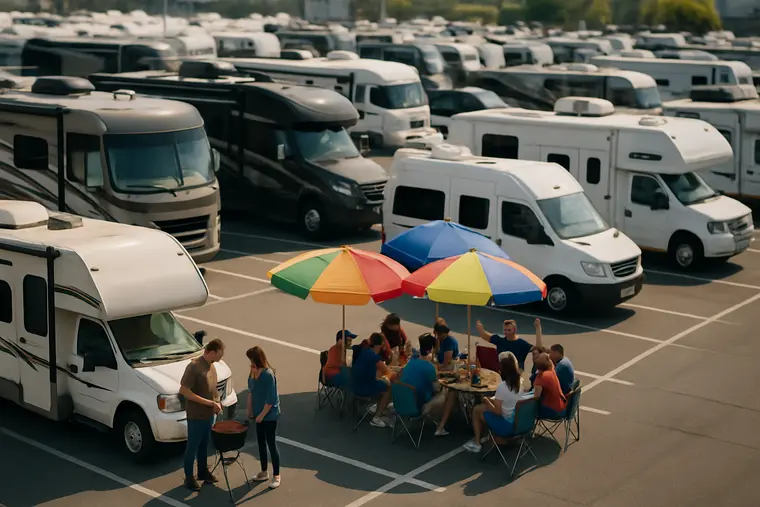
RV Parking Is Centralized Away From The Stadium
RV and oversize vehicle parking is centralized in State Lot 26 at 701 W 51st St. The research notes list the cost at $20 per space from 6:00 p.m. the night before a home game until noon the day after. For game day alone, the listed cost is $10 per space. A free shuttle service runs from the adjacent UT Athletics Fields to the stadium.
That setup changes the day for RV groups. Instead of treating the RV as a close-in tailgate base, fans should plan around the shuttle connection and the distance from State Lot 26 to the stadium district. Load only what your group can reasonably carry or manage during the shuttle transfer. If part of the group drives a separate vehicle, confirm where that vehicle will park before game day.
I-35 Construction Changes The Usual Austin Approach
I-35 construction continues to affect access near the stadium area. Research notes say drivers arriving from the north on I-35 who intend to exit at MLK Blvd should use the lower deck because there is no exit onto MLK from the upper deck. The former exit from 15th Street onto the northbound I-35 ramp has also been permanently removed.
Postgame traffic is affected as well. Some fans are directed toward the I-35 Southbound frontage road from 15th Street, while others are directed toward 12th Street. That means the return route may not mirror the arrival route. Fans who park east or south of campus should pay close attention to postgame traffic direction, especially if their normal habit includes the removed 15th Street northbound ramp movement.
- Move affected R, F, or S permit vehicles before 11:59 p.m. the day before a home game.
- Expect traffic controls and one-way designations around the stadium beginning at 5:00 a.m. on game day.
- Plan public parking around the general five-hours-before-kickoff opening time.
- Have ADA placards or license plates ready for checkpoint verification if using ADA parking.
- Use the Dean Keeton rideshare zone instead of asking drivers to stop near stadium gates.
- Account for I-35 construction, especially the lower-deck requirement for MLK Blvd from the north.
Why DKR parking changes Matter Before Kickoff
DKR parking changes are easy to underestimate because they look like small operational details on paper. In practice, they shape the full game-day experience. A missed relocation deadline can lead to citation or towing. A wrong I-35 approach can add stress before arrival. A misunderstanding about ADA versus special accommodation parking can create a serious problem for a fan who needs a specific access point.
The safest way to handle Texas home football parking in 2026 is to plan backward from kickoff. Confirm whether your parking option is a permit garage, public garage, surface lot, ADA space, special accommodation zone, RV lot, downtown option, or rideshare plan. Then match that choice to the right time: day-before relocation by 11:59 p.m., traffic controls at 5:00 a.m., special accommodation parking beginning at 7:00 a.m., and public parking generally opening five hours before kickoff.
Good game-day planning will not remove every delay around a packed stadium in Austin. It will keep the avoidable mistakes off your schedule. For Texas fans, that leaves more time for the walk to Darrell K Royal–Texas Memorial Stadium, pregame routines, and the football itself.