

Fan Journey Profiles became Texas Athletics’ clearest attempt in 2026 to sort a crowded Longhorns football Saturday into plans that different fans could actually use. Announced on August 25, 2026, the program grouped gameday recommendations into three personas — Families, Explorers, and Essentials — before the September 5, 2026 season opener against Texas State at Darrell K Royal-Texas Memorial Stadium, according to the Texas Athletics announcement.
That opener has already passed as of October 19, 2026, so the better way to judge the rollout is not as a preview. It is a practical look at how Texas tried to help families, regulars, first-time visitors, and quick-turn fans plan the hours before kickoff.
For a Texas football crowd, this mattered because DKR Saturdays are not one-size-fits-all. Some people arrive early with kids and need shade, bathrooms, food, and predictable movement. Some want music, merchandise, photos, and campus energy. Others want a clean path from parking or rideshare to their seats with as little wasted time as possible.
Fan Journey Profiles Changed Pregame Planning
The strongest part of the rollout was its format. Texas did not simply publish another long list of gameday features. The athletic department grouped choices around fan behavior, which made the information easier to act on before leaving home.
Fan Journey Profiles For Families, Explorers, And Essentials
The Families profile was built around fans who needed a calmer and more predictable day. That group included parents, younger children, and anyone trying to balance football traditions with food, restrooms, walking distance, and timing.
The Explorers profile pointed fans toward a fuller campus experience. Based on the research provided, that meant a stronger focus on pregame destinations, traditions, merchandise stops, food options, and social spaces around the stadium.
The Essentials profile served fans who wanted a direct plan. That audience likely included season-ticket holders with established routines, visitors on tighter schedules, and anyone who wanted to know where to go, what to handle first, and how to get inside without turning the afternoon into a long campus loop.
For readers wanting a narrower breakdown of the concept, our related piece on Texas fan journey profiles covers how the categories fit different Longhorns gameday habits.
How The Texas State Opener Tested The Format
The first use case came on September 5, 2026, when Texas hosted Texas State in a 2:30 p.m. kickoff. That time slot created a real test for planning. A mid-afternoon start compresses the morning, pushes families into hotter parts of the day, and forces fans to decide early how much pregame activity they can handle before entering the stadium.
Texas Athletics published hour-by-hour suggestions for that game based on the three profiles. The value was not that every fan had to follow the same script. The value was that each group could build around a starting point instead of sorting through every option at once.
What Each Profile Solved For Longhorn Fans
DKR is a large college football venue with several competing pregame priorities. The profiles helped sort those priorities into usable plans. For Texas fans coming from Austin neighborhoods, Central Texas suburbs, or longer drives across the state, that kind of structure can affect when to leave, where to eat, and how much time to build in before kickoff.
Families Needed Predictability More Than Volume
Families usually benefit from fewer decisions, not more of them. A parent with children does not need every possible stop around the stadium. They need the order of operations: where to start, where food is likely to fit, when to move closer to the gate, and how to avoid unnecessary backtracking.
The 2026 additions around DKR gave that group more choices, but the profile format helped reduce the burden. Smokey’s Midway added more carnival games. Big Bertha’s Bazaar offered merchandise and photo opportunities with Big Bertha. Hook ’Em Hangout included rotating food trucks, beer selections, and live broadcasts before games. Those are useful stops, but only if fans can place them in a realistic timeline.
Explorers Had More Reasons To Arrive Early
The Explorers group had the most natural connection to Texas’ signature pregame destinations. Longhorn City Limits, staged on LBJ Lawn, was in its seventh season in 2026 and featured national and regional musical acts. For fans who see Texas football as a full campus day, not just four quarters, that kind of destination can shape the whole afternoon.
This group also had reason to sample the expanded concessions program. Sodexo Live!, the venue’s food and beverage provider, introduced celebrity guest chef items for 2026 and added general seating menu options such as Footlong Brisket Nacho Dogs, Big Tex Bacon-Wrapped Hot Dogs, Cake Cups, and Dirty Sodas. Those details matter because food planning has become part of the stadium experience, especially for fans who spend several hours near DKR before kickoff.
Maps, Food, And Timing Became Part Of The Plan
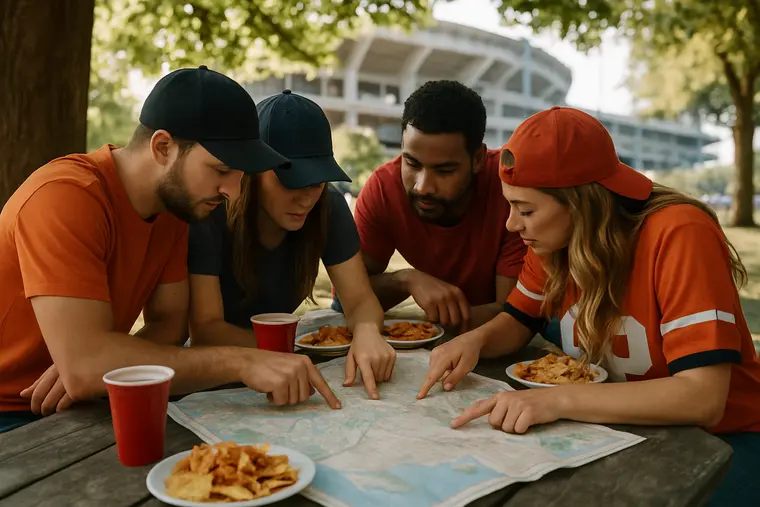
Good gameday planning depends on timing as much as enthusiasm. In 2026, Texas connected the profiles with newer tools and stadium operations, which helped make the categories more useful than a simple marketing label.
Using The Map Before Leaving Home
On September 4, 2026, Texas Athletics added an interactive 3D map powered by Mappedin. The map displayed stadium amenities such as concessions, restrooms, gates, pregame destinations, and profile-linked locations. It was available through the Texas Longhorns mobile app on iOS and Android and through a web view at TexasLonghorns.com/DKRmap.
That map mattered most before fans reached campus. A family could check where restrooms and food were located before deciding how early to arrive. An Essentials fan could identify the most direct route toward a gate. An Explorer could pair Longhorn City Limits, Hook ’Em Hangout, or Big Bertha’s Bazaar with a realistic stadium entry plan.
Concessions Speed Still Shaped The Day
Food improvements only help if lines move. Texas’ 2026 setup included 105 Mashgin self-checkout units after 16 were added for the season. The research notes identify that as the highest count of any collegiate stadium in the United States.
The Fan First Menu also remained in place for a ninth consecutive season in 2026, with core prices unchanged: $3 bottled water, candy, and popcorn; $4 hot dogs and peanuts; and $5 nachos and Coca-Cola. For families and regulars, that pricing structure gave fans a dependable baseline even while higher-profile food items drew attention elsewhere in the stadium.
- For families: check restrooms, water, food, and kid-friendly stops before picking a gate time.
- For explorers: build the day around one or two pregame destinations instead of trying to cover everything.
- For essentials fans: anchor the plan around parking, entry, seat location, and the shortest food stop.
- For afternoon kickoffs: leave extra time for heat, walking pace, and security entry before the band and team runout.
Why Fan Journey Profiles Matter At DKR
Fan Journey Profiles did not change the score, the opponent, or the noise inside DKR. What they changed was the planning layer around a Texas home game. That layer is where many fans decide whether a Saturday felt manageable or frustrating.
The 2026 rollout showed Texas Athletics treating gameday as several different experiences happening at the same time. A family with small children, a graduate coming back for a full campus day, and a season-ticket holder trying to get from the car to the seat do not need the same plan. They need clear choices tied to timing, gates, food, restrooms, and traditions.
By October 19, 2026, the September 5 opener had already provided the first real example of that approach. The larger lesson for future DKR trips is simple: decide what kind of fan day you want before you get near campus. Once that choice is made, the profile format, map tools, concessions setup, and pregame destinations give Longhorn fans a better starting point for building a Saturday that fits their group.