
Steve Sarkisian enters the week of October 14 facing one of the most important offensive tests of Texas’ 2026 season. The Longhorns are 4-1, ranked No. 7 in the AP Top 25, and coming off a 27-24 loss to Oklahoma that exposed problems the coaching staff can no longer dismiss as isolated mistakes. Texas now hosts Florida on Saturday, October 17, at Darrell K Royal-Texas Memorial Stadium, with kickoff scheduled for 11 a.m. Central. A convincing performance could restore confidence in the offense; another uneven afternoon would intensify questions about Sarkisian’s play-calling and the team’s ability to compete for the SEC title.
The Oklahoma defeat was particularly frustrating because Texas showed that it could move the football. The Longhorns gained 382 total yards and averaged 6.1 yards per play, but they converted only three of 14 third downs, averaged 3.8 yards per rushing attempt and failed to score a rushing touchdown. Two fourth-quarter interceptions by Arch Manning and a blocked punt returned for a touchdown made the margin for error even smaller. Those numbers point to an offense that can generate production but has struggled to turn it into consistent scoring opportunities.
Oklahoma Exposed More Than Manning’s Mistakes
Manning’s two interceptions understandably dominated the postgame discussion. The first became a 42-yard pick-six for Oklahoma safety Peyton Bowen, tying the game at 24-24. The second came with approximately 20 seconds remaining and gave Oklahoma the opportunity to move into range for Tate Sandell’s winning 47-yard field goal.
Those mistakes were decisive, but they did not explain every problem Texas experienced.
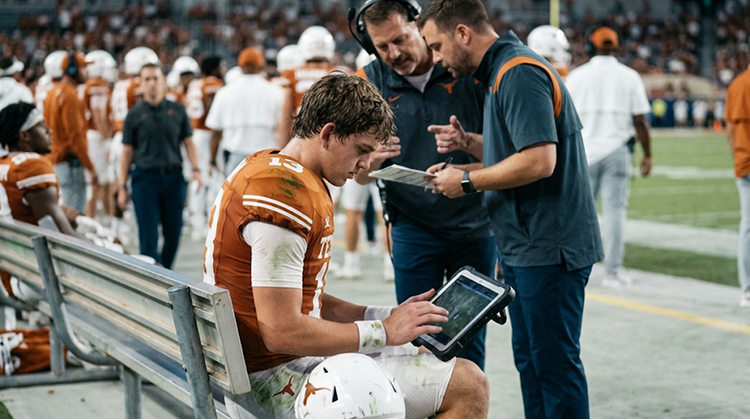
The Longhorns repeatedly struggled to sustain drives, and their rushing game failed to provide a dependable alternative when passing situations became difficult. Texas also surrendered six sacks against Oklahoma, according to the postgame reporting, putting additional pressure on Manning to make difficult decisions under pressure.
Sarkisian has acknowledged that the offensive problems ultimately fall on him. After the defeat, he resisted calls to surrender play-calling duties and maintained confidence in his ability to coach the unit through its current struggles.
That decision establishes the central question for Florida: can Sarkisian make meaningful adjustments without abandoning the offensive system he has built?
Sarkisian Has Identified The Problem, But Execution Must Improve
During his October 12 media availability, Sarkisian described Texas’ offensive situation as a lull involving rhythm, scheme and personnel. He maintained that the team was close to becoming more explosive, while acknowledging that the offense had been below its expected standard.
The distinction between a temporary slump and a structural problem matters.
If Texas is simply missing a few assignments, improved practice execution could produce a quick response. If the offense is struggling because its formations, personnel combinations and play sequences are too predictable, the coaching staff will need to make more substantial changes.
Texas has enough talent to produce explosive plays. Ryan Wingo, Cam Coleman and Emmett Mosley V provide Manning with several receiving options, while the running back rotation offers different ways to attack defenses.
The task is to make those options work together.
Sarkisian needs to create more favorable second- and third-down situations, establish a reliable rushing threat and give Manning clearer answers when defenses pressure him or take away his first read. Those changes would address the underlying problems without requiring Texas to replace its offensive identity.
Florida’s Defense Creates An Opportunity
Florida arrives in Austin after consecutive losses to Missouri and South Carolina. The Gators lost 38-19 at home to South Carolina on October 10, continuing a difficult stretch after a promising start to the season. First-year head coach Jon Sumrall has acknowledged that his team remains a work in progress.
The matchup offers Texas a chance to exploit Florida’s defensive weaknesses, particularly in pass coverage.
Recent scouting analysis identified Florida’s pass defense as a major concern, with the Gators allowing 37.5 points per SEC game in the cited assessment. That creates a potentially favorable environment for Manning and the Longhorn receivers, provided Texas gives its quarterback enough protection and avoids predictable passing situations.
Texas cannot assume that Florida’s recent results guarantee an easy afternoon. The Gators still have athletic defenders capable of disrupting plays, and a desperate opponent can become dangerous if it finds early momentum.
The Longhorns need to establish control rather than wait for Florida to make mistakes.
Arch Manning Needs Better Situations, Not Just More Throws
Manning’s performance against Oklahoma contained both encouraging production and costly errors.
He threw for 260 yards and three touchdowns, showing that Texas can still create meaningful passing opportunities against a major opponent. His two interceptions, however, demonstrated the risks of forcing throws when the offense is under pressure.
Through five games, Manning has recorded 1,122 passing yards, 10 touchdowns and five interceptions. His overall production remains useful, but the turnover total shows why Texas needs a more balanced approach.
Florida gives Manning an opportunity to respond, especially if the Gators’ secondary struggles to contain Texas’ receivers. But the quarterback should not have to carry the entire offense.
Sarkisian can help by incorporating quicker reads, creating opportunities for receivers after the catch and using the running game to prevent defenses from focusing exclusively on the pass. Better protection and more manageable third downs would also reduce the likelihood that Manning must attempt difficult throws in obvious passing situations.
A strong response from Manning would be valuable. A strong response from the offense as a whole would be more meaningful.
The Offensive Line Must Help Restore The Running Game
Texas’ offensive line is another major part of the Florida preparation.
Against Oklahoma, the Longhorns averaged only 3.8 yards per rushing attempt and failed to score on the ground. The team’s passing production was enough to move the ball, but the lack of a consistent rushing threat made it more difficult to control the game.
The running game does not need to produce a spectacular statistical performance to become useful. Texas needs consistent gains that keep the offense on schedule, create manageable third downs and force the opposing defense to respect the possibility of a handoff.
That would also make the passing game more difficult to defend.
When Texas can run effectively, Sarkisian can use play-action, motion and formations that create uncertainty for linebackers and defensive backs. When the rushing game stalls, the offense becomes easier to anticipate.
Florida provides an opportunity to test whether Texas can correct that imbalance.
The coaching staff should also pay attention to protection assignments. The Oklahoma game showed how pressure can disrupt Manning’s timing and increase the consequences of a difficult decision. The offensive line must give the quarterback enough time to operate while creating room for the backs.
Texas Needs More Explosive Plays
One of the clearest concerns surrounding the Longhorn offense is its limited production on big plays.
Recent reporting has identified Texas’ lack of explosive plays as a major reason the offense has failed to meet expectations. The team has the receivers to stretch defenses, but those individual strengths have not consistently translated into sustained offensive momentum.
The answer is not simply to call more deep passes.
Sarkisian needs to create explosive opportunities through a variety of approaches. A quick pass to a receiver with space, a successful run through a defensive gap or a play-action concept that catches a linebacker out of position can all produce significant gains.
Texas also needs to avoid forcing explosive plays when a simpler completion would move the chains.
That balance matters against Florida. The Longhorns should attack opportunities when they appear, but they cannot allow the pursuit of a big play to create unnecessary turnovers or stalled possessions.
A more efficient offense could produce more explosive plays naturally by keeping defenses uncertain about what is coming next.
Third-Down Efficiency Could Determine The Game
Texas converted only three of 14 third-down opportunities against Oklahoma. That figure captures the difference between gaining yards and sustaining drives.
Third down is where offensive design, protection, route execution and quarterback decision-making meet. A team that repeatedly reaches third-and-long is more likely to face pressure and less likely to sustain a drive.
Texas needs to improve its early-down production to avoid those situations.
Shorter second- and third-down distances would give Sarkisian more flexibility. He could call a wider range of plays, use the running backs more effectively and give Manning opportunities to make quicker decisions.
The Longhorns should also examine how they handle third-and-medium situations. Those downs can offer opportunities for intermediate routes, quarterback movement and well-timed runs, provided the formation does not reveal the play too early.
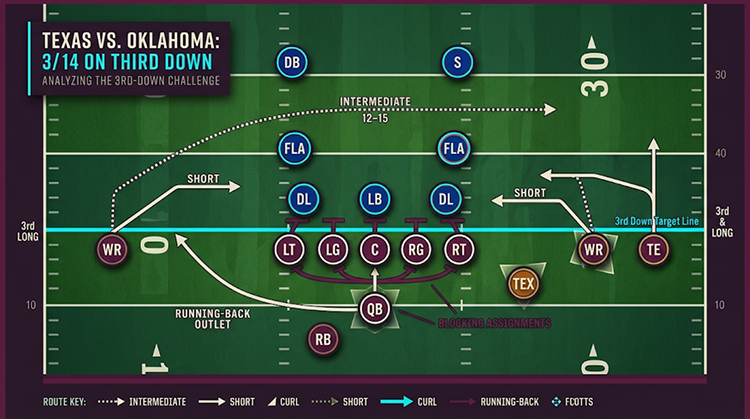
Florida’s defense gives Texas a chance to improve those numbers. The key will be whether the Longhorns execute consistently enough to turn favorable situations into first downs.
Special Teams Cannot Keep Erasing Texas’ Progress
Texas’ offensive problems have been compounded by mistakes on special teams.
Against Oklahoma, the Sooners blocked a punt and recovered the ball in the end zone for a touchdown. That play provided seven points without requiring Oklahoma’s offense to score, making an already difficult game more challenging for the Longhorns.
The blocked punt was part of a wider pattern. Recent reporting has highlighted critical special-teams errors across Texas’ previous games, including a long punt return touchdown against Tennessee and other mistakes involving kickoffs, penalties and returns. Sarkisian has indicated that he does not intend to make major changes to special-teams responsibilities immediately.
For Florida, the priority is to remove avoidable mistakes.
Texas does not need special teams to win the game by itself. It needs the unit to perform its basic responsibilities without giving the opponent free points or favorable field position.
That is particularly important while the offense is trying to regain confidence. Every possession becomes more valuable when the team is struggling to score consistently.
Florida Will Test Texas’ Ability To Respond
The October 17 matchup is important because Texas has little time to let the Oklahoma loss fade from view. The Longhorns are still 4-1, but their margin for error in the SEC race has narrowed.
Florida enters the game at 4-2 and has its own problems to address. The Gators have lost their last two games, and their defense has struggled during conference play. Both teams therefore have a reason to treat this matchup as an opportunity to reset their seasons.
Texas should approach the game with several measurable objectives: improve third-down conversion, establish the running game, protect Manning, limit turnovers and avoid special-teams breakdowns.
The outcome will matter, but the manner of the performance will matter too.
A win built around defensive stops and a few isolated offensive plays would provide relief without necessarily answering the questions raised by Oklahoma. A win featuring sustained drives, balanced production and cleaner execution would offer stronger evidence that Sarkisian’s adjustments are working.
One Week Is Enough To Improve, Not To Fix Everything
Texas does not need to solve every offensive problem before facing Florida. College football offenses evolve throughout a season, and a single week cannot eliminate every weakness involving personnel, protection and execution.
It can, however, establish whether the coaching staff has identified the right priorities.
Sarkisian needs to simplify situations that have become unnecessarily difficult, use the available talent more effectively and make the offense less dependent on Manning producing a spectacular play. The Longhorns must also demonstrate that they can respond when an opponent takes away their first option.
That requires preparation, but it also requires discipline. Texas cannot afford to give away possessions through turnovers or allow special-teams errors to undermine its progress.
Florida’s defensive struggles provide an opening. The Longhorns should have opportunities to move the ball, particularly through the passing game, but those opportunities will mean little if they fail to finish drives.
Sarkisian’s Next Decision Is About Execution
The Oklahoma loss did not erase Texas’ potential. It exposed the distance between the roster’s talent and the offense’s current performance.
Sarkisian has chosen to retain play-calling duties and has expressed confidence that the team can work through its offensive lull. The Florida game gives him an immediate opportunity to demonstrate that confidence is supported by tangible improvement.
The most convincing response would not require a completely different system. It would require a more effective version of the existing one: better protection, a dependable running game, smarter decisions from Manning, more productive third downs and fewer mistakes that change the game.
Texas remains capable of competing with the best teams in the country, but the Longhorns cannot rely on potential alone. Their offense must begin producing consistently enough to support an elite defense and protect the team’s position in the SEC race.
Florida is the next test. For Sarkisian, it is also an opportunity to show that the problems exposed in Dallas can be corrected before they define the season.