

Texas 2027 Recruiting is already giving the state a clear early storyline: Texas and Texas A&M are building large, high-profile classes with different roster strengths. As of Aug. 7, 2026, the Longhorns and Aggies have both created early separation in the 2027 cycle, and the most useful read is not just where they rank. It is how each staff appears to be filling future roster needs.
Texas is sitting in a strong national position with a class built heavily around defensive backs and select line-of-scrimmage pieces. Texas A&M, based on the supplied recruiting notes, has pushed to the top nationally through volume, top-end prospects and a clear emphasis on offensive line help. For Texas high school players, families and fans, the state’s two SEC programs are not waiting late in the cycle to define their boards.
Texas 2027 Recruiting Starts With Volume
Why Early Class Size Matters
Texas had 22 commitments and the No. 4 national class in mid-July 2026, according to Yahoo Sports on the Longhorns’ class. That number matters because 22 commitments gives a staff less room for speculation and more evidence of how the class is actually being built. Early class size can change before signing day, but it still shows which positions have received priority treatment.
Texas A&M’s number is even larger in the research notes: 26 commitments, the No. 1 national class, five five-star recruits and six more top-100 prospects. Those figures point to a staff trying to stack the class before the fall evaluation period reshapes boards around the country. The Aggies’ early push is especially notable because large classes can create peer momentum. Recruits notice who is already attached to a class, and families often track whether a program has a clear development plan for their position.
What Texas 2027 Recruiting Says About Fit
The first read on Texas 2027 Recruiting is that the Longhorns are not chasing one type of prospect. They have built around the secondary, added linebacker bodies and secured a five-star offensive lineman in Ismael Camara, who committed in mid-July 2026. The balance matters in the SEC, where roster depth gets tested through conference play and injuries can expose thin position groups.
For Texas A&M, the class profile listed in the research is more front-driven. Five-star offensive tackle Mark Matthews, four-star offensive tackles Kaeden Scott and DeMarrion Johnson, and three-star tight end Holden Niemi give the Aggies an early offensive structure. That does not mean the class is finished on offense, but it does show the staff has already addressed size and blocking surfaces.
Longhorns Build Around The Secondary
John Meredith III Sets The Tone
Texas’ defensive back haul is the clearest identity piece in the Longhorns’ 2027 class. John Meredith III is listed as a five-star defensive back and the No. 1 cornerback nationally, and he committed on June 19, 2026, per Sports Illustrated on Texas defensive backs. A commitment with that profile can shape how other defensive prospects view a class because elite corners often want to play in secondaries with range, competition and future NFL visibility.
The same defensive back group includes Montre Jackson, a four-star cornerback who committed June 27, 2026, and Brandon Sherrard, a four-star cornerback who committed July 1, 2026. Those three commitments give Texas a position-room identity before the cycle reaches its later stretch. Cornerback recruiting is rarely just about one starter. Modern defenses need outside corners, nickel options, special teams contributors and players who can survive spread tempo snaps.
Why Defensive Back Depth Travels In The SEC
Texas’ move into the SEC changes the weekly standard for back-end recruiting. The Longhorns will face offenses that test leverage, tackling angles and communication. A class built with multiple cornerback profiles gives the staff more ways to develop depth across roles. That is especially useful in a multi-year plan, where one prospect may be physically ready early while another needs time in the strength program.
Linebacker additions round out the defensive picture. Cade Haug, a three-star linebacker from Humble Kingwood, committed in February 2026. Taven Epps, a four-star linebacker from Tustin, California, committed in April 2025. Those names point to a class with both in-state and out-of-state pieces, though the defensive back group remains the defining position cluster.
Texas A&M Leans On Line Play And Top-End Talent
The Aggies’ Offensive Line Push
The research notes describe Texas A&M’s 2027 class as the No. 1 group nationally, and the offensive line is a major reason. Mark Matthews is listed as a five-star offensive tackle and the No. 3 overall prospect. Kaeden Scott and DeMarrion Johnson are listed as four-star offensive tackles. That is a clear position strategy, not a random cluster of commitments.
Offensive tackle recruiting carries extra weight in Texas because the state produces high school linemen who often arrive with experience in spread systems, pass protection spacing and tempo work. For the Aggies, taking multiple tackle bodies early gives the staff more time to sort out future roles. One player may stay outside. Another may develop into a guard depending on frame, movement and roster need. Early commitments do not settle those decisions, but they create options.
Defense Still Carries Star Power
Texas A&M’s top-end defensive names in the research include Zyron Forstall, a five-star defensive end ranked No. 17 overall, and Kamarui Dorsey, a five-star safety ranked No. 21 overall. That combination matters because it touches two different defensive stress points. Edge players affect the quarterback. Safeties affect spacing, run fits and coverage communication.
The Aggies also added Holden Niemi, a three-star tight end, in June 2026 as the first tight end in the class. That is a smaller detail than the five-star commitments, but it is still useful in roster planning. Tight ends can become formation tools, special teams bodies and red-zone targets if they develop. In a class with heavy line emphasis, tight end is a natural position to add because it connects blocking and receiving personnel.
What The Two Classes Say About Roster Planning
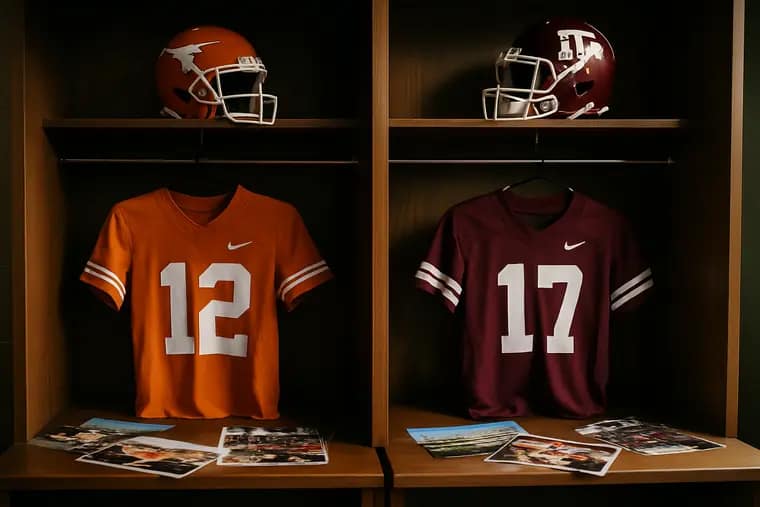
Texas Is Building Back-End Competition
The Longhorns’ class shows a staff placing real value on defensive back competition. That is a practical response to SEC football, where offenses can force nickel and dime personnel onto the field for long stretches. The Meredith, Jackson and Sherrard commitments give Texas a recruiting pitch that is easy to explain: come compete in a loaded defensive back room and develop against SEC receivers.
That approach also fits with broader in-state pressure. Texas high school defensive backs see Austin as a program where early competition can sharpen technique, but the Longhorns are not depending only on Texas players. The class includes out-of-state additions, which shows the staff is willing to recruit nationally when the fit is right. For a wider read on how the state’s two SEC programs are positioning early, our Texas 2027 Recruiting tracker connects the Longhorns and Aggies race to line play and local recruiting pressure.
Texas A&M Is Building From The Front
The Aggies’ early class is shaped by size, volume and high-end rankings. A&M’s offensive tackle group gives the staff a chance to develop future starters without forcing every lineman into the same timeline. That is how strong line rooms are usually built. Programs need players ready in year two, players who need three years and occasional prospects who can compete earlier than expected.
That is the biggest contrast between the two classes right now. Texas’ most obvious identity is in the defensive backfield. Texas A&M’s most obvious identity is at the line of scrimmage, especially on offense. Both approaches make sense. SEC schedules punish weak secondaries and weak fronts in different ways, and both programs are trying to solve those problems before the 2027 class reaches campus.
Why Texas 2027 Recruiting Matters In State
The Local Pipeline Is Under Pressure
For Texas families, high school coaches and regional fans, Texas 2027 Recruiting is not just a rankings race. It affects how prospects view the state’s two biggest SEC options. If Texas continues to stack defensive backs, in-state corners and safeties will have to weigh opportunity against competition. If Texas A&M keeps adding offensive linemen and front-seven talent, trench players will see a program selling development through depth.
The timing is important because commitments made this early can influence summer visits, fall game trips and peer recruiting. Prospects talk to each other. Position groups take shape in public. Coaches at Texas high schools can point their players to clearer examples of what each staff appears to value. That does not lock in signing day outcomes, but it gives everyone a better working map.
The state is big enough for both programs to recruit nationally while still fighting hard at home. Texas has made the secondary its early calling card. Texas A&M has paired class volume with offensive line and top-end defensive talent. That is the practical meaning of Texas 2027 Recruiting right now: two SEC programs with different roster builds, both moving early, and both forcing the rest of the cycle to respond.