

Texas Defensive Players in the 2026 class are already giving college staffs a clear read on where the state is strongest: edge rushers, interior defensive linemen, safeties, and versatile second-level defenders. This is not a complete statewide ranking, and the research file is limited, but the names available show how many major defensive profiles are tied to Texas high school programs before the 2026 season.
The group stretches from Duncanville to Temple, Richardson, Liberty Hill, Cedar Hill, Frisco Panther Creek, Austin Anderson, and Argyle Liberty Christian. That range matters. It shows defensive talent is not limited to one metro area, one classification, or one player type. Some prospects already have college commitments listed in the research. Others are identified through preseason recognition and position-specific attention.
For recruiting readers, the practical question is not just who has the biggest frame or the most recognizable school name. It is how each player fits a college projection. Defensive ends are being measured for length, pass-rush upside, and run-game strength. Defensive tackles are being evaluated for mass, power, and the ability to hold up against double teams. Safeties and linebackers are being watched for range, tackling angles, and how they handle space.
Texas Defensive Players Set The 2026 Tone
The early defensive picture starts with size. Several players in this group already carry college-ready measurements in the research notes, especially along the front. That does not guarantee early college playing time, but it does make the development conversation more direct. Coaches can ask whether a player projects as an edge, a hand-in-the-dirt lineman, an inside tackle, a hybrid safety, or a linebacker who can match modern spread offenses.
Why Texas Defensive Players Draw College Attention
The reason Texas Defensive Players draw so much college attention is tied to weekly competition. Texas high school football gives prospects repeated chances to face physical offensive lines, spread passing attacks, tempo, and playoff-level pressure. Even without verified game statistics in this research file, the school and position context helps explain why college programs are already attached to several names.
Duncanville, Temple, Cedar Hill, Liberty Hill, Richardson, Frisco Panther Creek, Austin Anderson, and Argyle Liberty Christian each offer different development settings. Some are known for deep rosters and playoff expectations. Others give a player a chance to be a central defensive piece. Both paths can matter. A prospect surrounded by other college-caliber teammates must win reps in a crowded room. A prospect carrying more of the defensive load may show leadership, endurance, and down-to-down reliability.
How To Read A 2026 Defensive Watch List
Because the research is a snapshot as of Aug. 11, 2026, it should be read carefully. Commitments can change, player measurements can update, and recruiting boards can shift. The supported information here is still useful because it identifies names, positions, schools, sizes, and listed college commitments. That is enough to frame what Texas fans and families should monitor during the season.
For a broader recruiting lens, our related look at Texas Football Talent rankings fits the same point: rankings can start a conversation, but development, role, and verified evaluation carry the weight.
Edge Rushers Carry The Early Recruiting Signal
The defensive end group is one of the clearest strengths in the notes. Landon Barnes, a 6-foot-3, 220-pound defensive end from Duncanville, is listed as committed to Ole Miss. Jamarion Carlton, a 6-foot-5, 240-pound defensive end from Temple, is listed as committed to Texas. KJ Ford, a 6-foot-3, 245-pound defensive end from Duncanville, is listed as committed to Florida. Dave Campbell’s Texas Football included those players in its 2026 defensive end prospect coverage 2026 defensive end prospects.
That trio gives the edge group a strong recruiting signal. Barnes and Ford being at Duncanville places two major edge bodies in one of the state’s most watched programs. Carlton gives Temple a high-profile defensive front presence with a listed Texas commitment, which naturally draws attention from fans following how in-state programs recruit the trenches.
The measurements also tell a story. A 220-pound edge may be viewed through speed, bend, and growth potential. A 240- or 245-pound edge may already be closer to a college front-seven frame. None of that replaces film, coaching evaluation, or verified production, but it does explain why these players are easy to track for college projection.
For Texas college football readers, the edge position carries extra weight because SEC and Big 12 offenses force defenses to win with pressure without constantly sacrificing coverage. That is why Texas defensive line recruiting remains such a useful lens for judging long-term roster construction.
Interior Size Gives The Class A Physical Center
The defensive tackle group in the research notes is built around large frames. Jaimeon Winfield, a 6-foot-3, 290-pound defensive tackle from Richardson, is listed as committed to USC. Alister Vallejo, a 6-foot-3, 270-pound defensive tackle from Liberty Hill, is listed as committed to Michigan. Jalen Brewster, a 6-foot-3, 300-pound defensive tackle from Cedar Hill, is listed as the Preseason Defensive MVP for the 2026 DCTX Whataburger Super Team.
Those profiles matter because interior defensive line development is rarely instant. Tackles must play with leverage, hand strength, conditioning, and gap discipline. Size is only one part of the projection, but it gives college staffs a starting point. A 300-pound high school tackle who can move well is valuable. A 270-pound tackle may offer room to add strength while keeping quickness. A 290-pound prospect sits near the middle of that range and can project in different fronts depending on his technique and growth.
Brewster’s preseason recognition is especially notable within the research because it identifies him beyond measurables. The file does not provide statistics, so the responsible read is simple: he is a heavily noted defensive tackle from Cedar Hill with preseason defensive MVP recognition attached to the DCTX Whataburger Super Team. That gives Texas high school fans a clear reason to track his 2026 season.
Safeties And Linebackers Widen The Map
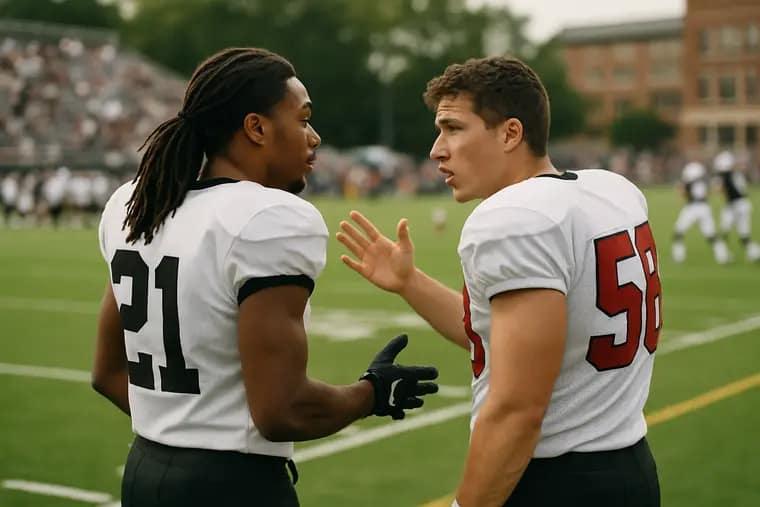
The back-end defenders in this group show that the 2026 defensive class is not only about the line of scrimmage. Donovan Webb, a 6-foot, 175-pound safety from Frisco Panther Creek, is listed as committed to Texas Tech. Yaheim Riley, a 6-foot, 180-pound safety from Austin Anderson, is listed as committed to Texas. Jason Bradford, a 6-foot-2, 195-pound safety from Temple, is listed as committed to TCU.
Safety play has changed at every level of football. Texas high school defenses need players who can tackle in space, cover slots, fit the run, and communicate against tempo. The research does not include testing numbers or verified statistics for Webb, Riley, or Bradford, so the fair focus is on frame, school, position, and listed college path. Bradford’s 6-foot-2, 195-pound build suggests a larger safety profile. Webb and Riley are listed closer to the classic space-defender size range.
Cooper Witten, a 6-foot-1, 215-pound linebacker from Argyle Liberty Christian, adds another type of profile. The research identifies him as the son of former Dallas Cowboys tight end Jason Witten and notes recognition for explosive play and elite range. The family name will draw attention, but the better football read is positional. A 215-pound linebacker with range is the kind of defender coaches value against spread offenses and quick passing games.
Recruiting Paths Already Point Beyond The State
For families tracking Texas Defensive Players, this group shows how varied recruiting pathways can be. The listed commitments include Ole Miss, Texas, Florida, USC, Michigan, Texas Tech, and TCU. That mix includes in-state and out-of-state options, which fits the current recruiting pattern for top Texas defenders. Some players stay closer to home. Others choose a national program fit.
It is worth being cautious with any commitment snapshot. Until signing paperwork is official, recruiting remains fluid. The correct way to use this information is as a season guide, not a final roster projection. A commitment tells readers where a player’s recruitment stands in the available notes. It does not tell us how quickly he will play, what position he will finish at in college, or how his senior season will develop.
That is why verified in-season evaluation still matters. Watch how edge defenders set the point against the run. Watch whether interior tackles can carry effort into the fourth quarter. Watch how safeties communicate before the snap and tackle after completions. Watch linebackers in coverage, not only when they run downhill. Those details often separate a well-known recruit from a college-ready defender.
Why The 2026 Defensive Class Matters In Texas
The 2026 season gives Texas Defensive Players a large stage because the state’s football identity is still built through Friday nights before it reaches college Saturdays. Defensive prospects do not always get the same attention as quarterbacks and receivers, but they shape the games that decide district titles and playoff runs.
This group has enough verified detail to be useful without stretching beyond the research. Barnes, Carlton, Ford, Winfield, Vallejo, Webb, Riley, Bradford, Brewster, and Witten give fans a practical watch list across the defensive front, secondary, and linebacker level. The common thread is not one school or one college destination. It is the depth of defensive player development across Texas.
The smart way to follow the class is week by week. Track health only through verified reports. Treat commitment status as current to the available information, not permanent. Value production, role, and improvement as much as frame. If those standards stay in place, the 2026 defensive group should give Texas high school football readers plenty to evaluate before the next signing cycle becomes the main story.