

Texas Players To Watch for the 2026 high school football season start with a useful caution: this is not a statewide ranking, and it should not be treated like one. It is a practical player-profile read built from the available research, with an emphasis on verified names, school context, positions where listed, measurable information where provided, and recruiting connections that were included in the research file.
That distinction matters in Texas high school football. A player can be a major Friday night factor without fitting neatly into one recruiting label. Some of the names below are listed as athletes, some as tight ends, one as a running back with major production, and others as quarterbacks or offensive line pieces. The common thread is that each gives coaches, fans, and local reporters a reason to pay closer attention once district play begins.
Texas produces enough high school talent that any short list will leave out good players. The better use of a preseason watch list is not to claim certainty. It is to frame what should be checked on film, at the stadium, and through the weekly box score.
How Texas Players To Watch Are Being Framed
Not A Statewide Ranking
The research points toward several players with clear preseason profile value, but it does not support ranking every name against the full state. That is why the focus here stays on what is known: school, size where available, position group, production where available, and recruiting status where the research provides it.
That approach helps avoid a common mistake in preseason coverage. Texas high school football readers do not need fake certainty in July or August. They need a grounded read on why certain players matter, how their roles could affect Friday night matchups, and what parts of their games deserve closer study.
Recruiting Context Without Overreach
Recruiting information can change. Commitments, offers, visits, and position projections are all part of a process that requires regular verification. The safest frame is to treat recruiting status as context, not as a guarantee of future production.
For a broader read on why evaluation still depends on development and fit, our breakdown of Texas football talent explains why rankings alone do not tell the full story. The same standard applies here. A player’s college connection draws attention, but his high school role still has to be judged on Friday nights.
Athletes Who Set Weekly Matchups
Texas Players To Watch At Athlete Spots
One of the strongest groups in the research comes from players listed as athletes. Dave Campbell’s Texas Football included Jermaine Bishop Jr. of Willis, Davian Groce of Frisco Lone Star, Paris Melvin Jr. of Cypress Springs, and Legend Bey of North Forney among its 2026 Texas high school athlete prospects; the same research lists Bishop at 5-foot-11 and 160 pounds with a Texas commitment, Groce at 6-foot-1 and 190 pounds with a Florida commitment, Melvin at 5-foot-11 and 170 pounds with a Houston commitment, and Bey at 5-foot-11 and 185 pounds with an Ohio State commitment according to Dave Campbell’s Texas Football.
This group of Texas Players To Watch matters because the athlete label usually signals matchup flexibility. It does not automatically define a player’s future position, and this article will not assign roles not supported by the research. From a high school viewing standpoint, though, athletes often influence games in more than one phase or force defensive coordinators to account for alignment, motion, return ability, or late-week personnel adjustments.
Bishop gives Willis a high-profile name in the same program that also appears in the research through tight end Jaivion Martin. Groce gives Frisco Lone Star another notable player on a roster already tied in the research to tight end Ryder Mix. Melvin keeps Cypress Springs in the Houston-area recruiting conversation, while Bey connects North Forney to national recruiting attention because of the Ohio State commitment listed in the research.
Why The Athlete Label Matters In Texas
In Texas high school football, the best athlete on the field may be asked to solve different problems from week to week. One opponent may force a team to find perimeter touches. Another may require a player to win contested snaps. A third may test special teams depth or late-game conditioning.
That is why these players are worth tracking beyond highlight plays. Coaches will want to see how they handle contact, spacing, tempo, and repeat workload. Fans should watch where they line up on early downs, whether opponents roll coverage or adjust pursuit angles, and how their touches change once district play becomes more physical.
Skill Players And Front-Line Names
Running Back Production That Travels
Landen Williams-Callis of Randle High School in Richmond is the clearest production-based name in the research. MaxPreps named him the 2025 Texas Player of the Year after a season in which he rushed for 3,502 yards and 59 touchdowns, and included him among its top running backs heading into the 2026 season per MaxPreps.
That level of production changes how opponents prepare. A back with that workload forces defenses to tackle cleanly, fit gaps with discipline, and limit explosive runs before the game tilts. For Randle, it also means weekly attention from scouts, opposing staffs, and local fans who want to see whether the run game can keep carrying high stakes.
The production number is already verified in the research, but the next evaluation step is more specific. How does Williams-Callis handle loaded boxes? Does he create yardage when the first read is muddy? Can he stay efficient against the better fronts on the schedule? Those questions are fairer than simply repeating the yardage total.
Quarterback, Tight End And Offensive Line Markers
The research file also identifies Colton Nussmeier of Denton Ryan as a quarterback to follow, with the note that he is listed as the No. 2 quarterback in the state and has offers from Georgia, Arkansas, and Kentucky. Because recruiting labels can move, the most practical Friday night lens is how he controls the offense, handles pressure, and keeps drives on schedule.
Keisean Henderson of Legacy School of Sport Sciences in Houston is listed in the research as a 6-foot-4, 187-pound quarterback committed to Houston. That size profile and local college connection make him relevant for Houston-area readers, especially families and fans who track the pipeline between high school programs and the University of Houston.
The tight end group in the research is also worth noting. Jaivion Martin of Willis is listed at 6-foot-4 and 250 pounds with a Houston commitment. Kaeden Johnson of Fort Bend Marshall is listed at 6-foot-5 and 220 pounds with a Texas A&M commitment. Ryder Mix of Frisco Lone Star is listed at 6-foot-4 and 220 pounds with an Oklahoma commitment. Zachery Turner of Duncanville is listed at 6-foot-2 and 215 pounds with an SMU commitment.
Those names matter because tight ends can tell a lot about a high school offense. Some teams use the position as a true in-line blocker. Others flex the player out and create size mismatches. A few ask the same player to do both. Until roles are confirmed on film, the cleanest analysis is to watch usage: formation, target share, run-game responsibility, and red-zone deployment.
Up front, the research identifies Ismael Camara of Gilmer as an offensive lineman known for recording 170 pancake blocks in the previous season. That kind of note points toward physical run-game value, but line play still needs context. Competition, assignment difficulty, pass protection, footwork, and consistency against stronger defensive fronts all matter.
What Coaches And Fans Can Learn By Position
Friday Night Evaluation Points
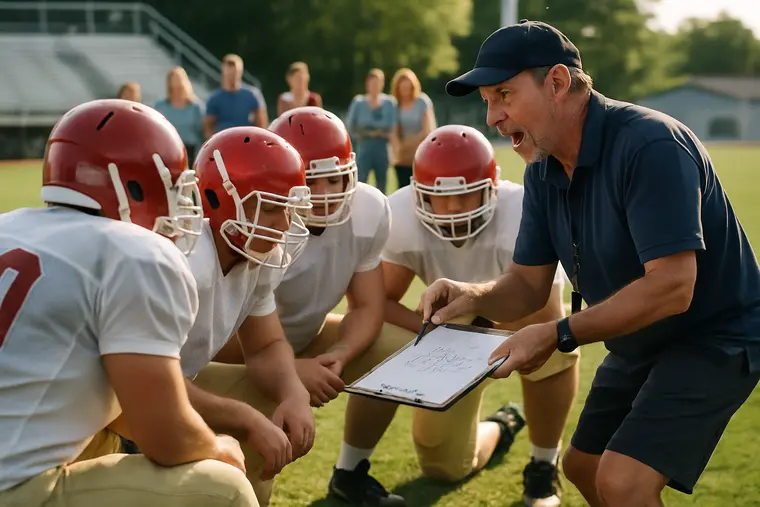
For fans, a watch list can be more useful when it gives a way to follow the game. Instead of only checking whether a player scored, pay attention to how defenses adjust and whether the player still affects the game without the ball.
- Athletes: Track alignment, touches by quarter, return usage, and defensive attention.
- Running backs: Watch yards after contact, patience, pass protection, and late-game workload.
- Quarterbacks: Watch timing, pocket response, third-down decisions, and ball security.
- Tight ends: Track in-line snaps, flexed alignments, red-zone targets, and run blocking.
- Offensive linemen: Watch first step, leverage, recovery after contact, and drive consistency.
This is where preseason context can help. District strength, returning starters, and schedule pressure can all affect how a player’s season is viewed. Our read on Texas high school football preseason predictions gives a separate team-focused frame for readers tracking how individual players fit into bigger races.
Scouting Texas Players To Watch Without Guesswork
The safest evaluation habits are simple. Use verified measurements when they are available. Separate recruiting attention from weekly production. Do not assume a future college position from a high school label. Avoid making claims about offers, injuries, transfers, or commitments unless they are confirmed by reliable sources.
That matters in Texas because the attention can get loud fast. A few early highlights can push a name across social media, but college staffs still want full-game answers. Can the player repeat effort? Can he handle better competition? Does the role expand as opponents adjust? Does the production hold up in November?
Why These Texas Players To Watch Matter In 2026
Regional Stakes By Program
The list carries regional value. Willis appears multiple times in the research through Bishop and Martin. Frisco Lone Star appears through Groce and Mix. The Houston area is represented by Melvin, Henderson, Williams-Callis, Johnson, and other nearby programs listed in the research. Duncanville, Denton Ryan, Gilmer, North Forney, Cypress Springs, Fort Bend Marshall, and Randle all give different parts of the state a reason to keep tabs on player development.
That spread is part of what makes Texas high school football valuable to college recruiters and local fans. Talent is not limited to one metro area or one classification. It shows up in power programs, fast-growing suburbs, established East Texas towns, and Houston-area schools with deep competitive schedules.
What Their Seasons Can Tell Us
The value in tracking Texas Players To Watch is not just finding the next college name. It is seeing how players respond to the hard parts of a season: heat, travel, rivalry weeks, district pressure, playoff expectations, and opponents with a full week to build a plan.
For Bishop, Groce, Melvin, Bey, Williams-Callis, Henderson, Nussmeier, Camara, Martin, Johnson, Mix, and Turner, the next step is not preseason praise. It is the weekly proof that comes with Texas Friday nights. If the production, role, and development match the attention, this group will stay central to the 2026 conversation.