
Texas enters November ranked No. 10 nationally, but Steve Sarkisian knows the Longhorns will not be taking their full roster to Columbia. After a 31–3 win over Mississippi State on Oct. 31, Texas is dealing with a cluster of injuries that could force several younger players into expanded roles against No. 19 Missouri on Saturday, Nov. 7.
Sarkisian acknowledged Monday that Texas will be “undermanned” when the Longhorns arrive at Faurot Field. He did not provide individual injury diagnoses, with the SEC availability process beginning later in the week, but he made clear that the roster situation will affect how Texas prepares for one of its most important remaining games.
That makes this Missouri matchup different from the Mississippi State game. Texas has already demonstrated that it can absorb individual absences. Now the challenge is absorbing several at once while facing a 6–2 Missouri team that has climbed four spots to No. 19 in the latest AP Top 25 and just defeated Arkansas 34–10 on the road.
The question for Sarkisian is therefore less about finding one replacement for one injured starter. It is about distributing responsibilities, simplifying assignments where necessary and making sure Texas’ experienced players carry more of the burden.
Texas Lost More Than One Starter Against Mississippi State
The timing of the injuries makes the situation particularly challenging. Texas entered the Mississippi State game already without starting offensive tackle Trevor Goosby for the season and edge rusher Colin Simmons, who has been dealing with an injury. During the 31–3 victory, wide receivers Cam Coleman and Ryan Wingo, running back Hollywood Smothers, nickel Graceson Littleton and cornerback Kade Phillips also suffered injuries.
The Longhorns were able to withstand those losses against Mississippi State because the game quickly moved in their favor. Texas led 17–0 at halftime and eventually held the Bulldogs to just 187 total yards. The defense produced seven sacks, while Arch Manning threw three touchdown passes and finished with 220 passing yards.
But Missouri represents a different type of test.
The Tigers are 6–2 overall and 3–2 in SEC play, and they enter the matchup with considerable confidence after beating Arkansas 34–10. Missouri forced four turnovers in that game and converted those takeaways into 24 points. Running back Jamal Roberts rushed for 138 yards and a touchdown on 23 carries, pushing his season total above 1,000 yards.
That combination puts immediate pressure on Texas’ depth. A weakened secondary must deal with a Missouri offense capable of controlling games on the ground, while an offense potentially missing key receivers must find enough ways to keep the Tigers from crowding the line of scrimmage.
Sarkisian Has Already Seen His Backup Plan Work
The most encouraging part of the situation is that Texas has already received evidence that its depth can function under pressure.
Against Mississippi State, Warren Roberson and Samari Matthews were forced into significant roles in the secondary after injuries affected the defensive backfield. Sarkisian specifically praised both players for entering the game and handling real SEC snaps. Roberson played more than 50 snaps, while Matthews also received extensive work.
That matters because Missouri is likely to test inexperienced defenders immediately.
Texas cannot afford communication errors against an offense built around outside-zone concepts and multiple running backs. Sarkisian described Missouri as an excellent wide-zone team and singled out Jamal Roberts and Ahmad Hardy as two different styles of runners who can create problems after the handoff.
The answer may therefore be less about asking young defenders to become stars overnight and more about giving them manageable responsibilities.
If Texas can keep the defensive calls clean, maintain proper leverage and force Missouri into longer third downs, its defensive front can take over portions of the game. That approach would allow players such as Rasheem Biles, Justin Cryer, Zina Umeozulu and Justus Terry to remain aggressive without requiring every young defensive back to win an individual matchup.
Rasheem Biles Gives Texas a Veteran Answer
One of the biggest developments of the last two games has been the emergence of Rasheem Biles as a player capable of changing the game from multiple positions.
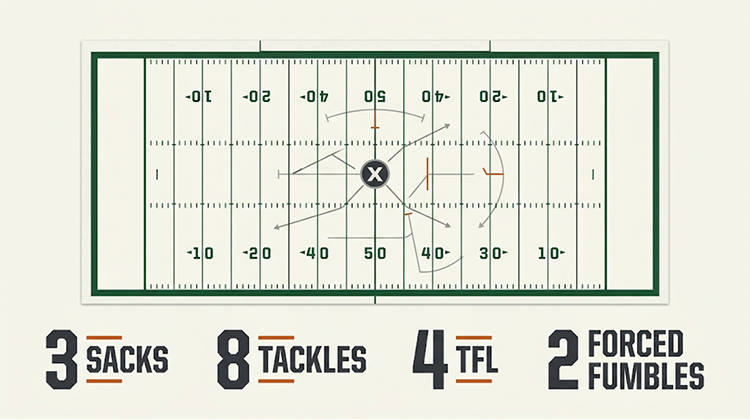
Biles produced a critical interception against Ole Miss and then delivered his best performance of the season against Mississippi State. He recorded three sacks, eight tackles, four tackles for loss and two forced fumbles. His second-quarter strip sack led directly to Maraad Watson’s 61-yard fumble-return touchdown.
That performance becomes even more important if Colin Simmons remains unavailable.
Sarkisian said Monday that Texas has not needed to manufacture sacks by asking players to chase individual statistics. Instead, the defensive front has been executing its assignments and allowing opportunities to develop. Biles has been particularly effective because he can rush the passer, defend the run and contribute in coverage.
That versatility gives defensive coordinator Pete Kwiatkowski and the Texas staff a valuable tool.
Rather than asking an inexperienced player to replicate Simmons’ role, Texas can distribute the pressure. Biles can create pressure from different locations, while the defensive line continues to benefit from players such as Umeozulu, Terry and Alex January.
Missouri’s running game makes that even more important. Texas cannot sell out for the quarterback and lose gap discipline. The Longhorns need their defensive front to stop the run without constantly adding extra defenders to the box.
The Receiver Room Could Become More Creative
The offensive side of the injury situation presents a different challenge.
Cam Coleman caught two passes for 61 yards and a touchdown against Mississippi State, including a 47-yard reception on Texas’ opening drive. But he did not play much after that early production. Ryan Wingo was also limited as the game progressed. Emmett Mosley V eventually became the biggest receiving threat, finishing with four catches for 98 yards and a touchdown.
If Coleman and Wingo are limited against Missouri, Texas cannot simply remove its vertical passing game.
Instead, Sarkisian may need to spread the ball across a larger group of receivers and backs.
Jermaine Bishop Jr. and Sterling Berkhalter could see expanded opportunities at receiver, while younger players such as Kohen Brown and Chris Stewart have been earning trust through special teams. Sarkisian specifically mentioned Brown and Stewart as players whose development could help Texas if their offensive opportunities increase.
That could also create more opportunities for Raleek Brown.
Brown had eight carries for 30 yards against Mississippi State but also caught two passes for 26 yards and a touchdown. Sarkisian pointed out that Brown’s receiving opportunities can develop because opposing defenses are forced to account for Texas’ receivers.
That principle could become especially important against Missouri.
If Texas is missing some of its normal perimeter threats, the Longhorns can compensate by moving players around, using motion and creating space for backs and tight ends underneath. The goal should be to make Missouri defend the entire formation rather than simply replacing one receiver with another.
Arch Manning Must Make the Depth Problem Smaller
The player who can make all of those adjustments easier is Arch Manning.
Manning completed 16 of 20 passes for 220 yards and three touchdowns against Mississippi State, including a 42-yard touchdown to Mosley. Texas also produced its tenth completion of at least 40 yards this season, the most in the SEC at the time of the game.
But Manning was also sacked five times.
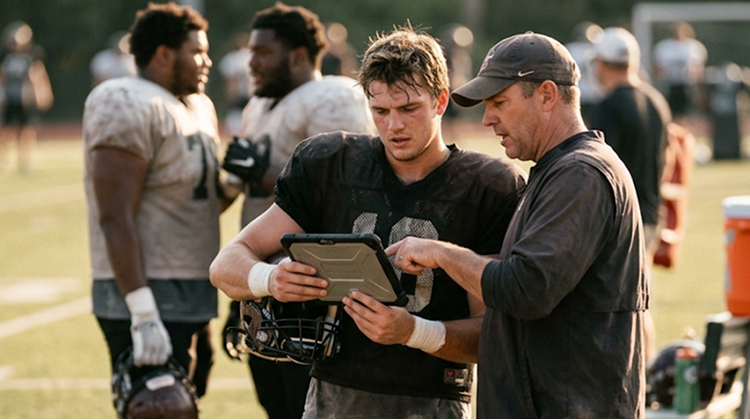
Sarkisian acknowledged Monday that Texas needs to protect its quarterback better and get the ball out more quickly in certain situations. That becomes even more important if the receiving group is short-handed and the offensive line continues to deal with personnel issues.
Manning does not need to throw for 400 yards to compensate.
He needs to stay efficient, avoid negative plays and punish Missouri when the Tigers bring extra defenders into the box. Quick completions can help inexperienced receivers settle into the game, while explosive throws can prevent Missouri from committing too many defenders to the running game.
The best version of Texas’ offense in Columbia may therefore be one built around efficiency rather than volume.
Texas Must Fix Its Running Game Too
There is another issue Sarkisian cannot hide behind the injury report: Texas needs to run the football better.
The Longhorns gained only 60 net rushing yards on 32 attempts against Mississippi State, an average of 1.9 yards per carry. Manning accounted for 10 net rushing yards, while Raleek Brown led Texas with 30.
Missouri is an especially difficult opponent for a struggling ground game.
Sarkisian said the Tigers average 200 rushing yards per game in their six victories and emphasized their commitment to outside-zone football. Missouri’s victory over Arkansas provided another example, with Jamal Roberts producing 138 rushing yards.
Texas cannot allow Missouri to dictate the physical terms of the game.
The Longhorns need enough rushing success to prevent the Tigers from playing downhill on defense. Even modest gains on first and second down would help keep the playbook open for Manning and reduce the number of obvious passing situations.
That makes the offensive line’s performance one of the most important factors in the game.
November Is Where Texas’ Depth Has to Matter
Sarkisian’s broader message Monday was that November football is different from September football.
He explained that Texas changes the way it practices as the season progresses because player development and player preservation have to coexist. The staff has to prepare established starters while also making sure younger players are ready if their numbers are called.
That philosophy is being tested immediately.
Texas is 6–2 and now ranked No. 10 after moving up one spot in the AP poll. Missouri is 6–2 and No. 19 after jumping four positions. The matchup is therefore a ranked SEC road game between two teams with legitimate postseason ambitions.
The margin for error is smaller because of the venue and the opponent, but Texas also has recent evidence that it can perform in difficult environments.
Sarkisian noted that Texas is 3–1 in its four SEC road games against ranked opponents since joining the conference and has collected 17 wins over current AP Top 25 teams since 2023, the most in the FBS.
Those numbers do not solve the injury problem. They do, however, explain why Sarkisian is confident that his team can handle the situation.
The Real Test Is Whether Texas Can Stay Structurally Sound
The biggest danger for Texas at Missouri is not simply missing five players.
It is allowing those absences to change the identity of the team.
The Longhorns still have Arch Manning. They still have a defense that just held Mississippi State to 187 yards. They still have Rasheem Biles playing at an extremely high level. They still have explosive receivers, even if some of them are unavailable or limited. And they still have a coaching staff that has been preparing younger players for precisely these moments.
But Missouri will test every one of those advantages.
The Tigers have momentum, a strong rushing attack, a positive turnover margin and home-field advantage. Texas will need to limit turnovers, avoid protection breakdowns and force Missouri into situations where its inexperienced replacements can play fast rather than think.
That is where Sarkisian’s job becomes most important.
He cannot replace every injured player with an equivalent talent. He can, however, change the structure around the players who remain available.
If Texas spreads the offensive workload, protects Manning, uses its defensive versatility and controls the line of scrimmage, the Longhorns have a path through the depth crisis.
The injuries make Saturday harder. They do not make it impossible.
Texas will enter Faurot Field without the luxury of a full roster. Sarkisian’s challenge is to make sure the players who do make the trip play with enough confidence and structure that Missouri never gets the chance to turn Texas’ injury list into the defining story of the game.