Texas’ 34–27 victory over No. 7 Ole Miss on October 24 came with a costly setback that could change the direction of the Longhorns’ offense. Left tackle Trevor Goosby suffered a knee injury during the first quarter and will miss the remainder of the 2026 season, according to reports published October 25. The 6-foot-7, 325-pound senior had become one of Texas’ most dependable offensive linemen, protecting quarterback Arch Manning’s blind side and helping establish the running game. His absence now forces head coach Steve Sarkisian and offensive line coach Kyle Flood to reconsider their protection schemes, personnel combinations, and approach to the final stretch of the SEC schedule. With Mississippi State visiting Austin on October 31, Texas has little time to find a reliable solution.
The injury is especially significant because Goosby had been delivering one of the strongest seasons of his college career. According to reporting by the Houston Chronicle, he recorded a 74.1 offensive grade from Pro Football Focus, the highest among Texas offensive linemen, and allowed no sacks in 223 pass-blocking snaps. Senior Andre Cojoe replaced him against Ole Miss, but his performance raised questions about whether Texas has a straightforward replacement available.
Trevor Goosby’s Injury Changes Texas’ Offensive Line Plans
Goosby entered the season with considerable expectations after earning first-team All-SEC honors from the conference’s coaches in 2025. The Melissa, Texas, native had started the first six games of the 2026 campaign at left tackle and established himself as a key part of the offense’s protection structure. He had also received national recognition, including the Outland Trophy National Player of the Week award in September.
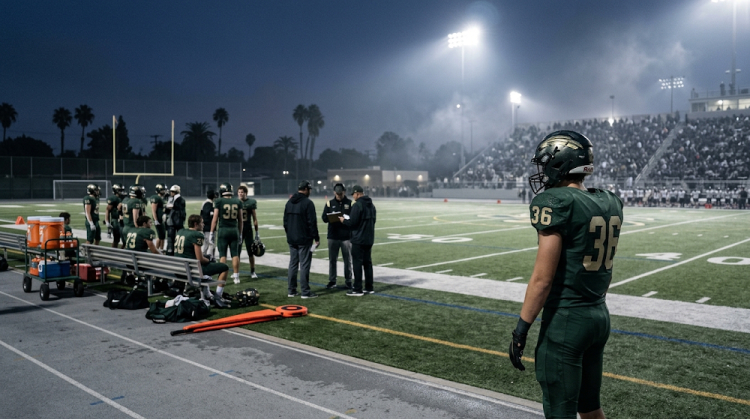
His injury occurred early in the Ole Miss game, limiting him to just 14 snaps before he left the field and was taken to the locker room. He later watched from the sideline using crutches. ESPN’s Pete Thamel reported on October 25 that Goosby would miss the rest of the season, a development that leaves Texas without one of its most experienced and productive blockers.
The timing creates a difficult problem for Sarkisian. Texas has five regular-season games remaining, beginning with Mississippi State, followed by two road tests against SEC opponents. Every game matters as the Longhorns try to strengthen their postseason position after an inconsistent start to the season.
Goosby’s value also extends beyond his individual statistics. Left tackles protect the quarterback’s blind side against edge rushers, communicate blocking assignments, and help the offense maintain its intended timing. Replacing that combination of experience, athletic ability, and consistency is rarely as simple as moving another player into the same spot.
Texas must now determine whether its best option is to keep Cojoe at left tackle, adjust other positions along the line, or use a combination of personnel changes and schematic adjustments to reduce the risk of protection breakdowns.
Andre Cojoe Faces the Biggest Opportunity of His Texas Career
Cojoe became the immediate replacement when Goosby left the Ole Miss game. The senior has appeared in games for Texas this season, but taking over at left tackle for the remainder of the campaign represents a substantially different responsibility.
His performance against Ole Miss illustrated the challenge. Pro Football Focus assigned Cojoe a 57.4 offensive grade for his relief appearance, according to the Houston Chronicle. He surrendered a sack and an additional quarterback hurry in his pass-blocking work. Those numbers do not determine how he will perform in future games, but they highlight why Texas cannot assume the transition will be seamless.
Cojoe also brings his own history of adversity. He missed the 2025 season after suffering an injury during preseason practice, making his return to a meaningful role part of a longer recovery. Texas will need to balance the value of giving him consistent repetitions with the importance of preparing alternatives if the matchup proves difficult.
The coaching staff can help by simplifying assignments where appropriate and giving Cojoe clearer support against dangerous edge rushers. A tight end or running back can provide additional help on selected passing downs, while quicker-developing routes can reduce the amount of time the line must sustain its blocks.
However, extra protection has a cost. Keeping additional players in to block can reduce the number of receivers running routes, making it easier for a defense to anticipate the passing concept. Texas must therefore find a balance between helping its replacement tackle and preserving the variety of Sarkisian’s offense.
Kyle Flood Must Decide Whether to Reshuffle the Line
The next question concerns the five-man offensive line as a unit. Flood must decide whether the existing starters should remain in their positions or whether a reshuffle could produce a stronger combination.
Moving an experienced tackle to the left side might appear attractive, but switching positions can introduce new problems. Offensive linemen develop footwork, hand placement, and blocking angles for their assigned positions. A player who performs well at right tackle or guard does not automatically offer the same consistency on the opposite edge.
Texas must also consider the effect of multiple changes on communication. Linemen coordinate protection calls, identify defensive fronts, and adjust to blitzes before the snap. If the staff changes more than one position, players must quickly establish new responsibilities while facing SEC defenses that will look for opportunities to exploit confusion.
Flood’s priority should be finding the most dependable combination rather than simply placing the five most experienced players on the field. The best lineup is the one that communicates clearly, handles assignments consistently, and gives Manning enough time to make decisions.
The coaching staff also needs to evaluate how different combinations perform in practice against speed rushers and simulated pressure. Mississippi State provides little time for experimentation during a game, so Texas must use its preparation week to identify the most reliable option.
Arch Manning Needs a Different Approach to Protection
Goosby’s absence affects Manning directly. A left tackle’s primary responsibility includes preventing edge pressure from reaching a right-handed quarterback’s blind side, where a defender can arrive outside the quarterback’s normal field of vision. If protection becomes less reliable, Manning may have to adjust his timing, movement, and progression through his reads.
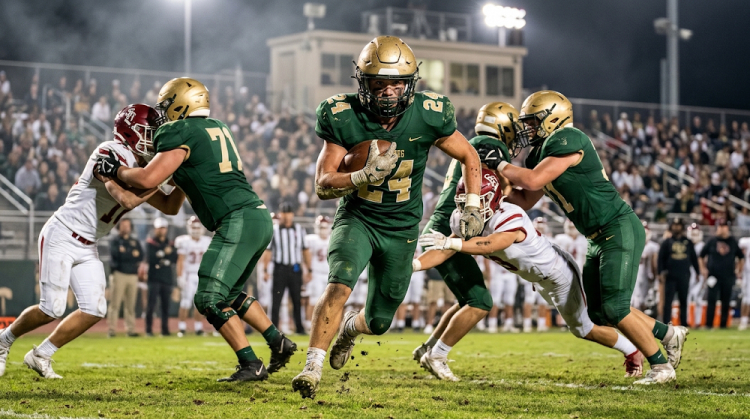
Texas cannot expect Manning to solve every protection problem himself. The offensive line must execute its assignments, and the coaching staff must build a plan that accounts for the personnel available. Still, Manning can help by recognizing defensive alignments, communicating adjustments, and releasing the football when the play design provides an early opportunity.
The Longhorns should consider using more quick passes, screens, and defined reads to reduce the time defenders have to reach the quarterback. Those concepts can also help Texas establish rhythm after the offense’s inconsistent performances earlier in the season.
The running game becomes another important tool. If Texas can produce efficient gains on early downs, it will avoid some obvious passing situations in which defenses can concentrate on rushing Manning. A credible rushing attack can also make play-action passes more effective by forcing linebackers to respect the possibility of a handoff.
Texas’ 34–27 victory over Ole Miss offered evidence that the ground game can provide a valuable alternative. Raleek Brown rushed for a season-high 157 yards, helping the Longhorns maintain offensive balance during a game in which Manning threw two interceptions. That production gives Sarkisian a reason to keep the running game central to the plan while the offensive line adjusts.
Mississippi State Will Test Texas’ New Protection Plan
Texas hosts Mississippi State on Saturday, October 31, at Darrell K Royal–Texas Memorial Stadium in Austin. The matchup arrives at a difficult time because the Longhorns must prepare for another SEC opponent while replacing a starting tackle who had been among their most reliable blockers.
Mississippi State’s defensive front will have an incentive to test the new alignment. Opponents often direct pressure toward a newly established starter, forcing him to prove that he can handle different rush techniques and protection adjustments. Texas should expect the Bulldogs to evaluate Cojoe’s side of the line and look for opportunities to create pressure.
That does not mean every snap will become a direct test of the left tackle. Defensive coordinators can move rushers around, use stunts, or send pressure from the interior. Texas needs all five linemen to communicate and respond rather than treating Goosby’s replacement as the only player responsible for keeping Manning clean.
The Longhorns also need to avoid predictable passing situations. Penalties, negative rushing plays, and missed assignments can put the offense behind schedule and give the defense a clear advantage. Reducing those mistakes will be particularly important while the line settles into a new configuration.
A successful performance against Mississippi State would not erase the importance of Goosby’s loss, but it could demonstrate that Texas has developed a workable plan for the remainder of the season.
Texas’ Playoff Push Depends on More Than One Position
Goosby’s injury adds another complication to a season that has already tested Texas’ depth. The Longhorns improved to 5–2 overall and 2–2 in SEC play with their victory over Ole Miss, but the team still needs greater consistency if it hopes to remain competitive in the conference and the College Football Playoff race. The win also showed that Texas can overcome adversity, even when key contributors are unavailable.
Sarkisian emphasized the team effort after the Ole Miss game, noting that Texas had played without several important players, including Goosby for most of the contest. The challenge now is to turn that resilience into a repeatable approach rather than relying on late-game recoveries.
Texas has options, but each carries a different trade-off. Keeping Cojoe at left tackle preserves continuity at the other positions, while a reshuffle could improve the individual matchup at left tackle but create adjustments elsewhere. Additional blocking help could protect Manning, although it might limit the number of receivers available on a given play.
The most effective solution will likely combine personnel decisions with changes to the offensive plan. Texas needs a reliable line combination, a productive rushing attack, quick answers against pressure, and better discipline on early downs. Those elements can reduce the impact of losing a player who had provided consistency across the first six games.
Goosby’s season-ending injury is a serious setback, but it does not automatically determine the outcome of Texas’ remaining schedule. The Longhorns still have talented players, an experienced coaching staff, and an opportunity to adjust before the next game. Their response against Mississippi State will offer the first clear indication of whether they can protect Manning and preserve the offensive balance needed for the final stretch of the 2026 season.