

UIL realignment is one of those Texas high school football moments that starts on a screen but ends up at the kitchen table, in booster club chats, and under stadium lights on Friday night. The University Interscholastic League released the 2026-2028 reclassification and realignment information on February 2, 2026, setting districts for the 2026-27 and 2027-28 school years UIL realignment information.
For parents, grandparents, students, band families, cheer families, and the folks who never miss a road game, the new districts are not just lines on a map. They affect kickoff routines, gas money, school-night returns, pregame meals, and which rival gets circled first on the calendar.
Texas football culture lives in those details. A district change can mean a familiar visitor’s side suddenly disappears from the schedule. It can also bring back an old matchup, add a longer bus ride, or put a family in a new stadium with new parking habits and a different visitor gate.
How UIL realignment Changes Friday Nights
UIL realignment Dates Parents Should Circle
The UIL realigns districts every two years using school enrollment figures submitted in October. For this cycle, the alignments apply to the 2026-27 and 2027-28 school years. That two-year window matters because families are not planning for only one fall. They are planning two seasons of district travel, rivalry weeks, senior nights, homecoming weekends, and possible postseason paths.
The conference cutoff numbers also frame why certain schools move or stay put. According to the research provided, the 2026-2028 cutoffs are 6A at 2,215 and above, 5A from 1,305 to 2,214, 4A from 550 to 1,304, 3A from 246 to 549, 2A from 105 to 245, and 1A at 104.9 and below. Those enrollment lines are the backbone of classification, even before local rivalries and travel concerns enter the conversation.
Why A Classification Line Feels Personal
On paper, a cutoff is a number. In a football town, it can feel like a shift in identity. A school moving into a new classification or football division may face different stadiums, different roster depth, and different travel rhythms. Parents may still sit in the same bleachers for home games, but the road map can change in a hurry.
That is why the first reaction around Texas is often practical. Who is in the district? How far is the longest trip? Does the band travel? Will freshman and junior varsity schedules mirror varsity travel? Which games are likely to draw the largest visiting crowd? Those questions shape the week as much as the opponent does.
Why The Two-Year Cycle Matters
Schedules Become Family Calendars
A two-year district cycle gives communities a chance to settle into a pattern. Once schools release football schedules, families can begin marking off long road trips, homecoming dates, open weeks, and rivalry games. For split households, working parents, grandparents, and siblings playing youth football on Saturdays, those dates matter early.
In Texas, Friday night is often a shared routine. Dinner gets moved earlier. Pickup plans revolve around the stadium. Younger kids learn where to meet after the alma mater. If the district map changes, the routine gets rewritten. That does not make the season less special, but it does ask families to prepare.
Coaches And Athletes Feel The Calendar Too
The fan side is only one part of the story. Players and coaches also adjust to new district structures. Longer trips can affect departure times. New opponents can change scouting habits. A district with unfamiliar programs may require more early-week film work and more attention to special teams, personnel groupings, and road-game operations.
Parents see the result in simple ways: earlier meal plans, later returns, and a stronger need to coordinate rides after away games. For many families, the best move is to ask the athletic department how travel will work once the school posts its official schedule.
District Changes Families Can Picture On The Map
Richardson ISD And Plano-Coppell Matchups
One verified example comes from North Texas. Richardson ISD announced that Berkner, J.J. Pearce, Lake Highlands, and Richardson High Schools will compete in District 7-6A with Plano Senior High, Plano East Senior High, Plano West Senior High, and Coppell High School for the 2026-27 and 2027-28 school years Richardson ISD districts.
For families in that district, the change is easy to picture. It means more Friday nights moving between Richardson, Plano, and Coppell communities. It also means visitor sections filled with parents who may know the route to some stadiums well and may be learning others for the first time.
Why Local Examples Help The Statewide Picture
Not every district change carries the same travel burden. Some alignments keep opponents close. Others stretch the weeknight drive. The larger lesson is that parents should treat district announcements as the starting point, not the finished schedule. The district tells families who the opponents are. The school schedule tells them when the trips happen.
That distinction matters for homecoming, senior celebrations, band contests, volleyball overlap, and younger siblings’ activities. A Friday night road game that looks easy in February can feel different in October traffic after a full school and work week.
Travel, Tailgates, And Weeknight Planning
The Road Game Checklist
Good road-game habits make the new district feel less stressful. Texas families already know the basics: leave earlier than the map suggests, bring layers for late-season games, and do not assume every stadium handles parking the same way. Realignment simply raises the value of planning ahead.
- Check the host school’s ticket, bag, and parking information before leaving home.
- Confirm kickoff time through the school or district athletic page once schedules are released.
- Plan meals for players, band members, cheer teams, and younger siblings before long trips.
- Ask whether sub-varsity games will follow the same opponent rotation as varsity.
- For longer drives, identify a postgame meeting spot before phones get crowded near the exits.
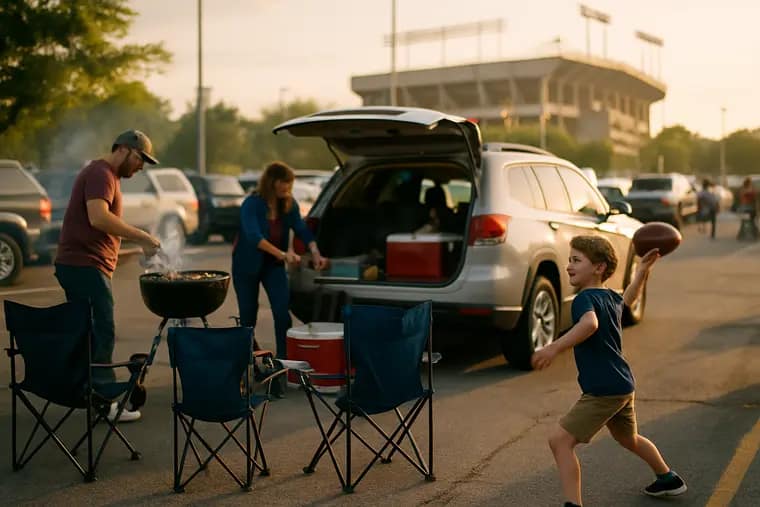
Some communities build tailgate traditions around familiar opponents. A new district may interrupt that rhythm, but it can also bring new gathering spots. Parents may find a different barbecue stop, a better route into the visitor lot, or a new pregame meeting place where families can settle in before kickoff.
For broader planning around how district changes can shape routes, rivalries, and playoff paths, our related breakdown of UIL football realignment connects the statewide structure to the 2026 season. Families thinking beyond travel can also read how Texas high school football builds community through the weekly habits that surround the game.
What UIL realignment Means For Rivalries And Community
Old Games, New Stakes
For fans, UIL realignment can sharpen a rivalry or pause one. A game that has been part of a community’s fall routine may no longer be a district contest. Another matchup may suddenly carry playoff weight. That shift changes the feel of the week, even if the stadium lights look the same.
Parents often notice it first in the stands. The visitor side may be fuller for a nearby opponent. Student sections may travel better for a school with old neighborhood ties. Booster clubs may need to adjust concession expectations, spirit nights, or parking volunteers when a larger visiting crowd is possible.
Tradition Still Travels
Even when districts change, the habits that make Texas high school football special tend to travel well. The pregame prayer circles, the band warming up beyond the end zone, the senior parents holding flowers, the little kids wearing oversized jerseys, the postgame traffic line that feels like part of the ritual — those pieces remain.
The best fan communities carry their manners with them too. A new road trip is a chance to represent the school well, learn another town’s stadium routine, and keep the focus on the students doing the work on the field, in the band, on the cheer line, and across the sideline.
Why UIL realignment Matters Before The 2026 Kickoff
UIL realignment matters because it turns the next two football seasons into something families can start preparing for now. The UIL announcement sets the district frame. Local schools will turn that frame into schedules, travel plans, ticket information, and game-week routines.
Parents and fans do not need to memorize every classification number to be ready. They need to know where their school landed, which opponents are new, which trips may run long, and where official schedule updates will appear. From there, Friday night takes care of the rest.
The heart of Texas high school football has always been local. Realignment may change the route, the opponent, or the visitor stands, but it does not change why families show up. They show up for the kids, the school colors, the band at halftime, the neighbors in the next row, and the shared feeling that, for a few hours, the whole community has somewhere to be.