Texas is 4-0, No. 1 in the AP Top 25 and coming off consecutive victories over ranked opponents. That résumé would normally leave little reason for concern. Yet the Longhorns enter their bye week with a statistical problem that Steve Sarkisian cannot ignore before the Red River Rivalry: the offense has produced far less consistently than the team’s record suggests.
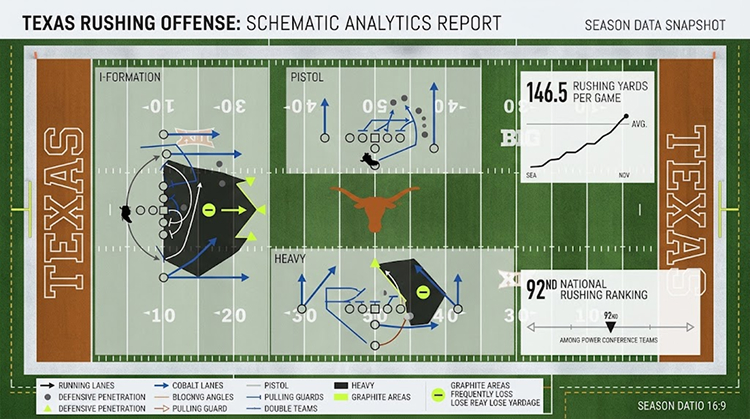
Through four games, Texas is averaging roughly 363 yards per game, with the rushing attack at 146.5 yards per game and the passing game at 216.5. Those figures place the Longhorns around 80th nationally in total offense and 92nd in rushing offense in current statistical listings. A Houston Chronicle report published Sept. 30 specifically placed Texas 83rd nationally in total offense while highlighting problems with the running game and offensive execution.
The timing makes the issue more significant. Texas has a bye before facing Oklahoma on Oct. 10 at the Cotton Bowl in Dallas. The Longhorns will have extra preparation time, but they also have a clear warning from their first four games: the defense has repeatedly had to compensate for an offense that has struggled to maintain consistency for long stretches.
The question for Sarkisian is therefore less about whether Texas needs a completely different offense and more about how quickly he can make the existing one function at a higher level.
Texas’ Record Is Hiding An Offensive Imbalance
Texas has already beaten Ohio State and Tennessee, two ranked opponents that entered those games with significant expectations.
Against Ohio State, Texas trailed 23-3 before scoring 21 unanswered fourth-quarter points in a 24-23 comeback. Against Tennessee, the Longhorns won 20-17 despite producing only 262 total yards.
Those victories demonstrate Texas’ ability to survive difficult games.
They also reveal why the offense has become the obvious area for improvement.
The Longhorns have scored 59 points against Texas State, 24 against Ohio State, 30 against UTSA and 20 against Tennessee. The scoring average remains respectable because of the early offensive explosion against Texas State, but the production against the two ranked opponents has been much less consistent.
That distinction matters more now because Oklahoma is the next opponent.
Texas cannot assume every future game will provide enough defensive dominance to overcome long offensive droughts. Colin Simmons and the defense have created an enormous margin for error, but the offense eventually needs to turn that margin into control.
The Texas football season outlook will increasingly depend on whether the Longhorns can develop that balance before the SEC schedule becomes even more demanding.
The Tennessee Game Exposed The Problem Clearly
Texas’ 20-17 victory at Neyland Stadium was an excellent defensive performance, but it was hardly an offensive showcase.
Arch Manning completed 14 of 19 passes for 201 yards and threw one interception. Texas rushed for only 61 yards on 36 attempts, an average of 1.7 yards per attempt. The Longhorns converted only three of 13 third downs and finished with 14 first downs.
The offense did have several important positives.
Texas opened the game with a seven-play, 75-yard touchdown drive. Manning completed his first six passes and connected with Emmett Mosley V for a 43-yard gain that set up Raleek Brown’s first touchdown.
The Longhorns also produced an eight-play, 60-yard touchdown drive in the fourth quarter that pushed the lead to 20-10.
Those drives show what the offense can look like when the execution is clean.
The problem is the space between those possessions.
Texas repeatedly struggled to sustain drives, allowing Tennessee to control the ball for 31:23 compared with Texas’ 28:37. The Volunteers ran 76 plays to Texas’ 55, even though Tennessee gained only 221 total yards.
That is an unusual combination: Texas’ defense dominated the opponent while the opponent still ran 21 more plays.
Against Tennessee, the defense was good enough to make that imbalance irrelevant.
Sarkisian cannot assume that will continue.
The Running Game Is The First Offensive Issue
The most obvious statistical weakness is the rushing attack.
Texas is averaging around 146.5 rushing yards per game, ranking 92nd nationally in the current statistical picture. The Longhorns have several capable runners, including Hollywood Smothers and Raleek Brown, but the production has not consistently matched the talent available.
Smothers entered the Tennessee game as Texas’ leading rusher with 198 yards through three games, while Brown had already established himself as an important part of the rotation. Brown then carried 17 times for 67 yards and scored both Texas touchdowns against Tennessee.
Brown’s performance provided a useful clue.
Texas does not necessarily need one running back to dominate the game. It needs enough efficiency from the ground game to prevent defenses from treating every passing situation as obvious.
That becomes particularly important for Manning.
A productive running game creates more favorable down-and-distance situations, slows defensive pressure packages and gives Sarkisian more flexibility with formations and play-action concepts.
The opposite has also been visible.
When Texas cannot establish consistent rushing production, opponents can commit additional defenders to the passing game and make the quarterback solve tighter coverage situations. That puts more responsibility on Manning and the offensive line.
Arch Manning Has Shown Two Different Versions Of Himself
Manning’s first four games have produced a much more complicated picture than a simple statistical evaluation.
Against Texas State on Sept. 5, Manning completed 20 of 27 passes for 305 yards and four touchdowns. Against Ohio State, he completed 23 of 37 passes for 196 yards and one touchdown while helping engineer the fourth-quarter comeback. Against UTSA, he went 16 of 32 for 161 yards and two touchdowns. Texas’ official roster statistics list those three performances before the Tennessee game.
Then came Tennessee.
Manning completed 14 of 19 passes for 201 yards, but he also threw an interception. His completion percentage was strong, and his 10.6 yards per attempt showed that Texas did create opportunities downfield. Yet the offense still finished with only 262 total yards.
That is an important distinction.
Manning does not necessarily need to throw for 350 yards every week. Texas needs its quarterback, running backs, receivers and offensive line to operate together well enough that the offense does not depend on one spectacular sequence to generate points.
The Texas quarterback outlook remains central to that development, particularly because Manning has already demonstrated that he can produce explosive passing games when the structure around him works.
Sarkisian Is Not Expected To Make Major Lineup Changes
The immediate response to offensive struggles is often to look for a personnel change.
Current reporting indicates that Sarkisian does not anticipate making significant changes to the starting lineup during the bye. Instead, the emphasis is expected to remain on execution and getting more production from the existing group.
That approach makes sense within the context of the first four games.
Texas is undefeated.
The offense has produced 1,452 total yards according to one current statistical compilation, while the Longhorns have scored 133 points. The team also has 92 first downs and has converted 50% of its third-down opportunities overall despite the poor conversion rate at Tennessee.
The problem is not that Texas has no offensive production.
It is that the production has been uneven.
A lineup overhaul could create additional instability when the more immediate need is improving the performance of the players already in place.
Sarkisian’s challenge during the bye is therefore to identify why the offense disappears for extended stretches and correct those issues without sacrificing the explosive potential already demonstrated.
The Offensive Line Is At The Center Of The Equation
The running game and passing game cannot be evaluated separately from the offensive line.
Texas struggled to move Tennessee consistently on the ground, and Manning was pressured throughout the afternoon. The Longhorns finished with 262 total yards while Tennessee’s defense repeatedly forced Texas into difficult third-down situations.
The offensive line has to accomplish two things simultaneously.
First, it must create enough movement for Texas’ running backs to reach the second level without constantly facing penetration.
Second, it has to give Manning enough time for the passing concepts to develop.
Those objectives are connected.
If the running game is ineffective, opponents can increase pressure frequency. If opponents increase pressure, Texas has fewer opportunities to develop longer passing concepts. If the passing game becomes more predictable, the defense can devote more resources to the quarterback.
That cycle can make an offense look worse than the individual talent on the roster suggests.
The bye week gives Texas time to attack that cycle through technique, communication and protection adjustments rather than simply changing personnel.
Texas Still Has Explosive Weapons
The offensive statistics should not obscure the amount of talent available to Sarkisian.
Ryan Wingo leads Texas in receiving yards with 239, while Cam Coleman has 194 and Emmett Mosley V has 173 through four games in current statistical listings. Manning has already demonstrated the ability to connect with those receivers on explosive plays.
Manning’s opening drive against Tennessee was a perfect example.
His 43-yard connection with Mosley immediately changed the field position and forced Tennessee’s defense to respect the deep passing game. Later, Manning connected with Ryan Wingo for an 18-yard third-down conversion in the fourth quarter during the drive that ultimately helped Texas protect its lead. Texas Athletics highlighted that completion as one of Manning’s key late-game throws.
The ingredients are therefore present.
Texas has speed at receiver, experienced coaching, multiple running backs and a quarterback capable of making difficult throws.
The next step is making those elements appear together more frequently.
Oklahoma Will Force Texas To Show More Offensive Answers
The Red River Rivalry is scheduled for Oct. 10 at 2:30 p.m. CT at the Cotton Bowl in Dallas, with ABC carrying the game. Texas enters the bye at 4-0, while Oklahoma is 2-2 after a 41-13 loss to Georgia.
Oklahoma’s record should not be mistaken for a guarantee of an easy afternoon.
The Sooners have already faced Michigan and Georgia, giving them experience against high-level competition. The Georgia loss also means Oklahoma will have its own reasons to improve during the same bye period.
Texas will therefore need more than the formula that worked in Knoxville.
The Longhorns cannot expect to hold Oklahoma to 221 yards while producing only 262 themselves and still maintain comfortable control of the game.
The Red River Rivalry can turn on a handful of possessions.
A stalled Texas drive can change field position. A missed protection assignment can create a turnover opportunity. A successful third-down conversion can keep Oklahoma’s offense on the sideline.
The offense needs to become more efficient before those moments arrive.
The No. 1 Ranking Raises The Standard
Texas remains No. 1 in the AP Top 25 after the Tennessee victory, receiving 62 first-place votes in the Sept. 27 poll. Georgia is No. 2 and Notre Dame No. 3.
That ranking is based on what Texas has accomplished.
The Longhorns have beaten Ohio State and Tennessee, and they are one of only three undefeated teams occupying the top three spots in the current AP poll.
But the ranking also changes how every weakness is examined.
A No. 1 team averaging around 363 yards per game can expect opponents to study every limitation. If Texas’ running game is struggling, opponents will test it. If the offensive line has protection issues, defensive coordinators will pressure it. If Manning is being asked to make difficult throws on third-and-long, opponents will try to create more of those situations.
The bye week is therefore valuable because Texas does not need to prove that it belongs at No. 1.
It needs to improve the areas that could eventually prevent it from staying there.
Texas Does Not Need To Become A Different Offense
The temptation during a bye week is to make dramatic changes.
Texas probably does not need that.
The Longhorns have already shown they can score quickly. They opened the season with 59 points against Texas State. They rallied for 21 fourth-quarter points against Ohio State. They scored on their first two possessions against Tennessee and finished 3-for-3 in the red zone.
Those are meaningful indicators.
The issue is consistency between the explosive sequences.
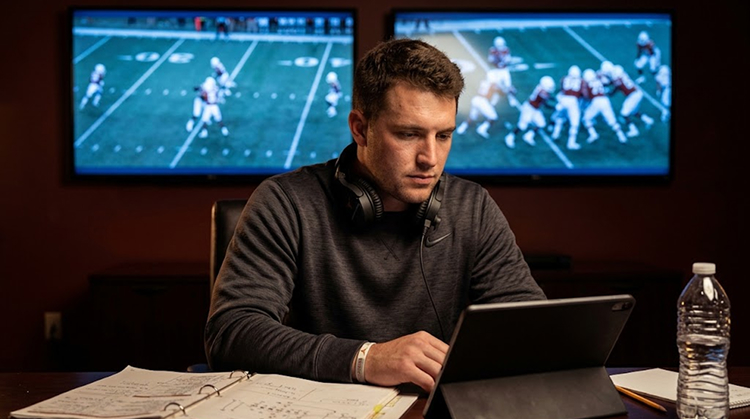
Sarkisian needs to find ways to keep the offense on schedule, especially on early downs. The running game needs to create more manageable second and third downs. The offensive line needs to reduce negative plays. Manning needs enough protection to make decisions rather than constantly reacting to pressure.
If those elements improve together, Texas does not need to reinvent its identity.
It simply needs more of the offense that has already appeared in flashes.
The Bye Week Is A Test Of Offensive Adaptation
Texas has spent the first month of the season proving that its defense can carry championship-level pressure.
Colin Simmons tied the Texas single-game sack record against Tennessee, and the defense produced 10 sacks with five different players recording at least one. Texas has held all four opponents below 30 points and has allowed only 53 points through four games.
That defense gives Sarkisian valuable breathing room.
But it should also give him an opportunity to improve the offense without panic.
Texas does not need Manning to become a different quarterback. It needs the offense around him to create more favorable conditions. It does not need to abandon the running game. It needs to make the rushing attack efficient enough that defenses cannot ignore it.
And it does not need to sacrifice its defensive identity to score more points.
The most important offensive improvement before Oklahoma may therefore be balance.
Texas has already shown it can win games when its defense dominates and its offense produces just enough. The next stage is finding out what happens when the offense stops forcing the defense to rescue it.
That process begins during the bye.
On Oct. 10, the Cotton Bowl will provide the first opportunity to see whether the adjustments worked.