

Arch Manning knows that Texas needs a different version of its quarterback before the Longhorns host No. 7 Ole Miss on October 24. After consecutive 27–24 losses to Oklahoma and Florida, the Texas starter has acknowledged that hesitation has affected his play and promised to attack defenses more decisively. His declaration, “I’m gonna die on the hill of, I’m letting it rip,” has become a defining storyline ahead of one of the most important games of the Longhorns’ 2026 season. As fans assess the stakes surrounding Texas football and the broader sports landscape, independent sportsbook reviews by Bookmakers Review can also provide context on sportsbook offerings and the differences between operators.
Manning made the comments on October 19 after Texas fell to 4–2 overall and 1–2 in Southeastern Conference play. The Longhorns, who reached No. 1 in the national rankings earlier this season, dropped to No. 19 in the Associated Press Top 25 following their defeat to Florida. Head coach Steve Sarkisian continues to support Manning as the starting quarterback, but both understand that the offense needs to improve quickly. Recent reporting on Manning’s commitment to a more aggressive approach has put his decision-making at the center of the discussion.
The challenge against Ole Miss is straightforward to describe but difficult to execute. Manning must play with greater confidence without turning aggression into reckless decision-making. Texas also needs better protection, more dependable rushing production, and improved third-down efficiency. If those pieces come together, the Longhorns have an opportunity to respond to their losing streak and strengthen their position in the playoff conversation.
Arch Manning Admits Hesitation Has Hurt Texas
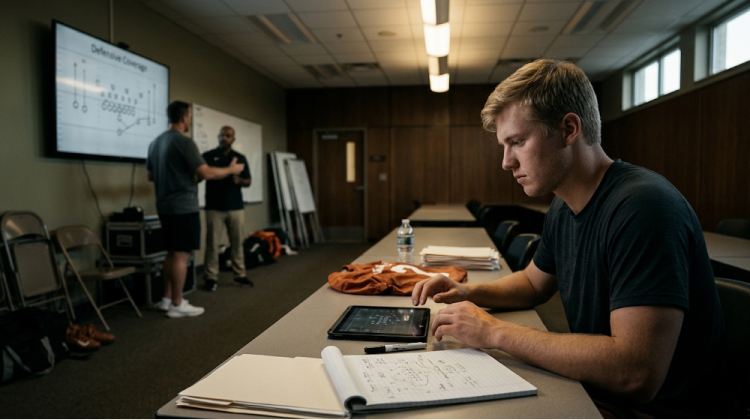
Manning’s recent comments offered a candid explanation of what he believes has gone wrong. He acknowledged that he has been too hesitant, a problem that can affect an offense even when a quarterback avoids obvious mistakes. Passing up an open receiver, holding the ball while waiting for a deeper route, or settling for a checkdown when a better option is available can prevent a drive from developing.
That hesitation has become particularly costly during Texas’ two most recent defeats. Against Oklahoma on October 10, Manning threw for 260 yards and three touchdowns but also recorded two interceptions. One interception was returned for a touchdown, while the other helped set up Oklahoma’s winning field goal in the 27–24 result.
Florida produced another difficult finish on October 17. Manning completed 14 of 20 passes for 173 yards and one touchdown, but he lost a fumble late in the fourth quarter after Texas had narrowed Florida’s lead to three points. The turnover ended the Longhorns’ opportunity to pursue a tying score.
Through six games, Manning has completed 106 of 166 passes for 1,295 yards, with 11 touchdown passes and five interceptions. His completion rate stands at 63.9%, and he is averaging 215.8 passing yards per game. Those figures indicate that Texas has a capable passing attack, but the offense has not consistently translated that production into wins.
Manning’s promise to let the ball go more freely should not be interpreted as an instruction to force throws into coverage. It means trusting his preparation, recognizing defensive openings sooner, and committing to the correct read. A quarterback can play aggressively while still understanding when a short completion, a throwaway, or a decision to protect the ball is the right choice.
Steve Sarkisian Is Standing Behind His Quarterback
Sarkisian has publicly reaffirmed Manning as the starter despite growing criticism of the offense. On October 19, the coach emphasized that Texas needs a better performance from its quarterback rather than announcing a change at the position. Backup KJ Lacey Jr. has received first-team practice repetitions, but Sarkisian described those opportunities as part of the team’s preparation rather than evidence that Manning has been removed from his role.
That distinction matters before a matchup with a ranked SEC opponent. Manning has considerably more experience directing the offense than Lacey, and a midseason quarterback change would introduce additional questions about timing, communication, and preparation. At the same time, the coaching staff must evaluate how its personnel and play design can produce more consistent results.
Sarkisian also has responsibilities beyond selecting the quarterback. Texas has struggled to sustain drives, and the offense has repeatedly placed itself in difficult third-down situations. A more decisive Manning could help, but the coaching staff must also give him clear reads, workable protection schemes, and a balanced offensive plan.
The Ole Miss game will therefore test both the quarterback and the coaching staff. Manning needs to execute the opportunities available to him, while Sarkisian must help create opportunities that allow the offense to play with rhythm instead of spending possessions trying to recover from earlier mistakes.
Texas’ Offensive Line Must Give Manning Time to Attack
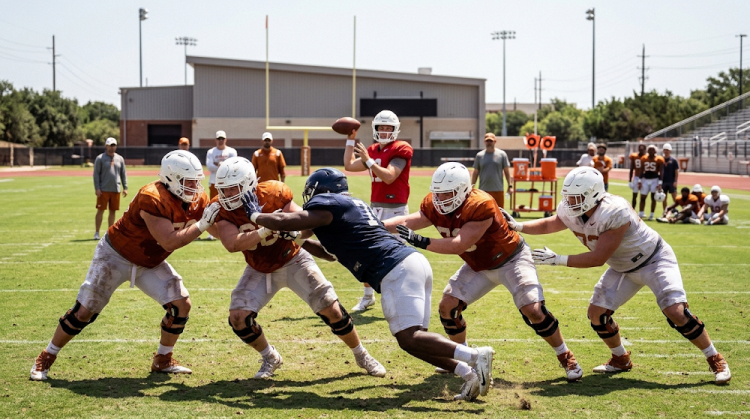
A more aggressive quarterback cannot be effective if pressure arrives before his receivers have time to get open. Texas has allowed 17 sacks through six games, a significant concern heading into the Ole Miss matchup. Manning’s tendency to hold the ball has contributed to some of the pressure, but protection breakdowns have also limited his options.
The relationship between quarterback decisions and offensive-line performance is important. Linemen need to identify defensive fronts, communicate assignments, and sustain blocks. Manning must recognize pressure, move through his progressions, and release the ball when the play calls for it. When either side struggles, the other is forced into more difficult situations.
Offensive line coach Kyle Flood faces a practical challenge: Texas needs to protect the quarterback while giving the running game enough room to become a reliable part of the offense. Against Florida, the Longhorns finished with only 99 rushing yards and converted just two of 10 third-down opportunities. That combination made it difficult to maintain possession and respond after the Gators took the lead.
Texas can help Manning by using quicker-developing routes, mixing in screens, and creating manageable second- and third-down situations. Those adjustments would not require abandoning Sarkisian’s offensive identity. They would give Manning clearer options and reduce the number of plays on which he must wait for a receiver to uncover deep downfield.
A successful passing attack also needs a credible running threat. If Ole Miss can focus its defensive pressure on obvious passing situations, Manning will have fewer opportunities to make comfortable reads. Better rushing efficiency could force the Rebels to respect multiple possibilities and create more favorable throwing windows.
Ole Miss Will Challenge Manning’s Decision-Making
No. 7 Ole Miss enters the October 24 game at 5–1 overall and 3–1 in SEC play. The Rebels travel to Austin for a 6:30 p.m. Central kickoff at Darrell K Royal–Texas Memorial Stadium. The matchup gives Texas a chance to halt its losing streak against a highly ranked opponent, but it also presents a demanding test for an offense that has struggled to maintain consistency.
Ole Miss quarterback Trinidad Chambliss has provided the Rebels with effective production through the air. Against Missouri on October 17, he completed 20 of 36 passes for 241 yards and three touchdowns in a 31–3 victory. His performance illustrates the challenge Texas faces if its offense cannot sustain possessions and give the defense time to recover.
For Manning, the priority should be identifying what the defense gives him rather than trying to manufacture a highlight on every possession. If Ole Miss leaves space underneath, Texas should take the available completion. If a receiver wins a matchup downfield, Manning needs to recognize the opportunity and deliver the ball without unnecessary delay.
The same discipline applies when the Rebels bring pressure. A quick, accurate throw can punish an aggressive defense, but holding the ball too long can turn a promising play into a sack or turnover. Manning’s commitment to a more decisive style will matter most when he must make those choices under game pressure.
Texas also needs to avoid allowing the opponent’s ranking to dictate its approach. The Longhorns cannot afford to become overly conservative because of their recent losses, but they should not mistake aggressive play for forcing the ball into dangerous situations. The goal is to make sound decisions at full speed.
The Running Game and Receivers Must Support the Rebound
Manning’s response will be easier if the players around him deliver more consistent production. Running backs Hollywood Smothers and Raleek Brown offer Texas options to improve its ground attack and reduce the burden on the passing game. Through the first six games, Smothers had recorded 289 rushing yards, while Brown had produced 265 yards and five rushing touchdowns.
The Longhorns need those contributions to become more dependable from drive to drive. Explosive runs can change a game, but steady gains on early downs help the offense stay on schedule. That gives Sarkisian more flexibility with play-calling and reduces the frequency of obvious passing situations.
The receiving group must also help Manning play decisively. Ryan Wingo had recorded 345 receiving yards through the first six games, making him one of Texas’ leading options in the passing game. Receivers can support the quarterback by maintaining route discipline, creating separation at the right time, and securing catchable passes.
Manning does not need to target one receiver repeatedly to demonstrate confidence. He needs to distribute the ball according to coverage and take advantage of favorable matchups. A balanced passing attack can prevent Ole Miss from concentrating its defensive plan on a single player.
Texas also needs to turn red-zone opportunities into touchdowns. Field goals may keep a game close, but touchdowns provide the scoring margin required to beat ranked opponents. Better execution near the goal line would make the most of drives that Manning and the offense manage to sustain.
A Strong Performance Against Ole Miss Could Change the Conversation
Texas’ playoff prospects have become more difficult after the losses to Oklahoma and Florida, but the season is not decided by the October 19 rankings alone. A victory over Ole Miss would provide a valuable conference result and give the Longhorns evidence that their recent problems can be corrected.
The most meaningful signs of improvement may be visible before the final score. Manning needs to move through his reads decisively, protect the football, and respond calmly when a drive encounters pressure. The offensive line must reduce sacks, while the running game needs to provide consistent support. Sarkisian must help the offense find answers when the initial plan is no longer working.
A single game cannot erase the mistakes of the previous two weeks. It can, however, show whether Texas has made measurable progress. Manning’s promise to let it rip creates a clear point of evaluation: will he trust what he sees, commit to his reads, and make timely decisions without sacrificing ball security?
The stakes are substantial, but the path forward is practical. Texas needs better execution, not a dramatic declaration. If Manning plays with greater conviction and the offense becomes more balanced, the Longhorns will have a stronger chance of defending their home field against Ole Miss and restoring momentum to their 2026 season.
For Sarkisian, the objective is to help his quarterback turn confidence into consistent production. For Manning, it is to prove that the lessons from two narrow defeats can lead to better decisions in the next critical moment. Saturday’s matchup will provide the next opportunity to show whether that change is taking hold.