

Texas will travel to Columbia without one of its most productive running backs. Hollywood Smothers has officially been ruled out for the November 7 matchup against No. 18 Missouri, creating another challenge for a Longhorns offense that needs to establish a more consistent rushing attack during the final stretch of the 2026 season.
The announcement appeared on the Southeastern Conference’s initial availability report released Wednesday, November 4. Smothers is among four Texas players listed as unavailable, while five additional Longhorns, including wide receivers Cam Coleman and Ryan Wingo, remain questionable. The injuries arrive at an important point in the schedule, with Texas preparing for a ranked road opponent and trying to protect its College Football Playoff position.
Smothers’ absence matters because Texas has relied on a combination of running backs rather than a single featured ball carrier. His production, physical running style and ability to contribute to the passing game have given Steve Sarkisian another option in the offensive rotation. Removing that option places greater responsibility on Raleek Brown, Michael Terry III and the remaining healthy backs.
The Longhorns still have enough talent to build an effective rushing rotation, but the coaching staff must make several decisions before kickoff. Texas needs to distribute carries intelligently, protect Arch Manning from unnecessary pressure and find a way to challenge a Missouri defense that will likely look to take advantage of the personnel changes.
Hollywood Smothers’ Injury Changes the Texas Running Back Rotation
Smothers entered the Missouri week with 283 rushing yards on 69 carries, averaging 4.1 yards per attempt. He had also scored twice on the ground. Those numbers made him a meaningful contributor behind Raleek Brown, particularly during a season in which Texas has attempted to develop a dependable two-back combination.
His value extends beyond the basic rushing totals. Smothers has provided another option for changing the tempo of the offense, giving Texas the ability to rotate backs and avoid placing the entire workload on one player.
That flexibility becomes more important during November, when injuries and accumulated physical wear can affect offensive production. Texas has already dealt with personnel problems along the offensive line, including the season-ending injury to Trevor Goosby. Now the backfield must adjust to another confirmed absence.
Smothers was injured during the October 31 victory over Mississippi State and did not finish the game. Reports following that matchup indicated that he was dealing with shoulder and knee issues, although the coaching staff did not publicly provide a complete medical assessment. The SEC availability report subsequently confirmed that he would not play against Missouri.
The immediate consequence is straightforward: Texas must replace his carries without making the running game predictable.
Raleek Brown Becomes the Central Figure in the Backfield
The most obvious player to absorb additional responsibility is Raleek Brown.
Brown leads Texas with 452 rushing yards on 92 carries, averaging 4.9 yards per attempt. He has also scored five rushing touchdowns, making him the Longhorns’ most productive running back through the first eight games. His production gives Sarkisian a reliable starting point as the coaching staff reorganizes the rotation.
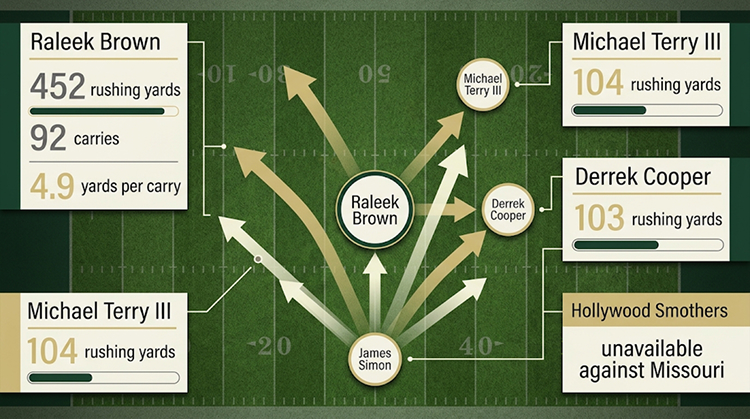
Brown has already demonstrated that he can handle a substantial workload. His performance against Ole Miss on October 24 was particularly important. He recorded 157 rushing yards on 23 carries, averaging 6.8 yards per attempt in Texas’ 34–27 victory over the Rebels. Michael Terry III added 41 rushing yards and a touchdown in that game, providing evidence that Texas can receive meaningful production from more than one back.
That performance offers a useful blueprint for Missouri.
Texas should give Brown enough opportunities to establish the running game while avoiding an excessive workload that could reduce his effectiveness late in the contest. His ability to gain yards between the tackles and create additional yardage after contact makes him an important part of the offensive plan.
The challenge will be finding the right balance. If Brown receives nearly every meaningful rushing opportunity, Missouri can concentrate its defensive attention on him. A second productive option would force the Tigers to account for more than one runner and help Texas maintain offensive flexibility.
Michael Terry III Could Receive a Bigger Opportunity
Michael Terry III is one of the most interesting candidates to benefit from Smothers’ absence.
Terry has recorded 104 rushing yards on 22 attempts, averaging 4.7 yards per carry, with one rushing touchdown. His production is smaller than Brown’s, but his performance against Ole Miss showed that he can contribute when Texas needs another runner.
Terry’s potential role is especially important because Sarkisian does not necessarily need to find another player who duplicates Smothers’ entire skill set. He needs someone who can execute the assignments required by the offensive system.
That could mean using Terry on early downs, giving him opportunities in short-yardage situations or incorporating him into packages that feature multiple backs. His ability to contribute without requiring the offense to change its entire structure would be valuable against Missouri.
Terry also gives Texas another opportunity to preserve Brown’s energy. If the Longhorns can maintain a meaningful rotation, they can keep their primary runner fresher for the fourth quarter.
The coaching staff must still evaluate how much responsibility Terry can handle against a ranked opponent. His previous production provides encouragement, but Missouri presents a different level of defensive competition.
Derrek Cooper and James Simon Add More Depth
Texas has additional options beyond Brown and Terry.
Derrek Cooper has recorded 103 rushing yards on 29 carries, averaging 3.6 yards per attempt, with one touchdown. James Simon has also contributed, recording 24 rushing yards and a touchdown on six attempts. Ryan Niblett provides another experienced option within the program, although his offensive rushing production has been limited this season.
Cooper could be particularly important if Texas wants to distribute carries across three running backs. His opportunities would allow the coaching staff to maintain a rotation without requiring Brown and Terry to handle nearly every rushing assignment.
Simon offers another possible option for selected situations. Texas does not necessarily need to give him a large number of carries, but his presence provides additional flexibility if the game creates an unexpected need.
The challenge is that Missouri will likely recognize the changes in Texas’ backfield. The Longhorns must prepare these players for meaningful snaps rather than simply assuming that additional opportunities will produce the same results as the established rotation.
Missouri’s Defense Makes the Running Game Even More Important
The opponent makes Smothers’ absence more significant.
Missouri enters the matchup at 6–2 and ranked No. 18 in the College Football Playoff rankings. The Tigers have built their season around a balanced offense and a defense capable of creating difficult situations for opposing quarterbacks.
Texas cannot afford to become one-dimensional against them.
The Longhorns have averaged approximately 135 rushing yards per game entering the matchup, while Missouri has allowed approximately 98 rushing yards per game according to the teams’ pregame statistical comparison. That difference illustrates the challenge facing Sarkisian’s offense.
Missouri also has reasons to be confident after its 34–10 victory over Arkansas on October 31. Running back Jamal Roberts rushed for 138 yards and a touchdown, demonstrating the Tigers’ ability to control portions of a game through their ground attack.
Texas must respond with a more efficient rushing performance than it produced against Mississippi State.
The Longhorns gained only 60 net rushing yards on 32 attempts in their 31–3 victory. That performance was particularly concerning because the final score suggested a more comfortable offensive afternoon than the rushing numbers actually showed. If Texas struggles to run the football again, Missouri can devote additional defenders to disrupting Arch Manning’s passing game.
Arch Manning Needs the Running Backs to Help Control the Game
Smothers’ absence also affects Arch Manning.
A productive running game reduces the pressure on the quarterback by creating more manageable down-and-distance situations. It can also slow down opposing pass rushers and prevent defenses from focusing exclusively on coverage.
Manning enters the Missouri matchup with 1,727 passing yards, 15 touchdown passes and seven interceptions. Those numbers demonstrate his importance to the Texas offense, but the Longhorns need to avoid making him responsible for generating nearly every meaningful offensive play.
The five sacks allowed against Mississippi State provide another reason to prioritize balance. Even though Texas won comfortably, protection breakdowns remain a concern, particularly with the offensive line already dealing with the loss of Goosby.
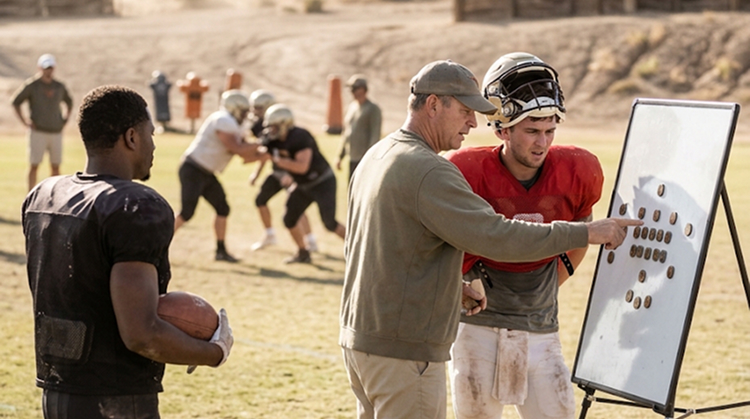
Sarkisian can help Manning by using running backs in different ways. Brown and Terry can contribute through conventional carries, while screen passes, checkdowns and motion packages can create additional opportunities for the backfield.
Those adjustments would also become valuable if Coleman or Wingo cannot play. Both wide receivers were listed as questionable on the initial SEC availability report, meaning Texas could enter the game without some of its most important perimeter threats.
The offense must therefore be prepared to create production through several different personnel combinations.
Sarkisian Must Avoid Overloading One Player
The most important coaching decision may be how Sarkisian distributes the carries.
Brown is clearly the leading option, but asking him to handle nearly every rushing assignment could create another problem. A demanding road game against Missouri may require four quarters of physical football, and Texas needs enough depth to maintain its effectiveness late in the contest.
A sensible approach would involve using Brown as the primary runner while giving Terry and Cooper meaningful opportunities. Simon and Niblett could provide additional depth depending on the game situation and how the rotation develops.
The coaching staff should also consider how the backs complement one another. Brown’s production makes him the natural centerpiece, while Terry’s previous contributions offer another option. Cooper’s involvement could prevent the offense from becoming overly dependent on two players.
The objective is not to recreate Smothers’ individual production through one replacement. It is to distribute those responsibilities across the available roster.
Texas also needs to improve its blocking. Running back substitutions alone will not solve the problem if Missouri consistently wins at the line of scrimmage. The offensive line must create better running lanes, communicate effectively and avoid allowing defenders to reach the backfield before the play develops.
The Missouri Game Could Reveal Texas’ True Backfield Depth
Texas will face Missouri on Saturday, November 7, at 11 a.m. CT at Faurot Field in Columbia. ESPN will televise the matchup, which carries important implications for both teams’ SEC and College Football Playoff ambitions.
The first availability report confirmed that Smothers, Trevor Goosby, Richard Wesley and Nick Townsend would be unavailable. Colin Simmons, Cam Coleman, Ryan Wingo, Graceson Littleton and Kade Phillips were listed as questionable. Those additional statuses could influence how Texas structures its offense and defense before kickoff.
For the backfield, however, the immediate responsibility is clear.
Brown must remain productive, Terry needs to be ready for a larger role, and Cooper and the other available backs must provide enough support to keep the offense balanced. Texas cannot assume that Manning will be able to overcome every personnel problem through the passing game.
Smothers’ absence is a setback, but it also creates an opportunity for Texas to demonstrate the depth it has developed throughout the season.
The Longhorns have a difficult opponent and a demanding November schedule ahead. Their ability to maintain a functional running game without one of their leading backs could determine how much flexibility Sarkisian has in the weeks that follow.
Missouri will test that depth immediately. If Brown and the supporting rotation can establish a consistent ground attack, Texas will have a much better chance of controlling the pace, protecting Manning and keeping its playoff ambitions on track.