Rivalry game security has become a bigger part of football planning for Texas fans, especially after several high-profile September 2026 games showed how quickly entry, parking, student sections and postgame movement can change.
As of November 7, 2026, the September examples in this story have already been played. They still offer useful lessons for the next Texas college trip, high school rivalry night or neutral-site weekend where larger crowds, visiting fan sections and extra law enforcement can affect the way families plan kickoff.
The practical point is simple: security changes rarely start at the metal detector. They can begin on the drive in, at the edge of campus, in student seating areas and in the walk back to the car. Fans who build in extra time usually have a better day than fans who treat a rivalry game like a routine September nonconference matchup.
Rivalry Game Security Starts Before The Gate
For Texas fans, the first adjustment is the clock. A rivalry game often brings more visiting fans, more tailgate traffic and more law enforcement activity near the venue. Even if the ticket says one kickoff time, the real planning window starts hours earlier.
Rivalry Game Security And Arrival Timing
For Texas fans, rivalry game security means checking the venue plan before leaving home, not while sitting in traffic near the stadium. The most useful pregame steps are basic but easy to miss: confirm the gate opening time, know which lots are tied to your pass, check whether rideshare drop-off points moved and make sure every person in the group has a ticket ready before reaching the gate.
The September 26, 2026 Tennessee-Texas game at Neyland Stadium showed why that matters. Officials opened the stadium 30 minutes earlier than usual because President Donald Trump attended, and perimeter security checks were intensified, according to AP reporting on Tennessee-Texas security. That kind of change can affect everyone, not only fans seated near a high-profile guest.
Texas fans traveling to another campus should treat the final mile like part of the event. A parking lot that works for a normal game may feel much different when officers are directing traffic, buses are moving through controlled areas and visiting fans are arriving in larger groups.
What To Do Before Leaving Home
The best rivalry plan starts with one person in the group taking responsibility for logistics. That does not need to be complicated. It does need to be settled before the first car leaves the driveway.
- Save tickets to each phone before arriving near the stadium.
- Check the stadium bag policy and leave extra items at home.
- Pick a meeting spot outside the gate in case cell service slows down.
- Build in time for traffic, walking, restrooms and security screening.
- Agree on a postgame pickup or exit plan before kickoff.
Families heading to Texas high school games can use the same approach. District stadiums may not have the same footprint as SEC venues, but rivalry crowds can still back up school parking lots, create longer concession lines and slow entry for parents with small children. For a Texas-specific checklist, our rivalry planning guide covers arrival timing, gate screening and family meetups in more detail.
What September 2026 High-Profile Games Showed
The fall of 2026 offered two clear examples of how security posture can rise when the event profile rises. Those games were not Texas home games, but they carried lessons that fit college towns and major stadium weekends across the state.
The Tennessee-Texas Example
The Tennessee-Texas game on September 26, 2026 carried extra attention because of the presidential visit. The most fan-facing change was time. Earlier gate opening and stronger perimeter checks meant fans needed more patience outside the stadium before reaching their seats.
The lesson for Texas fans is that rivalry game security can expand without changing the football schedule. Kickoff can stay the same while the fan schedule changes around it. Pregame meals, tailgate timing, rideshare plans and child-care plans can all be affected when screening begins earlier or more slowly.
That is especially true for fans who travel from Texas to road games. A road campus has different signage, unfamiliar lot names and different walking routes. If security pushes fans through fewer paths or holds certain lanes for team, police or guest movement, a ten-minute walk can take much longer.
The Ole Miss-LSU Example
The September 18, 2026 Ole Miss-LSU game in Oxford also showed how rivalry and storyline can change operations. Before that game, officials said Mississippi was deploying its largest law-enforcement presence ever for a college football game, with about 65 to 70 troopers and officers from state and highway patrol and commercial transportation enforcement on duty for the weekend. Louisiana State Police also added 15 officers focused on transportation and operations for LSU’s traveling party, according to WBOC reporting on Ole Miss-LSU security.
That report also said the Vaught-Hemingway Stadium student section would not allow entry to anyone wearing opponent apparel, and anyone spotted in opponent colors during the game would be removed by security. For Texas fans, that is a reminder to read venue-specific rules closely. Student sections, reserved visiting areas and general seating can be treated differently depending on the school and the event.
Bag Checks, Student Sections, And Seating Rules
Bag policies and seating rules are where many fans get slowed down. Rivalry games can put more pressure on those checkpoints because crowds arrive in waves and more fans may be unfamiliar with the host venue.
What Rivalry Game Security Means For Families
Rivalry game security affects families differently than solo fans or student groups. Parents may be carrying snacks, jackets, medical items, diaper bags or school spirit gear. Grandparents may need more time between parking and the gate. Kids may get restless if the line stalls outside the stadium.
The safest planning move is to pack lighter than usual and confirm what the stadium allows before leaving. If a venue has a clear-bag rule, size limits or exceptions, those details should come from the school, stadium or district hosting the game. Fans should not rely on what worked at a different stadium the week before.
Student sections deserve special attention. The Ole Miss-LSU example showed that opponent apparel rules can be stricter in student seating than elsewhere. Texas fans traveling to college rivalry games should make sure every ticket holder knows where their seat is and whether any section-specific rules apply.
Parking, Pickup Points, And Postgame Exits
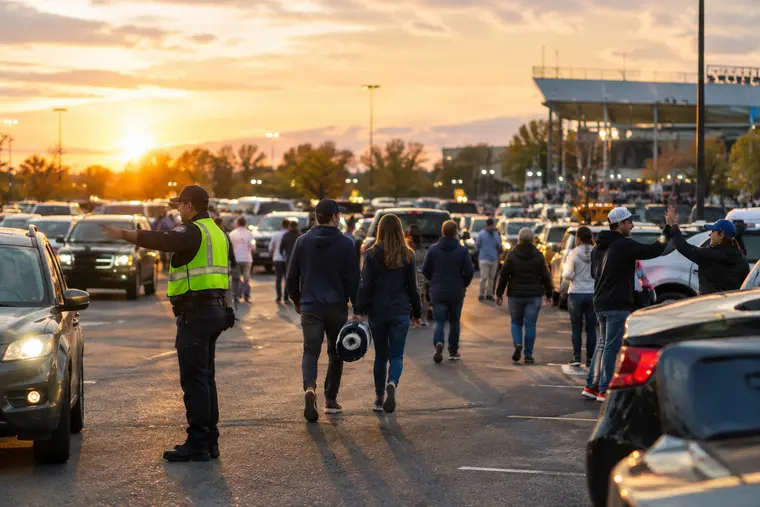
Security changes are not finished once fans enter the stadium. Postgame movement can be just as important, especially after a tight rivalry game when both fan bases leave at the same time.
Plan The Exit Before Kickoff
Texas fans should pick an exit route before the game starts. That route may not be the same as the entry route. Police may close streets, shift pedestrians away from team buses or change rideshare access after the final whistle. If fans wait until the crowd starts moving, it is harder to keep a group together.
For high school rivalry games, the same idea applies on a smaller scale. A district stadium parking lot can jam up quickly when bands, buses, families and student sections all leave together. Parents picking up students should agree on a specific location away from the heaviest pedestrian flow.
Fans should also think about emotions after the game. Rivalries bring louder crowds and more back-and-forth between sections. The easiest way to avoid problems is to keep moving, stay with the group and skip arguments in the aisle, concourse or parking lot.
Why Rivalry Game Security Changes Texas Game Day
Rivalry game security does not have to ruin the fun of a Texas football weekend. It does require fans to treat logistics as part of the game plan. The schools and police agencies handle the operations, but fans control their own timing, packing, meeting points and patience.
If rivalry game security feels tighter at a future Texas college or high school game, the September 2026 examples offer a clear playbook: arrive earlier, carry less, read the venue rules, respect student-section boundaries and decide how the group will leave before kickoff. That kind of preparation keeps the focus where it belongs — on the football, the bands, the rivalry and the people who made the trip with you.