Texas has spent the first month of the 2026 season searching for more consistency on offense, and Steve Sarkisian has now added a formation that could give Arch Manning another way to attack defenses. The Longhorns have installed a 10-personnel package featuring four wide receivers, giving freshman Jermaine Bishop Jr. a larger role without taking Ryan Wingo, Cam Coleman or Emmett Mosley V off the field. The package has already produced several useful plays and could become one of Texas’ most important offensive wrinkles against Oklahoma on Oct. 10.
The timing matters. Texas enters the Red River Rivalry at 4-0 and No. 1 in the country, but its offense has been much less convincing than its record suggests. Manning has thrown for 862 yards through four games, while the Longhorns have struggled to create consistent rushing production and sustain drives. The introduction of four-receiver personnel gives Sarkisian another way to spread a defense horizontally and create clearer throwing opportunities for his quarterback.
The experiment also brings Bishop into the center of the offensive conversation. The freshman from Willis, Texas, has quickly shown that his versatility can create problems for opposing defenses. His increased role could be exactly what Texas needs as it prepares for an Oklahoma defense that has been one of the Sooners’ strongest units this season.
Sarkisian Has Finally Added Four-Receiver Personnel
For most of Sarkisian’s time at Texas, the offense has leaned heavily on 11 personnel, with three wide receivers on the field, along with substantial use of 12 personnel and occasional 21 personnel. The recent addition of 10 personnel changes that structure by removing the tight end or running back and putting four wide receivers on the field simultaneously.
The purpose is straightforward.
Texas has three established receivers who have earned major playing time. Wingo, Coleman and Mosley have all demonstrated the ability to create explosive plays, but giving Bishop meaningful snaps traditionally would have required one of those players to leave the field.
The 10-personnel package solves that problem.
Sarkisian explained that his first three receivers had earned their opportunities through the offseason and opening games. Bishop’s emergence created a different problem: how could Texas get another talented playmaker onto the field without reducing the roles of its top receivers? The four-receiver package provides an answer.
That makes the formation more than a gimmick.
It is a personnel solution built around the strengths of the roster.
Jermaine Bishop Has Forced His Way Into The Rotation
Bishop entered Texas as one of the most intriguing athletes in the 2026 recruiting class. The Willis product was rated a five-star recruit by 247Sports and the No. 16 overall player in the class by that service. Texas also viewed him as an unusually versatile athlete capable of contributing at wide receiver, slot receiver, running back and safety.
His high school production helps explain why Sarkisian wanted to find a way to use him.
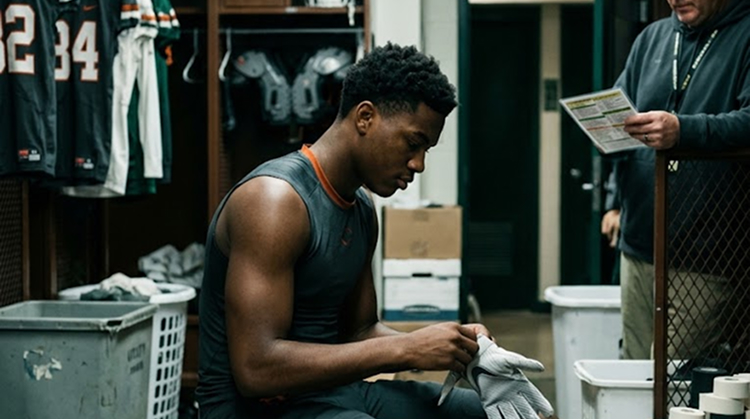
As a senior at Willis, Bishop recorded 86 receptions for 1,241 yards and 14 touchdowns. He also rushed for 378 yards and four touchdowns on 34 carries. His versatility extended to defense and special teams, giving Texas a player with experience handling multiple responsibilities.
The transition to college football naturally took some time.
Bishop played just 14 snaps during Texas’ first two games. His role expanded against UTSA, when he played 25 snaps, and then against Tennessee, when he played 16. Through the first four games, he had six receptions for 81 yards on nine targets, with 56 of those receiving yards coming after the catch.
Those numbers are modest, but the efficiency is significant.
Bishop has shown that he can turn short throws into meaningful gains. Four of his six receptions have come on screens behind the line of scrimmage, producing 34 yards. That gives Sarkisian another way to use him without asking the freshman to win every route deep downfield.
The Tennessee Game Showed Why The Package Matters
The most encouraging evidence came during Texas’ 20-17 victory at Tennessee on Sept. 26.
Bishop caught two passes for 34 yards, including a 29-yard reception on a corner route from the 10-personnel formation. The play became one of Manning’s best throws of the afternoon and helped demonstrate why putting four receivers on the field can create opportunities for the quarterback.
That play matters because it was not simply a case of a receiver making an isolated spectacular catch.
The formation itself helped create the opportunity.
With four receivers spread across the formation, the defense has more space to cover. The quarterback can identify how the secondary is aligned, locate the favorable matchup and make the ball come out quickly. For Manning, that can reduce the amount of time he has to hold the ball while also creating opportunities outside the numbers.
Texas has needed more of that.
The Longhorns produced only 262 total yards against Tennessee, including 201 passing yards and 61 rushing yards. Manning completed 14 of 19 passes for 201 yards, but the offense spent too much of the game struggling to maintain consistent rhythm. The defense ultimately carried Texas to the victory.
A more effective 10-personnel package could help prevent that imbalance from becoming a weekly problem.
Emmett Mosley V Can Make The Package More Difficult To Defend
Texas has already shown another wrinkle inside the four-receiver concept.
Against Tennessee, Sarkisian used Mosley as a motioning player from the backfield before sending him into the formation. That approach helped Texas create additional protection flexibility while still keeping four receiving threats involved. The concept was used on a critical third-and-8 conversion to Wingo during Texas’ fourth-quarter touchdown drive.
That play demonstrates why the package could grow.
Sarkisian does not have to treat 10 personnel as one fixed formation. He can change where the four receivers align, motion one player across the formation and use different pre-snap looks while keeping the same basic personnel on the field.
That creates a larger menu without requiring Texas to substitute.
For an offense that has struggled to maintain rhythm, reducing substitutions can also help Texas play faster.
Manning can get the defense lined up, identify the coverage and move into the next phase of the play without waiting for another personnel group to enter the field.
The Package Could Attack Oklahoma’s Pressure Strategy
Oklahoma presents an especially interesting opponent for the new formation because the Sooners have already demonstrated a willingness to pressure quarterbacks.
Texas does not need to assume Oklahoma will copy Tennessee’s defensive approach, but the Longhorns can use the 10-personnel package to prepare for aggressive pressure looks. If the Sooners send extra rushers, Manning has four receivers available as potential outlets.
That does not eliminate the importance of pass protection.
Texas still needs its offensive line to hold up, especially with Oklahoma capable of creating pressure with its front. But the formation can give Manning faster answers when the defense shows pressure before the snap.
Screens become particularly valuable in that situation.
Bishop has already caught four screen passes this season, and his ability to gain yards after the catch makes him a logical player for those concepts. A short completion can become a way to punish an aggressive defense while also getting the ball into the hands of a freshman who has shown natural ability in space.
That could become important at the Cotton Bowl.
Four Receivers Give Manning A Different Picture Before The Snap
The biggest potential benefit for Manning is the information the formation can provide before the ball is snapped.
When Texas places four receivers on the field, Oklahoma must decide how it wants to distribute its defensive backs. The Sooners can respond with nickel or dime personnel, adjust their pressure packages or leave certain defenders isolated against Texas receivers.
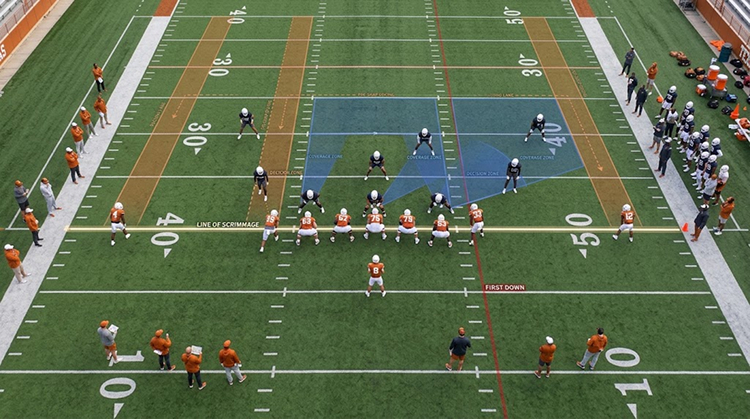
Each response creates a different problem.
If Oklahoma uses lighter personnel, Texas can potentially attack the box with quick throws and perimeter runs. If the Sooners bring additional pressure, Manning can identify favorable matchups before the snap and deliver the ball quickly. If Oklahoma plays conservative coverage, Texas can use spacing to work underneath routes and force defenders to tackle in space.
That is where Bishop becomes particularly interesting.
His background as a multi-position athlete means Texas can move him around before and after the snap. He can line up outside, work from the slot or motion into another location. That movement forces the defense to communicate while giving Manning another clue about coverage.
The formation therefore has value even when Bishop does not receive the ball.
Texas Does Not Need Four Wide Receivers On Every Down
The biggest mistake would be treating 10 personnel as a replacement for the rest of Sarkisian’s offense.
It is not.
Texas has invested heavily in multiple personnel groupings because different formations create different answers. Sarkisian specifically discussed the importance of being able to move between 12, 10, 20, 21 and 11 personnel without losing offensive rhythm.
That versatility is the actual goal.
Texas wants Oklahoma to prepare for several possibilities instead of allowing the Sooners to anticipate one formation and dictate the matchup.
The Longhorns can use heavier personnel when they want to establish the run, bring in additional blockers in short-yardage situations and shift to four receivers when they want to create space.
For Manning, that means the formation itself becomes part of a larger system.
He does not have to win the game from 10 personnel.
He simply needs the formation to produce enough favorable situations that Oklahoma cannot comfortably defend the other packages.
Ryan Wingo, Cam Coleman And Bishop Create A Difficult Receiver Rotation
The most obvious advantage is the number of quality receiving options Texas can place on the field.
Wingo has been Manning’s most productive receiver through four games with 239 receiving yards. Coleman has 194 yards, while Mosley has 173. Those numbers show why Sarkisian has been reluctant to reduce their snaps simply to create opportunities for Bishop.
The 10-personnel package allows all four to remain involved.
That creates a problem for Oklahoma’s secondary because there is no obvious reason to dedicate all its attention to one receiver.
If the Sooners focus on Wingo, Coleman may get a favorable matchup.
If they tilt coverage toward Coleman, Wingo can attack elsewhere.
If both receive additional attention, Mosley or Bishop can become the answer.
That is how an offensive formation can create value without producing enormous individual statistics.
The objective is to force the defense to make more decisions.
Bishop’s Role Could Grow Against Oklahoma
Bishop’s development also gives Sarkisian a young player who can become more important as the season progresses.
The freshman has already demonstrated that he can contribute in multiple ways. His early playing-time increase suggests the coaching staff has become increasingly comfortable with his understanding of the offense. Sarkisian has also praised Bishop’s intelligence and his ability to make plays when the ball reaches him.
The Red River Rivalry creates a much bigger test.
Oklahoma will have had additional time to study the package. The Sooners now know that Texas is willing to use four receivers and that Bishop can be a central part of the concept.
That means Sarkisian may need to counter Oklahoma’s counters.
This is where the formation could become more interesting than its basic four-receiver alignment.
Texas can motion Bishop.
It can motion Mosley.
It can shift Wingo or Coleman.
It can use screens.
It can run intermediate routes.
It can use the formation to create space for the running game.
The more answers Texas builds from the same personnel grouping, the harder it becomes for Oklahoma to identify exactly what is coming.
Arch Manning Needs Easier Answers
Manning does not need another complicated burden placed on him.
He needs more plays that allow him to make a decision quickly and confidently.
Through four games, he has completed 63.48% of his passes for 862 yards and seven touchdowns, according to Texas’ game-center statistics. Those numbers are productive, but Texas has not consistently created the type of offensive rhythm expected from the nation’s No. 1 team.
That is why the 10-personnel package could matter more than its statistical output suggests.
It can give Manning defined reads.
It can create wider throwing lanes.
It can force defensive backs to communicate.
It can produce quick throws.
It can place four receivers on the field without sacrificing the top three players in the rotation.
Those benefits can make the quarterback’s job easier.
And Texas needs that against Oklahoma.
The Red River Setting Raises The Stakes
Texas and Oklahoma will meet at the Cotton Bowl in Dallas on Saturday, Oct. 10, at 2:30 p.m. CT on ABC. The game is the 122nd meeting between the programs, with Texas entering 4-0 and ranked No. 1 for the fourth consecutive week.
The rivalry has produced enough surprises over the decades to make any discussion about records secondary once the teams enter the Cotton Bowl.
Texas also has another reason to avoid offensive stagnation.
The Longhorns are trying to maintain a championship-level standard while still correcting the issues that have appeared during the first month of the season. The defense has provided a significant margin for error, but Texas cannot expect its offense to remain inconsistent against every major opponent.
The four-receiver package gives Sarkisian another mechanism for fixing that problem.
It may also be one of the clearest examples yet of the coaching staff adjusting the offense around the players it has available.
The 10-Personnel Package Could Become A Bigger Part Of Texas’ Identity
Sarkisian has already acknowledged that Texas has not been as efficient offensively as it wants to be. The response has been to add another personnel grouping rather than simply abandon the structure of the offense.
That distinction matters.
Texas does not need to reinvent the offense before Oklahoma.
It needs more reliable answers.
The 10-personnel package can provide one of them.
Bishop gives the formation a specific purpose because his emergence created the need for additional receiver snaps. Wingo, Coleman and Mosley make the formation dangerous because Oklahoma cannot simply treat Bishop as an isolated freshman. Manning makes it viable because he has enough experience to diagnose coverage and exploit favorable matchups.
The formation is still new.
Texas has used it on only a small number of plays, and Oklahoma will have an opportunity to study everything the Longhorns have shown so far. According to recent analysis, Texas has run eight plays from 10 personnel this season, throwing on six of them. That makes the concept heavily weighted toward the passing game and gives Oklahoma another tendency to consider.
Sarkisian will therefore have to avoid becoming predictable.
The package works best when Oklahoma knows it exists but cannot easily determine what Texas intends to do from it.
Bishop Could Be The Small Adjustment That Changes Texas’ Offense
The most interesting part of Texas’ new offensive wrinkle is that it did not emerge from a desperate search for another star.
It emerged because Bishop played well enough to force the coaching staff to find more snaps for him.
That is a meaningful distinction.
Texas already has established receivers. Wingo, Coleman and Mosley have demonstrated that they deserve substantial roles. Bishop’s development created an opportunity to expand the offense rather than reshuffle the hierarchy.
Now Sarkisian has another option.
Against Oklahoma, that option could give Manning a wider field, faster answers and another player capable of turning a short completion into a meaningful gain.
The Longhorns do not need the 10-personnel package to dominate Red River.
They need it to make Oklahoma defend more of the field.
If Bishop continues to develop, if Manning recognizes the matchups quickly and if Texas can combine the formation with effective protection and enough rushing threat, the package could become more than a Red River wrinkle.
It could become an important piece of Texas’ offensive identity for the rest of the 2026 season.